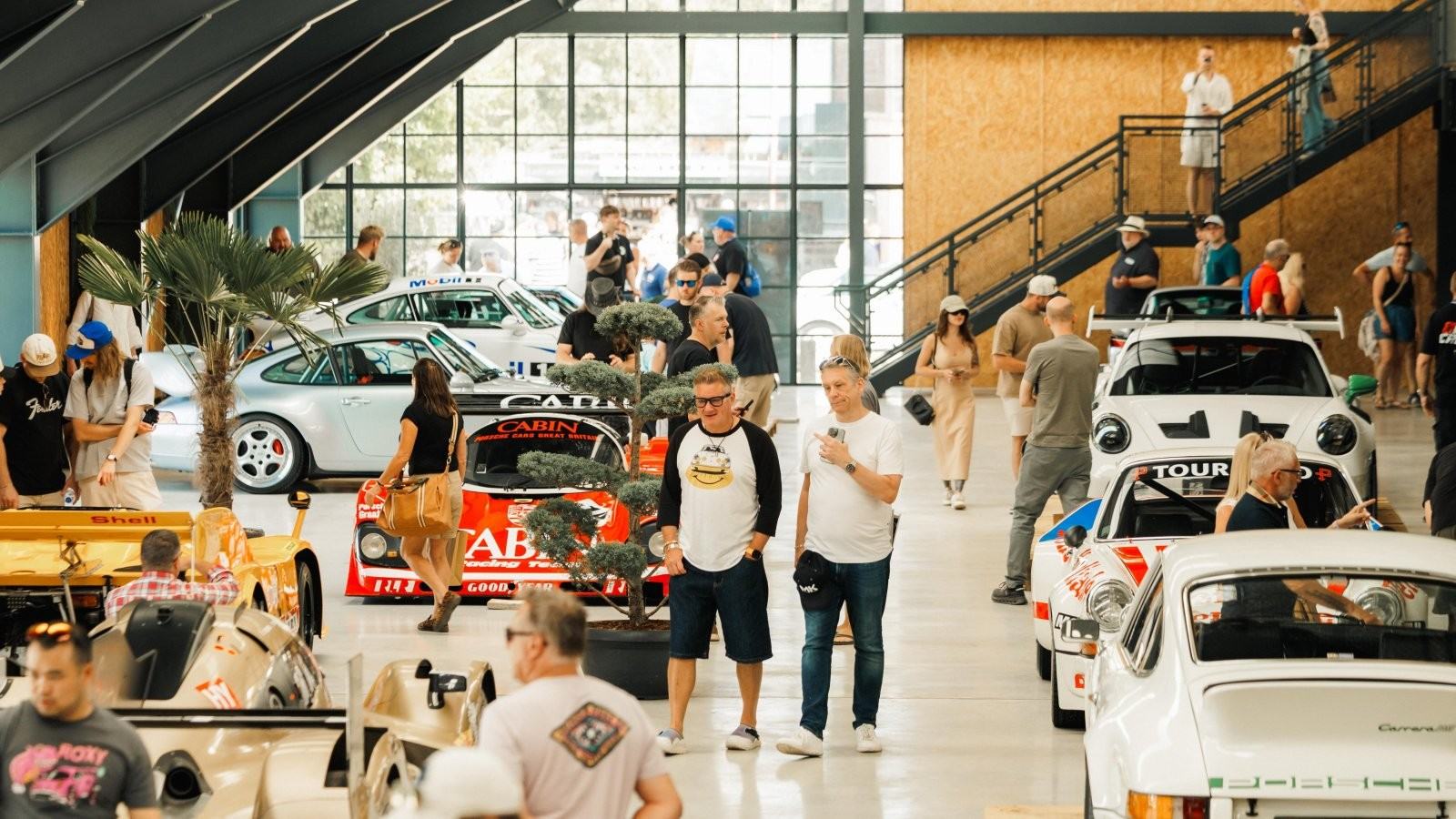
An expanded two-day Megaphonics gathering at Boxengasse attracted over 7,500 visitors, with historic race cars, rare road models and renowned Porsche guests.
Oxfordshire hosts a gathering of enthusiasts
The 2026 Megaphonics event attracted more than 7,500 visitors to the Boxengasse campus in Oxfordshire, according to Porsche's August account. The festival expanded to two days, giving enthusiasts additional time to encounter rare vehicles and meet people associated with the brand. Visitors reportedly travelled from across the United Kingdom and much farther afield.
Megaphonics has become more than a simple display of cars. It brings collecting, racing history, industrial design and a sense of community together. These aspects matter because the continuing relevance of a historic model depends partly on the knowledge and enthusiasm that owners share.
A cross-section of endurance-racing history
One display centred on a Porsche 904 GTS, accompanied by models including a 914/6 GT, 911 ST and Carrera RS 3.0. Another brought a 917, a 962 C and the modern 963 close together, illustrating the enormous changes in endurance racing over several generations of engineering development.
A museum can provide similar historical comparisons, but a community event adds conversation with people who maintain, restore and sometimes drive the vehicles. The contrast between an older racing machine and a modern hybrid prototype is also a reminder that performance engineering must continually reconcile speed, efficiency and reliability.
The changing identity of the road car
The festival was not confined to competition machinery. Early sports cars, air-cooled 911s, modern performance models, SUVs and electric vehicles were represented. Seeing these together demonstrates how Porsche's commercial range has broadened while the design identity of individual generations remains recognisable to enthusiasts.
For collectors, visual recognition is only part of a vehicle's significance. Mechanical specification, documented history, restoration choices and the originality of individual components may all influence desirability. Gatherings that allow owners to exchange expertise can help improve the preservation of important examples.
Designers and drivers provide context
The programme brought figures such as racing driver Richard Attwood and former Porsche designer Tony Hatter onto a new live stage. Their contributions gave visitors opportunities to hear about the decisions and experiences behind vehicles that are often understood only through published figures or auction descriptions.
A design change may have originated in a manufacturing constraint, an aerodynamic requirement or a request from a driver. Such insights help explain why one generation looks or behaves differently from another. First-hand accounts also preserve knowledge that might otherwise disappear as important participants retire.
An international cultural network
Porsche reported attendees from countries including Japan, Australia, Canada and the United States. The distance travelled suggests the event's appeal extends beyond a local car meet. Shared interests can bridge different cultures, particularly when members have spent years researching models or participating in historic races.
That community also supports specialist services such as parts sourcing, expert restoration and archive research. Accurate records are crucial when vehicles change hands and their history becomes more complicated. Owners benefit from connections with people who understand the particular demands of rare machinery.
A completed festival with a continuing legacy
The August 2026 report concerns an event that had already taken place, not a forthcoming October meeting. Its wider relevance is how a specialist automotive festival can offer genuine historical education and social exchange alongside impressive machinery. The cars provide the attraction, but conversations give the experience depth.
Travellers planning future motoring trips may find events of this kind particularly rewarding when they include discussions, design exhibitions and access to people involved in the vehicles' development. This helps distinguish a thoughtful heritage gathering from a display organised only for spectacle.