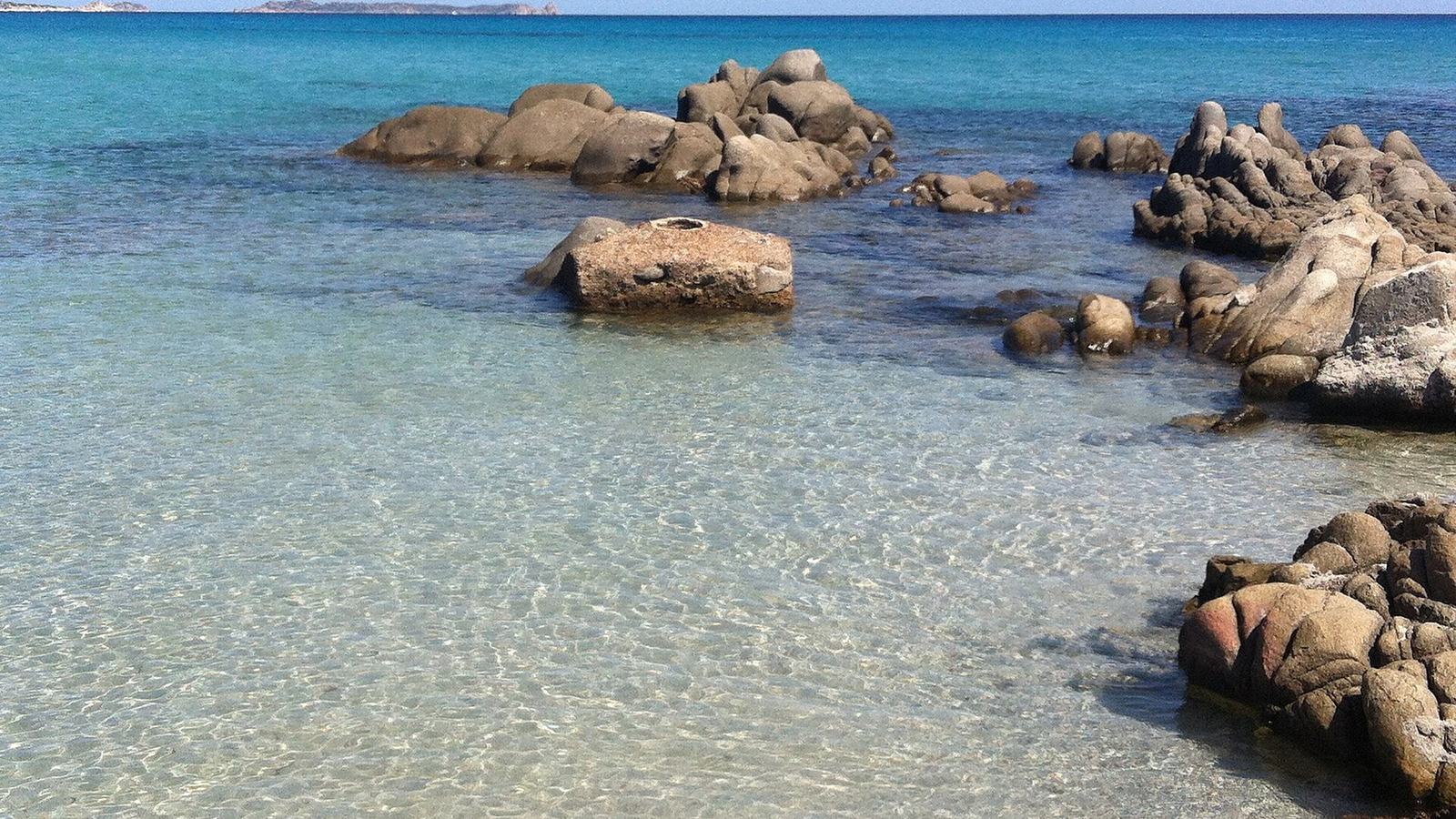
The beaches, lagoon and protected marine landscape around Porto Giunco give superyacht guests a quieter perspective on Sardinia's south-eastern coast.
A different expression of Sardinia
Porto Giunco is a coastal landscape that rewards travellers who are willing to look beyond Sardinia's most familiar luxury marina imagery. Near Villasimius in the island's south-east, the beach faces pale-blue water while a lagoon lies immediately behind the sand. Low Mediterranean vegetation and a coastal tower complete the scene. For owners and guests aboard a superyacht, the appeal is not an exclusive beach club created for large vessels. It is a striking natural setting in which the sea, wetlands and historical coastline can be understood together during a carefully arranged shore visit.
The official SardegnaTurismo portal describes Porto Giunco in the context of Villasimius and the Capo Carbonara marine area. Its information offers a more trustworthy basis for planning than unsourced claims about secret anchorages or unrestricted tender access. The lagoon behind the beach, the Notteri wetland landscape and the nearby historic tower are substantial features. An editorial visit can be built around those assets without inventing a glamorous private landing or suggesting that conservation rules can be waived for a large yacht. The destination's character depends on its ecology and public coastal setting.
Beach, lagoon and headland
The beach and lagoon sit close together, but each belongs to a different environmental system. The coastal strip is prized for its pale sand and clear water, while the wetland supports birdlife and seasonal ecological activity. SardegnaTurismo notes the presence of flamingos and other migratory birds around Notteri. A visitor may or may not see them on a particular day; responsible writing should not promise sightings. The interest lies in understanding how closely these habitats meet and how small changes in season, light and weather can alter the impression of the place.
For guests aboard a large yacht, a land-based nature walk may be more informative than another hour aboard a tender. A local guide can explain the lagoon's significance and help the group avoid sensitive areas. Shore plans should keep the party on designated routes and respect any restrictions on drones, wildlife approach or access to dunes. The lagoon is not a decorative backdrop to a luxury holiday; it is a living habitat. That simple principle can guide a low-impact visit which feels genuinely distinctive because it is based on what is present rather than on staged entertainment.
The tower above the bay
SardegnaTurismo identifies the Torre di Porto Giunco as part of the coast's historical defensive landscape. The tower provides a strong visual relationship between the beach and the wider sea. Its presence is a reminder that headlands were once used to observe shipping and watch for maritime threats. The perspective is especially meaningful for a party travelling aboard a modern yacht, whose bridge equipment makes coastal observation a completely different exercise. A walk towards a suitable public viewpoint can give the excursion a cultural dimension alongside its beaches and nature.
The fact that a tower is visible does not mean every route is open or appropriate for all visitors. Steps, gradients, heat and any site restrictions need to be checked before promising an ascent. A family group may be content with a view from the lower paths, while keen walkers may want a longer circuit. The crew should ask a local guide for the latest access conditions and avoid presenting a difficult route as an effortless stroll. A successful shore visit is shaped by the capabilities and interests of actual guests, not by a dramatic photograph.
Protected water changes the cruising decision
The Capo Carbonara area is an important marine setting. The official regional information places Porto Giunco within a broader landscape of protected coast and water. For a superyacht, that is an immediate planning consideration. A scenic bay does not automatically provide a lawful anchorage, nor does the existence of a beach establish a place where tenders may land. Local marine protected-area regulations, navigation notices, any buoy or mooring arrangements and the directions of the relevant authorities must be checked against the actual vessel and intended activity.
Captains should make these decisions independently of promotional beach descriptions. The yacht may be better accommodated at an authorised marina or another suitable location, with guests reaching the beach by arranged road transport. That option can be both more environmentally responsible and more comfortable than an improvised landing. The same caution applies to diving, fishing, personal watercraft and other water sports: a protected area can divide activities into zones with different rules. No itinerary should treat restrictions as a technicality simply because the shoreline is beautiful.
A measured day ashore
Porto Giunco works best as a gentle excursion with a clear focus. Guests could begin with a guided explanation of the lagoon, spend time on an authorised beach area, and later enjoy a meal or a visit to Villasimius if suitable transport and reservations are in place. The order should follow weather and seasonal conditions. On a hot day, an early nature walk may be preferable to a midday circuit; in a quieter season, a longer exploration can be enjoyable without a beach programme. Nothing about the destination requires a packed schedule to justify the call.
The regional tourism portal describes several nearby coves and coastal places, but they should be treated as alternatives rather than an instruction to visit them all at once. Distances, road access and shore restrictions can make a multi-stop itinerary less relaxing than it appears on a map. Families often welcome the opportunity to spend more time in one well-chosen setting, while photographers may prefer flexibility around the day's changing light. A concierge who asks what the owner actually wants from the coast can build a more rewarding day than one who simply presents a long list of attractions.
Ecology is part of the luxury
The visual appeal of Porto Giunco is inseparable from its relatively delicate natural elements. Dunes, lagoon margins, seagrass and coastal vegetation are not expendable features to be modified for a better photograph or a convenient shortcut. Visitors should use established access paths, keep litter and noise under control and follow local rules for beach equipment. Where wildlife is present, viewing from an appropriate distance is preferable to pursuing a closer image. These considerations are particularly important for high-end yacht travel because the presence of significant resources creates a corresponding opportunity to demonstrate good environmental practice.
A superyacht can give guests freedom to explore remarkable places, but that freedom is not permission to dominate them. The most memorable experiences often come from close observation: the line where lagoon meets sand, the movement of light over shallow water, the coastal vegetation or the historic tower above the bay. A knowledgeable guide can make these features intelligible without turning the visit into a lecture. The result is a form of luxury based on time, space and attention rather than exclusive possession of a public landscape.
Planning for the actual season
Access, services and the character of the beach change between high summer and quieter months. Guests should not assume that a facility mentioned in an old travel article remains open, or that conditions for swimming and walking are identical throughout the year. The yacht team needs current local information about transport, bathing services, any guided activities and environmental restrictions. Wind can affect both comfort on the beach and vessel operations offshore. An alternative plan can protect the quality of the day without making the crew feel obliged to deliver a fixed itinerary regardless of conditions.
The practical lesson is simple: treat Porto Giunco as a real protected coastal place, not a generic beach illustration. The original regional tourism sources help identify its character, while the relevant authorities determine what the yacht and guests may do at the time of visit. A measured excursion can combine shoreline scenery, natural history and a hint of Sardinia's former coastal defence network. For a Mediterranean superyacht itinerary, that balance is compelling precisely because the experience depends on the coast itself rather than on an imported formula for luxury.
Photograph: Muzzudan / Wikimedia Commons, CC BY-SA 4.0; Porto Giunco beach, Sardinia. Image resized for web. Original photograph and creator; Creative Commons licence.

Primary source: SardegnaTurismo, official tourism website of the Region of Sardinia. Opening hours, rules, berthing and visitor arrangements should always be reconfirmed with the responsible local authorities.