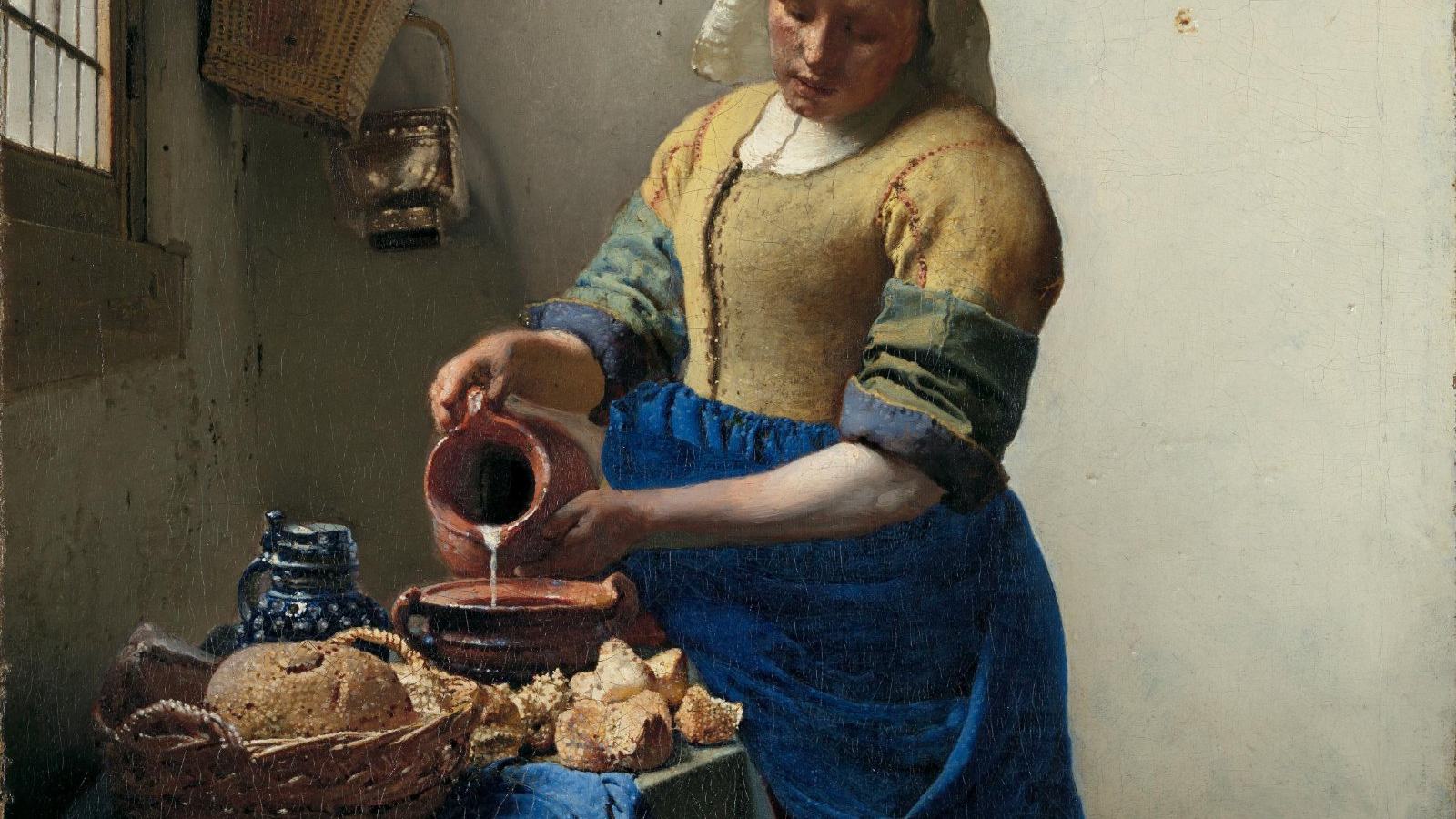
An art-led Amsterdam shore visit centred on Vermeer's Milkmaid, Rembrandt conservation, Dutch design and careful planning from a superyacht berth.
An Amsterdam cultural day worth making time for
Amsterdam’s waterways are an irresistible backdrop for a superyacht visit, but the city’s most enduring luxury is often found away from the quay. The Rijksmuseum offers an exceptionally concentrated journey through Dutch painting, decorative arts and national history, giving guests a richer understanding of the culture behind the canals, townhouses and historic trading routes they see from the water. A visit can be a highlight in its own right rather than an obligatory stop between shopping appointments.
Although the museum occupies a monumental building, its strongest experiences are intensely personal: standing before a domestic scene painted by Johannes Vermeer, tracing the confidence of a Rembrandt portrait or examining the craftsmanship of a small object made centuries ago. The collection extends across some 800 years of Dutch history. For owners and guests accustomed to visiting remarkable places, the interest lies in how individual works reveal the ambitions, skills and contradictions of the society that produced them.
The essential decision is how much of the museum to attempt. A short, expertly planned visit to the Gallery of Honour can be more memorable than a hurried march through every gallery. For a longer Amsterdam call, guests can return to surrounding neighbourhoods for architecture and dining, treating the museum as the cultural anchor of a relaxed day ashore.
Vermeer’s Milkmaid and the art of close looking
Johannes Vermeer’s The Milkmaid, painted around 1660, is a natural starting point. The composition contains an ordinary act—milk being poured into a vessel—yet its effect is extraordinary. Light enters from the side, textured bread lies on the table and the figure concentrates completely on her work. It is a painting that rewards unhurried attention because nothing in it depends on spectacle or scale.
The Rijksmuseum identifies the work as an oil painting on canvas measuring approximately 45.5 by 41 centimetres. Those relatively modest dimensions are part of its power. Visitors approaching it after large decorative interiors often discover that the smallest objects can command a room through precision of observation, the distribution of light and the confidence with which a simple domestic moment has been organised.
Vermeer’s use of luminous colour also opens a conversation about collecting. Art is not valuable only because a name is famous or a record price has been achieved; rarity, condition, historical context and visual quality all matter. The museum provides a setting in which owners who collect contemporary design, sculpture or paintings can study the fundamentals of connoisseurship without the commercial pressure of a sale.
Rembrandt and the visible science of conservation
The Gallery of Honour gives visitors access to major works by Rembrandt, Vermeer and Frans Hals, but an especially revealing dimension of the Rijksmuseum is the continuing conservation of Rembrandt’s The Night Watch. The museum launched Operation Night Watch in 2019 to investigate and conserve the painting in public view. The project turns an object generally understood as a finished masterpiece into an active subject of research.
Conservators have used sophisticated imaging and microscopic examination to understand the work’s condition and the artist’s technique. The museum reports that an earlier wooden stretcher was replaced by an aluminium support and that painstaking varnish removal began after testing in late 2024. Visitors should check the current arrangement before arrival because conservation work may affect the appearance or viewing conditions of sections of the painting.
For a technically minded superyacht audience, the connection is more than metaphorical. Fine art, historic vessels and complex yacht interiors all require careful assessment of materials, controlled environments, documentation and specialist interventions. Seeing conservation as a disciplined process can change how guests think about maintaining treasured objects, whether a seventeenth-century canvas or an irreplaceable piece of craftsmanship aboard.
Architecture, design and a broader Dutch story
The building itself is part of the experience. Its monumental circulation spaces and carefully framed gallery sequence provide a dramatic contrast with the intimate scale of many artworks. Instead of treating the museum as a backdrop for photographs, guests should pay attention to the relationship between architecture, historical display and the changing character of the collection from one room to the next.
The displays also invite visitors to consider the Netherlands as a maritime nation. The prosperity associated with seventeenth-century painting was entangled with global trade, colonial networks and the technologies of seafaring. A thoughtful private guide can place the paintings and decorative objects within that larger and sometimes uncomfortable history, giving a more substantial account than a procession of familiar names.
Guests with an interest in yacht interiors may find the furniture, ceramics, textiles, silverwork and other designed objects particularly rewarding. The appeal is not to copy period styles, but to see how form, material, craft and social ritual have evolved. Such comparisons can provide fresh language for discussions with designers, architects and craftspeople during a new-build or refit project.
Planning the visit from a superyacht itinerary
The Rijksmuseum stands on Museumstraat in Amsterdam and welcomes visitors throughout the year, according to its official visitor information. Published admission categories and opening times are clearly set out on the museum’s website, which is the appropriate place for guests or their shore agent to check the details applicable to a planned visit. These details should always be reconfirmed when a shore programme is finalised because temporary exhibitions and special arrangements can affect individual bookings.
Crucially, the museum requires visitors to reserve a start time, including most holders of museum passes. Guests should therefore avoid leaving access to an uncertain walk-in arrangement, even when the yacht’s schedule appears flexible. A captain, concierge or shore agent can coordinate the berth-to-museum transfer around that reservation, with extra margin for city traffic, canal crossings and any changes in arrival procedures.
Amsterdam berthing varies considerably according to yacht size, draft, permissions and the marina or commercial harbour concerned. Nothing about a museum appointment implies that a vessel can berth at the museum or directly in the historic centre. It is better to confirm the yacht’s suitable berth and legal transfer point first, then choose the transport plan, including any privately arranged car or appropriate licensed water transfer.
For the best rhythm, aim to enter early and devote the first part of the day to a few selected works while attention is fresh. The museum’s own guidance suggests that the period before 11:00 and the later afternoon can be less busy, although no public collection can promise an empty gallery. A short itinerary might prioritise The Milkmaid, several Gallery of Honour works and a measured look at the conservation programme.
Dining, privacy and the value of a measured itinerary
The museum has a café and shop, while its RIJKS restaurant operates on a separate service schedule. Reservations for a special lunch or dinner should be treated independently of the timed museum entry. A carefully paced plan can make room for a conversation about what guests have seen, turning the shore day into an experience rather than simply a set of photographs and checkmarks.
Private enjoyment does not mean private ownership of a public space. The Rijksmuseum has photography rules, and visitors must respect other guests and museum staff; flash photography is not permitted. Owners travelling with security, children or a larger party should arrange any appropriate group admission or guided experience in advance and avoid assuming that a discretionary concession will be available upon arrival.
Anyone bringing a serious interest in art, architecture or acquisition can use the visit to identify subjects for later private study. The collection’s own online resources offer object records and imagery, including many public-domain reproductions suitable for research. That preparation helps a specialist guide tailor the day to an owner who prefers Dutch interiors, naval history or the material culture of international commerce.
In a city famous for its canals, the Rijksmuseum is an elegant reminder that the pleasure of yachting is often what a voyage makes possible ashore. Give the museum sufficient time, let the strongest works speak without interruption and return to the yacht with a clearer picture of Amsterdam’s artistic achievement. The result is a shore excursion worthy of the journey that brought the guests there.
Sources and image provenance
Visitor times, reservation rules and admission details are based on the Rijksmuseum’s official admissions information; collection interpretation and conservation details come from its The Milkmaid record and Operation Night Watch programme. Hero image: Johannes Vermeer, The Milkmaid, circa 1660, Rijksmuseum, Amsterdam; the museum identifies the artwork image as public domain and makes it available through its official image service.