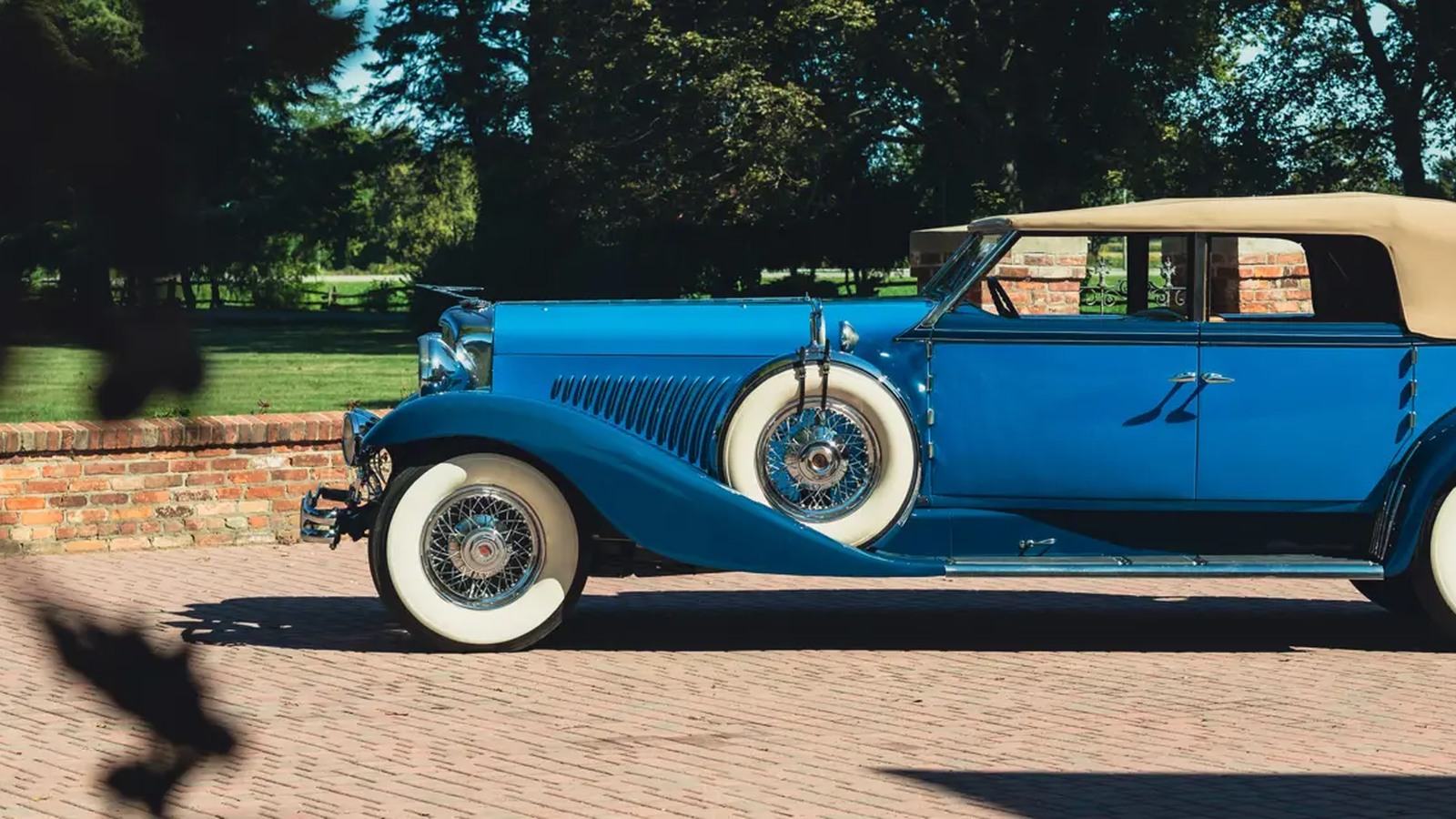
RM Sotheby's held its Hershey auction on 7 and 8 October 2026 in Pennsylvania, alongside the Antique Automobile Club of America's National Fall Meet. The programme focuses on veteran cars, Brass Era automobiles and historic automobilia, placing early automotive craftsmanship before the later performance and supercar ca
An auction devoted to motoring history
RM Sotheby's held its Hershey auction on 7 and 8 October 2026 in Pennsylvania, alongside the Antique Automobile Club of America's National Fall Meet. The programme focuses on veteran cars, Brass Era automobiles and historic automobilia, placing early automotive craftsmanship before the later performance and supercar categories common at major collector auctions.
The October event has already taken place, but final results require the auction house's verified lot-by-lot reporting. Catalogue estimates and presale descriptions must not be confused with achieved prices, and the significance of the event extends beyond any one record transaction.
What defines the Brass Era
Early automobiles frequently featured prominent brass lamps, radiator details and fittings, alongside mechanical systems that differ substantially from modern engineering. The period captures an era of rapid experimentation in controls, engines, starting systems and coachwork before standardised solutions became widespread.
Collectors often value a vehicle's relationship to this period of invention as much as its appearance. Understanding the original specification requires research into surviving factory documents, marque registers and historic photographs, particularly when a car has been rebuilt more than once.
Preservation and authenticity
A rare survivor with original finishes may offer exceptional insight into early manufacturing methods, while a carefully restored vehicle can demonstrate the machine as it would have appeared when new. These represent different collecting philosophies rather than a simple hierarchy of quality.
A proper inspection should identify replacement panels, non-original engines, reconstructed trim and sympathetic mechanical updates. The quality of records can determine whether future owners understand what they have purchased, especially where long-obsolete components had to be recreated.
The realities of driving early motor cars
A Brass Era automobile may require specialist knowledge for starting, gear selection, braking and lubrication. It should not be assumed to perform safely in modern traffic simply because it can be driven around an exhibition field.
Experienced mechanics and event organisers can advise on appropriate road use, transport and the handling of unusual controls. The long-term commitment involves preserving operating knowledge in addition to maintaining paint, leather, wheels and mechanical parts.
Hershey's specialist collecting community
The AACA Fall Meet attracts enthusiasts, researchers and parts specialists focused on older vehicles, making it a valuable venue for the exchange of technical knowledge. Buyers can compare a car against surviving examples and seek advice about restoration practices that may not be familiar to generalist automobile dealers.
A collector establishing a museum-quality garage will often need relationships with restoration workshops, archival researchers and transport providers. The community surrounding an object can influence the ease and pleasure of ownership long after the auction event has concluded.
Acquisition and long-term stewardship
Purchasing a veteran automobile can involve buyer's premiums, specialised transport and insurance, with future expenditure on mechanical preservation. An assessment should distinguish the cost of a cosmetic restoration from the potentially more demanding task of making early engineering safe and reliable.
The Hershey programme illustrates an alternative to collecting recently produced performance cars. Its enduring appeal is the chance to protect and understand the machines that established motoring culture, rather than relying solely on the prospect of rising financial values.