Rolls-Royce has published a new review of its long relationship with artists, patrons and collectible design, tracing the connection from the origins of the Spirit of Ecstasy to modern Bespoke collaborations. The retrospective shows how the
Rolls-Royce has published a new review of its long relationship with artists, patrons and collectible design, tracing the connection from the origins of the Spirit of Ecstasy to modern Bespoke collaborations. The retrospective shows how the motor car has repeatedly functioned as both transport and a commissioned object within wider art collections. It also shows how commissioning culture has repeatedly brought automotive design into conversation with sculpture, painting and patronage.
The Spirit of Ecstasy began with an artist
Charles Robinson Sykes studied drawing, painting and sculpture at the Royal College of Art before becoming closely connected with early Rolls-Royce imagery. Claude Johnson later commissioned him to create the official mascot that became the Spirit of Ecstasy.
The story matters because art was not added to Rolls-Royce only after the marque became a luxury symbol. Visual culture and commissioned design were present in the company’s identity from the early decades of motoring.
Coachbuilding created moving works of art
Early Rolls-Royce clients commonly bought a chassis and commissioned a specialist coachbuilder to create the body. That structure gave wealthy owners enormous freedom to shape proportions, materials and purpose around personal taste.
Modern Coachbuild and Bespoke programmes revive part of that logic with contemporary engineering and manufacturing standards. The owner is again able to treat the car as a commissioned object rather than a fixed product.
Collectors have moved between cars and art for generations
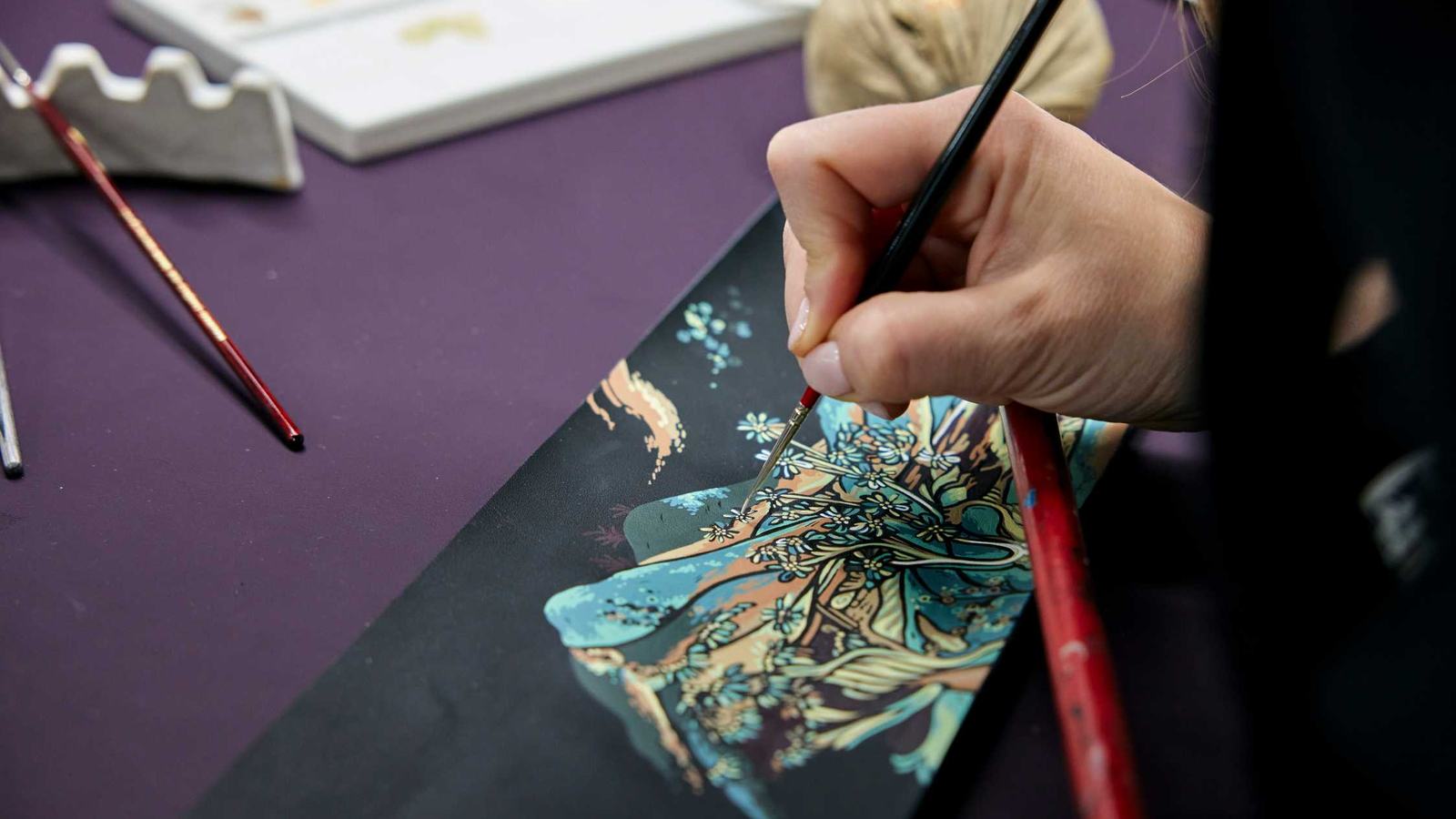
Rolls-Royce notes that artists, patrons and cultural figures have owned and used its cars across different periods. In the contemporary era, the marque has also invited artists into direct collaborations that transform interior surfaces and details into original works.
That crossover is familiar in the superyacht world, where owners often commission art specifically for a vessel or build interiors around a collection. The car offers a smaller but similarly personal canvas.
Bespoke increasingly resembles patronage
The most ambitious modern commissions require dialogue among clients, designers, engineers and specialist craftspeople. When an artist is involved, the process can resemble patronage more than conventional automotive specification.
For collectors, the attraction lies in authorship and provenance. A unique collaboration can carry meaning that is difficult to reproduce through limited-edition badges or option packages alone.
Official sources: www.press.rolls-roycemotorcars.com.