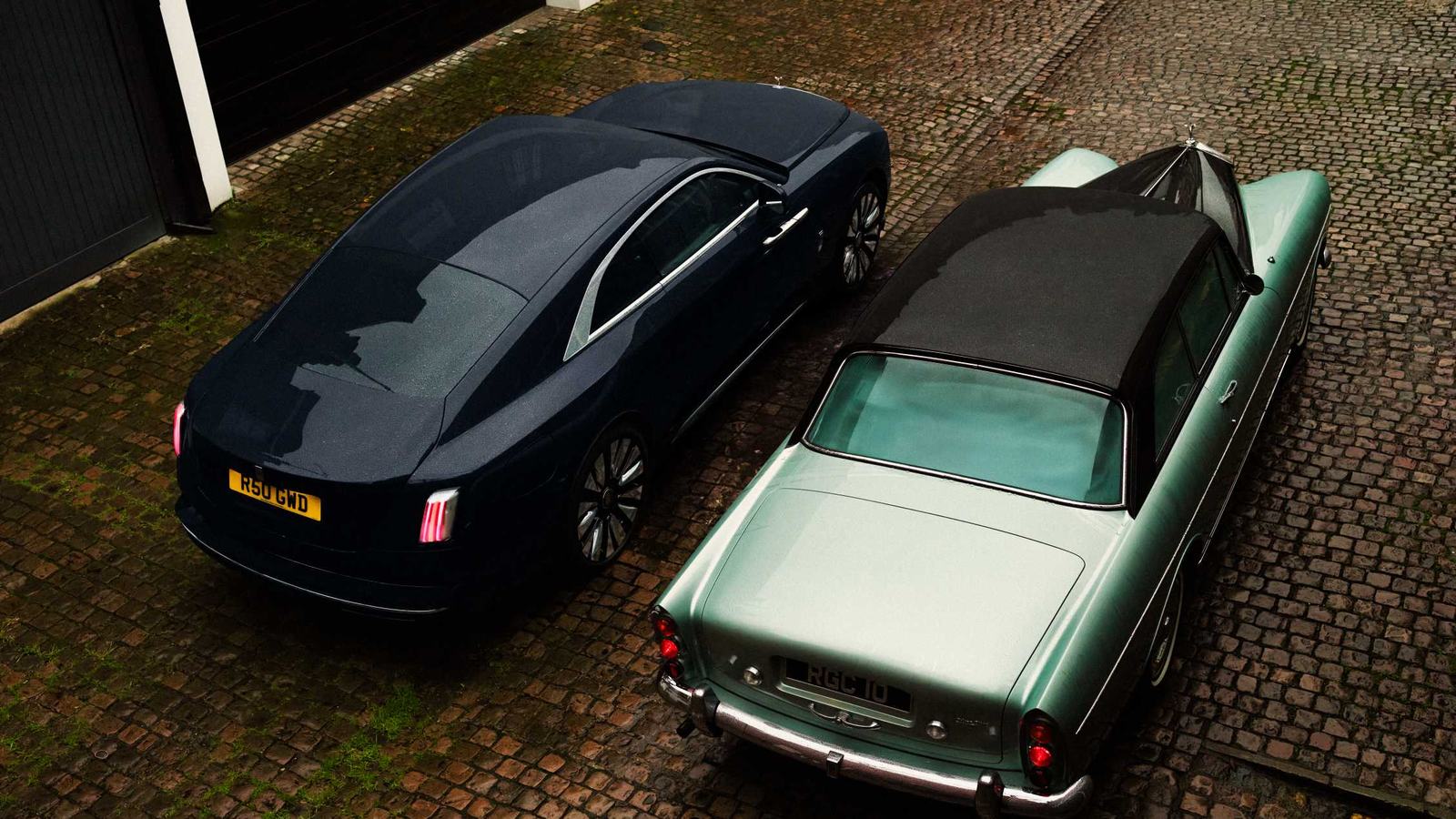
Rolls-Royce traces the history of its coupé body style from early coachbuilt cars to the electric Spectre super-coupé.
Two doors, very different eras
Rolls-Royce has revisited the coupé as one of the most expressive forms in its history, beginning with coachbuilt two-door cars and continuing through the Goodwood era. The body style has consistently allowed designers to place proportion and presence ahead of practicality.
Early examples depended on independent coachbuilders, while later fixed-head and drophead coupés brought the format into a more integrated factory environment. Each period used the form to show what the marque considered contemporary luxury.
Spectre changes the technology
Spectre carries the coupé idea into the electric era and removes the assumption that a large grand tourer needs a conventional engine to feel dramatic. Its near-silent powertrain changes the sensory experience while retaining visual authority.
That contrast between old proportions and new propulsion is central to the car’s identity. Spectre is intended to feel evolutionary in design even while its technology represents a major break with the past.
Why coupés remain collectible
Luxury coupés tend to age differently from mainstream models because they are often produced in smaller numbers and bought for emotional rather than practical reasons. Strong design therefore matters as much as performance when collectors look back.
For SYG readers, the form has the same attraction as a fast open yacht or custom tender. It is an object that can justify itself through beauty, presence and the pleasure of ownership rather than utility.
Source
Rolls-Royce Motor Cars