Rolls-Royce Motor Cars and Goodwood Estate report three projects encompassing soil research, archaeological conservation and restoring a pond for environmental education.
A different perspective on the Home of Rolls-Royce
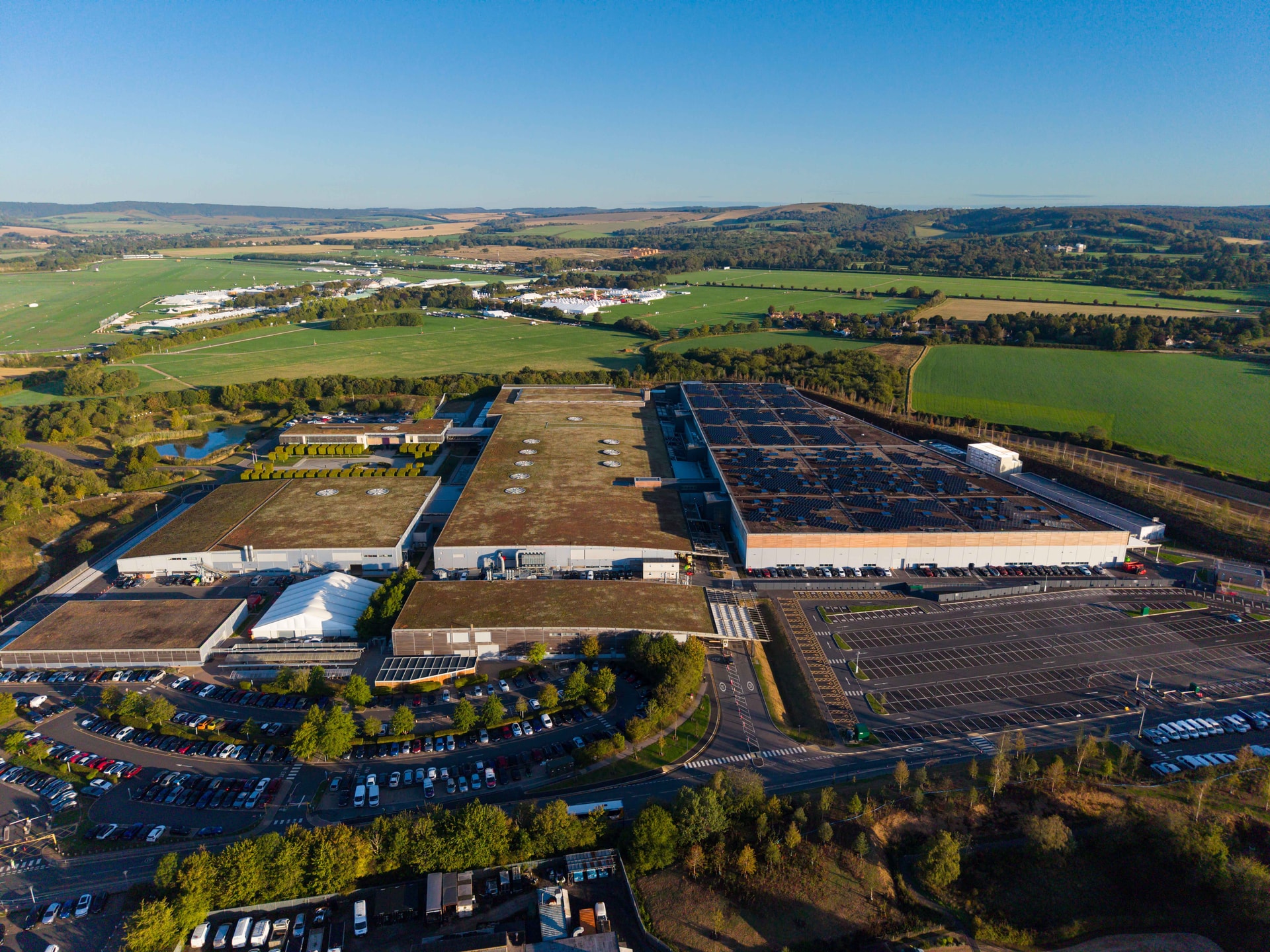
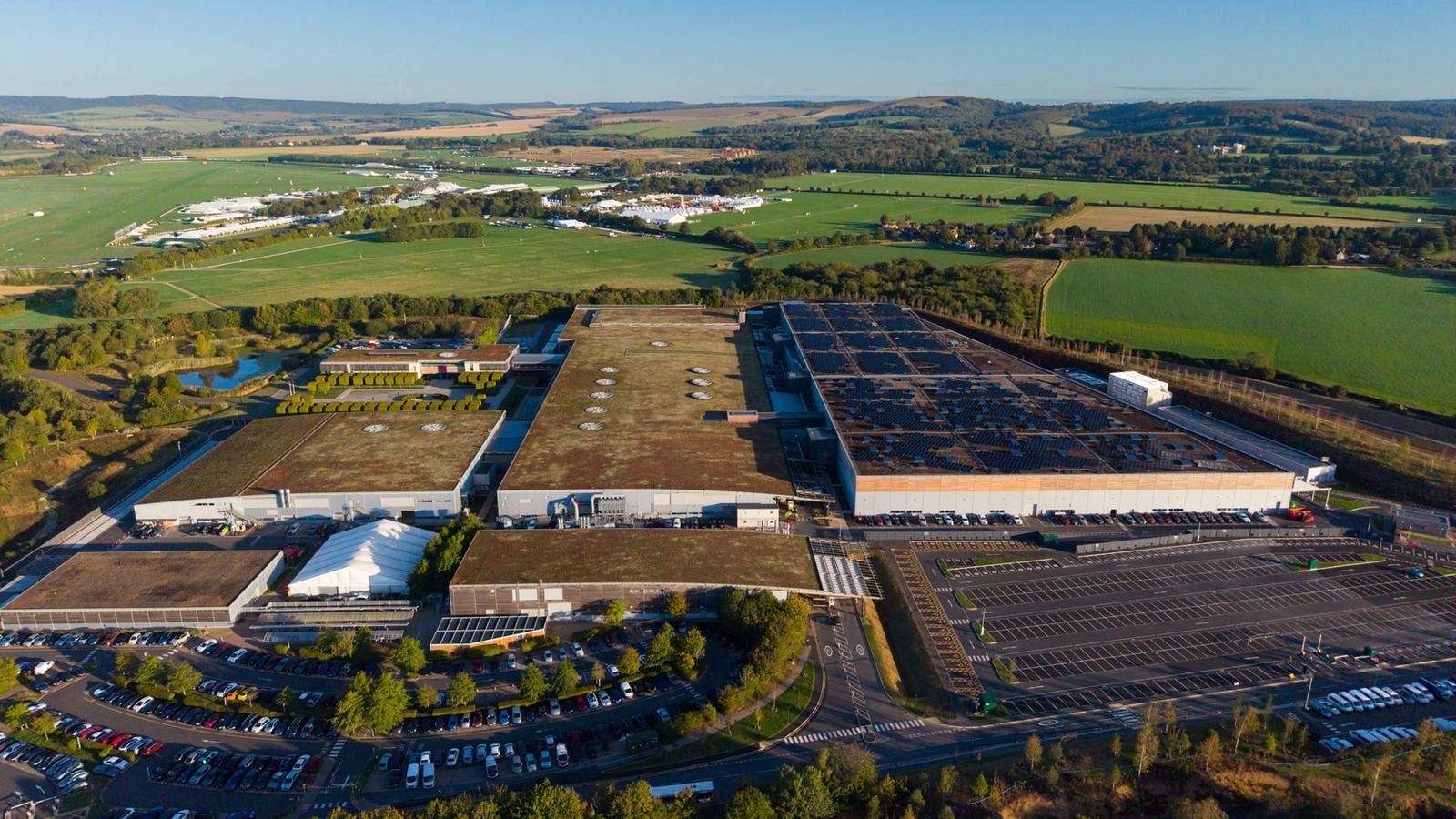
Rolls-Royce Motor Cars and its neighbour, the Goodwood Estate in West Sussex, have reported the completion of three projects involving the landscape around the manufacturer's home. Their 21 October 2026 announcement describes a trial of a fungus-enriched fertiliser, measures to protect the Goodwood Trundle archaeological site and the restoration of a previously disused pond at Goodwood Home Farm. The projects form part of a continuing partnership between the manufacturer and the estate, and the publicity photograph accompanying this report comes from the manufacturer's editorial gallery.
They offer a perspective on an area that international automotive enthusiasts often associate primarily with motoring. The relationship between a carefully crafted vehicle and the landscape in which its makers work is not necessarily apparent when the finished object is displayed in a distant showroom. At Goodwood, the surrounding countryside contains agricultural land, habitats and significant archaeological features. Preserving these qualities requires a different type of attention from the engineering and design of a motor car. It is a worthwhile subject for visitors who are interested in the character of the place as well as in contemporary luxury manufacturing.
Fungi and the health of the soil
The first of the three projects concerns mycelium-enriched fertiliser. The manufacturer says it supported a trial conducted at Goodwood Estate and that some of the resulting fertiliser is now being used by environmental specialists at the Rolls-Royce site. Mycelium consists of networks of fungal filaments that can form complex relationships with plants and other organisms in their surroundings. A soil treatment containing fungal material may be intended to encourage particular biological processes rather than supply nutrients in exactly the manner of a conventional mineral fertiliser.
The potential value of such a treatment depends on the conditions in which it is used. Soil chemistry, moisture, the species of plants and microorganisms already present, and the characteristics of the preparation are all relevant. An apparently promising result in one plot should not automatically be generalised to every type of soil. The partnership's release describes its trial as successful but does not provide a quantified comparison of yields, changes in biodiversity or long-term soil carbon measurements. It is therefore more appropriate to regard the project as an example of applied experimentation and adoption at the site than as proof of a universal ecological benefit.
Landscaping as part of an industrial development
Rolls-Royce also says that approximately one-third of its site extension project will incorporate features specifically intended to support wildlife and biodiversity. The announcement connects the fertiliser work with the wider approach to the grounds of the factory. An industrial development's relationship with the land around it is shaped by much more than the planting chosen to soften the appearance of a building. Construction, drainage, access, lighting and the movement of people and vehicles can all influence the environment.
For owners of private estates and other substantial properties, the distinction between a landscaping objective and a measurable ecological outcome is important. The choice of native vegetation, the management of water and the preservation of connections between habitats may need to be addressed together. Appropriate monitoring can determine whether a scheme is developing as intended and whether management changes are necessary. An announcement of the area allocated to landscaping is meaningful, but it is not the same thing as an independent assessment of biodiversity gains. The Goodwood project is interesting because its stated ambitions include the relationship between the industrial site and a larger landscape rather than the appearance of isolated ornamental planting alone.
Protecting the Goodwood Trundle
The Trundle is a prominent hilltop archaeological site within the South Downs National Park. The manufacturer's release identifies an Iron Age hillfort and a Neolithic monument, with evidence of human activity extending over roughly five millennia. Its elevated position provides views across the surrounding countryside, the coast and, when conditions permit, the English Channel. The site's historical importance creates a conservation responsibility that is distinct from its appeal as a place to walk.
Increasing visitor footfall has contributed to erosion, according to the announcement. Goodwood Estate has worked with Historic England and the South Downs National Park Authority to identify methods intended to reduce damage without unnecessarily restricting public enjoyment. The measures include a replaceable protective chalk layer at vulnerable parts of the ramparts. The reasoning is that wear can be directed towards material that can be replenished rather than allowed to affect underlying archaeological deposits. The release also describes interpretation boards and short films intended to make the history and ecological significance of the area more accessible.
Access and preservation are complementary objectives
An archaeological landscape does not need to become inaccessible in order to be taken seriously, but access must be managed according to the vulnerability of its features. Visitors may otherwise assume that a track or slope is suitable for use simply because it has already been crossed by others. The visible landscape can contain evidence that is difficult to recognise without specialist knowledge.
The Trundle conservation work provides an example of a preventative approach. Interpretive material can help visitors understand why particular paths or surfaces are important and why damage occurring gradually through repeated footfall deserves attention. For a traveller visiting Goodwood because of its automotive associations, the hill presents a further opportunity to learn about the much older history of the area. Current access guidance and any restrictions should be confirmed with the relevant land manager before a visit. The project does not imply unrestricted permission to enter every part of the estate, and organised motoring events may have their own arrangements.
A pond becomes an educational resource
The third initiative concerns a pond at Goodwood Home Farm that had been inactive for about thirty years. The partnership reports that it has been restored for wildlife and for educational use by the Goodwood Education Trust. Ecologists contributed recommendations, including modifications to its profile to improve access for larger mammals and planting selected native aquatic species. A new jetty provides access for supervised educational activities.
A pond can offer an unusually rich subject for teaching because many of its processes are observable within a comparatively small area. Children can examine the relationships between aquatic plants, invertebrates, water and the surrounding land. The interpretation becomes more valuable when it connects those observations to wider questions of habitat management. An educational pond nevertheless needs practical provisions for safe access, supervision and the protection of its inhabitants. The press release describes the facility as integrated into the trust's educational programme; it does not establish that it is open for independent public visits.
A continuing relationship between neighbouring organisations
Beyond the three recent projects, Rolls-Royce lists earlier work involving the planting of more than 60,000 trees, opportunities for collecting and replanting native wildflower seed, and research into the movement of rare Barbastelle bats. The manufacturer also refers to permissive walking routes developed through the partnership. These are activities with different timescales. Establishing trees, studying mobile wildlife and maintaining access routes each require sustained attention if their intended benefits are to persist.
The relationship is relevant to private estate management because land boundaries do not necessarily coincide with the boundaries of an ecosystem. A habitat corridor may extend through both public and privately managed properties, while decisions about water and vegetation on one site can have consequences elsewhere. Cooperation allows neighbouring land managers to consider those connections and share specialist knowledge. The announcement describes the organisations' own account of their activities; assessing their overall environmental effectiveness would require more detailed supporting evidence across the relevant sites and timescales.
Understanding Goodwood beyond the motor car
Goodwood's identity extends across motor sport, country estates, agriculture and the history of the South Downs. For an international visitor interested in automotive craftsmanship, the surrounding landscape provides a context that cannot be reproduced merely by examining a finished car. The three announced projects offer concrete examples of the different forms of stewardship involved: experimentation with soil amendments, conservation of archaeological remains and the creation of a habitat supporting environmental education.
The developments are not presented as an offset for the environmental impacts of motor-car manufacture or driving. Rather, they document specific work undertaken around the manufacturer's home with its neighbouring estate. That is a useful distinction when interpreting corporate environmental announcements. Collectors and owners can appreciate the individual initiatives while continuing to ask for evidence about broader environmental performance. A visit to the area, arranged according to the appropriate access requirements, offers the chance to discover a varied cultural and natural setting alongside the automotive heritage for which Goodwood is internationally known.
Primary source: Rolls-Royce Motor Cars official editorial media release, 21 October 2026.
Rolls-Royce Motor Cars official editorial press gallery (21 October 2026). Official source.