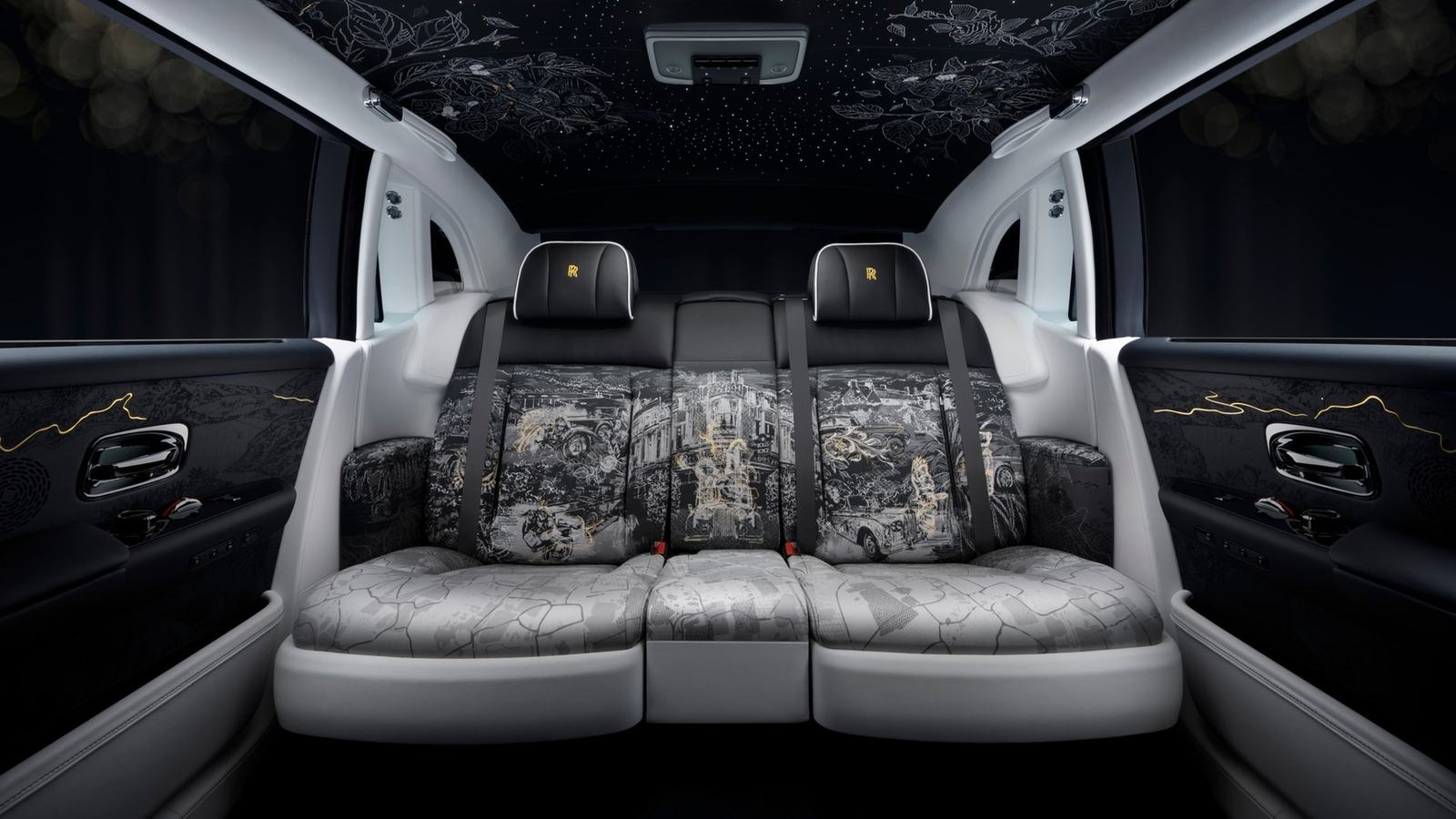
A closer look at Rolls-Royce's Phantom Centenary collection, first unveiled in October 2025, reveals how 25 cars transformed a century of design history into handmade interiors.
An anniversary collection turns engineering history into art
When Rolls-Royce revealed its Phantom Centenary Private Collection in October 2025, the undertaking was intended as a material record of one hundred years of its flagship nameplate. Only twenty-five cars formed the series, each using bespoke detailing to connect the current Phantom with designs, journeys and owners associated with earlier generations. As a craftsmanship retrospective, the project offers a revealing look at what modern coachbuilding can encompass.
The anniversary was a 2025 unveiling, not a new model launch in October 2026. Its continuing interest lies in the detail of the handmade interior and the investment of skill behind elements that might otherwise appear decorative. For collectors, a project of this kind also demonstrates how provenance can be deliberately created during manufacture instead of emerging only decades later.
Rear seats were treated as layered textile artworks
Rolls-Royce worked with a fashion atelier to develop rear-seat panels combining high-resolution printed fabric, hand-drawn imagery and golden embroidery. The project required roughly twelve months of experimentation with inks, surface finishes and stitching methods before the team could produce forty-five individually crafted panels with a consistent alignment and finish.
The result is far removed from choosing a standard leather colour for a luxury saloon. In this setting, the seat becomes a record of design decisions, archival references and human labour. That complexity creates future stewardship questions as well: cleaning, repair and conservation may require specialist attention to maintain the relationship between layered materials.
Woodwork charts a century of Phantom journeys
The door panels use Blackwood shaped through three-dimensional ink techniques, marquetry and twenty-four-carat gold leaf. The imagery evokes episodes in Phantom history, including travels between the French Riviera and English coast and a journey across Australia. Each panel functions both as furniture and as a historical composition viewed by the passenger at close range.
Such surfaces rely on painstaking alignment, controlled finishes and very careful placement of delicate materials. Rolls-Royce has described the work as among its most intricate wooden interiors. A collector assessing a bespoke vehicle should understand how these materials react to humidity, sunlight and ordinary use, since preserving extraordinary craftsmanship involves more than protecting exterior paint.
The cabin carries multiple references to early cars
The collection includes etched picnic-table portraits of the 1925 Phantom I and the contemporary Phantom VIII, along with a gallery of fifty interlaced aluminium fins inscribed with language recalling the model's history. The Starlight Headliner uses constellations and embroidery to introduce further references, including a mulberry tree associated with Henry Royce.
Even the front seats contain discreet motifs from the company's engineering past, including a seagull linked to an early Phantom prototype's codename. These details reward careful looking, but they also make the interior unusually dependent on documentation. A future owner may know what an element is only if the original design notes and archival explanations remain with the vehicle.
Rarity does not replace responsible stewardship
The exterior pairs a two-tone finish with gold accents, while each wheel design includes a twenty-five-line detail referencing the collection's twenty-five vehicles. Together, the elements make clear how the design team turned a numerical anniversary into an organised visual language rather than a simple plaque and special badge.
This retrospective is not a new availability announcement or a valuation of the cars. Anyone assessing a private collection of this complexity should consider the original build records, specialist servicing and preservation of delicate interior surfaces. The lasting achievement is the demonstration that historic storytelling, woodworking and textile art can be integrated into a functioning motor car.
Source
Rolls-Royce Motor Cars