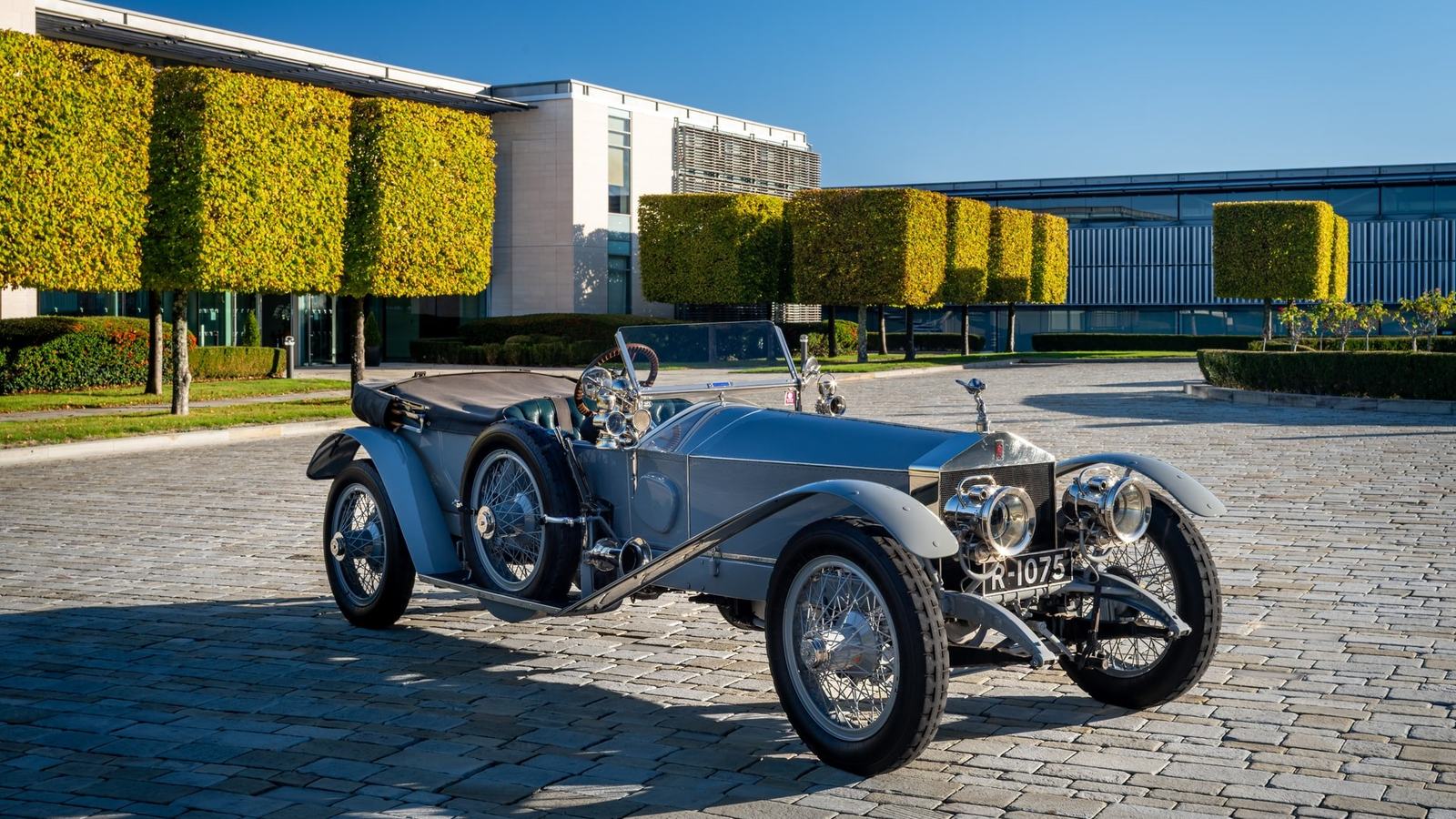
Rolls-Royce commemorates 120 years since its 40/50 H.P. became the Silver Ghost, revisiting the engineering and endurance records that shaped the marque.
An anniversary that begins with a motor car in 1906
Rolls-Royce Motor Cars is marking 120 years since the introduction of the 40/50 H.P. in 1906, the model that became known as the Silver Ghost. The company's 26 October 2026 heritage release revisits the way the car helped build a reputation for refinement, endurance and engineering quality. Its significance is not limited to the elegance of an early motor car: the Silver Ghost established expectations that would come to define how later Rolls-Royces were judged.
The anniversary is a historical commemoration rather than the launch of a new Silver Ghost model. The original 40/50 H.P. remained in production until 1925, a long period across which the specification and social context evolved. Collectors should distinguish surviving cars by chassis, coachwork and documented history instead of assuming that every example represents an identical configuration from the year in which the name first became famous.
Engineering ambition and Claude Johnson's vision
The company's account places Henry Royce's engineering discipline alongside the commercial and public vision of Claude Johnson. The aim was a car capable of quiet, dependable long-distance travel at a time when motoring could involve frequent mechanical interruption. That aspiration helped transform technical reliability into a central feature of luxury: comfort meant not only soft upholstery but also the confidence that a journey would be completed.
The reputation emerged from a combination of design, careful manufacture, testing and the experiences of actual owners. It would be misleading to credit it to a single publicity campaign or one component. Early motorists judged vehicles against very different road conditions, fuel availability and maintenance support from those familiar today. Understanding that context makes the Silver Ghost's achievements more impressive and the surviving cars' upkeep more demanding.
The 1911 London–Edinburgh Trial
A particular focus of the anniversary is 40/50 H.P. chassis 1701, associated with speed and fuel-efficiency achievements during the 1911 London–Edinburgh Trial. Rolls-Royce says the car is now displayed at the Home of Rolls-Royce at Goodwood. The reference to a specific chassis is important, as it allows a documented historical machine to stand for an era of development without claiming that every Silver Ghost participated in the same endurance tests.
The trial belonged to a period when long-distance motoring could be an engineering demonstration as much as a leisure pursuit. Fuel consumption, mechanical resilience and the ability to maintain speed over varied roads were practical measures of a car's achievement. Modern readers should avoid directly comparing historic results with today's fuel-economy cycles or safety expectations, which use different protocols, vehicles and driving conditions.
Why the Silver Ghost name endured
A successful engineering programme can become part of a marque's identity when owners and observers repeatedly connect it with a particular model. Rolls-Royce's release notes both the documented records and personal accounts from those who encountered the Silver Ghost. Together, these sources help explain how a car's reputation can outlive its production life, shaping what later customers expect from the badge even as propulsion and manufacturing technologies change.
The Silver Ghost is also a reminder that luxury is partly a relationship with time. A vehicle built more than a century ago cannot be maintained as though it were a modern daily driver, yet its workmanship and operating characteristics can still offer a distinctive pleasure when properly conserved. The interest of knowledgeable collectors lies in preserving original evidence while ensuring that the car can be operated safely under appropriate conditions.
Coachwork, provenance and originality
Surviving early Rolls-Royces can differ substantially because the chassis and its coachwork may have separate histories. A buyer must establish how much of an individual car remains original, whether major components were replaced and how clearly restorations have been documented. The model name alone cannot answer questions about authenticity, condition or the appropriateness of work carried out over several generations of ownership.
High-value collector cars benefit from detailed archives, professional inspections and a realistic plan for specialist servicing. Original finishes, period-correct fittings and a well-recorded ownership chain may all matter to a collector, but they need to be evaluated in context rather than reduced to a checklist. A restoration that improves usability may also change aspects of historical originality, and different owners can reasonably make different choices about that balance.
Goodwood as a place to encounter the heritage
The presence of chassis 1701 at the Home of Rolls-Royce brings the anniversary into a physical setting associated with the modern marque. Visitors and enthusiasts can use the story of the trial car to explore how engineering concepts developed during the early years influenced later expectations. The release identifies the display but does not promise unrestricted public access or permanent availability under every visiting arrangement.
Anyone planning a trip specifically to view the car should therefore verify current access procedures with Rolls-Royce or the relevant heritage team. A heritage collection may change displays or reserve access for invited guests, owners and particular occasions. The experience is most valuable when approached as an opportunity to understand an engineering lineage, rather than assuming that a historic chassis is simply another showroom vehicle available for inspection or purchase.
An old definition of a modern luxury principle
Contemporary luxury cars advertise advanced assistance systems, digital comfort functions and almost silent propulsion, yet the essential demands of their owners are not completely new. The Silver Ghost's story centres on confidence, refinement and the ability to travel without constant mechanical concern. Those qualities can remain recognisable even when the technology behind them is radically different from the six-cylinder engineering of the early twentieth century.
For owners who also spend time aboard large yachts, the parallel is clear without being literal. A superyacht's luxury depends on its quiet machinery, serviceable systems and crew's capacity to deliver a seamless journey, not solely on visible decoration. Both historic motoring and modern yachting demonstrate that engineering reliability supports comfort. The comparison is one of underlying philosophy, not a claim that a vintage car and a contemporary yacht share technical standards.
What the anniversary really celebrates
Rolls-Royce's October commemoration identifies the Silver Ghost as a foundational chapter in its history. The facts are well defined: the 40/50 H.P. appeared in 1906, the model remained in production until 1925, and chassis 1701 participated in the notable 1911 London–Edinburgh endurance story. Those details support a reflection on the marque's development without inventing a new edition, price or museum programme that the source has not announced.
The deeper attraction for collectors is the survival of mechanical objects capable of conveying the ambitions of their builders across generations. Preserving such a car demands patience, documents and skilled maintenance, while driving it requires an understanding of its era. One hundred and twenty years later, the Silver Ghost remains relevant because it helps explain why Rolls-Royce came to be associated with engineering as an essential ingredient of exceptional luxury.