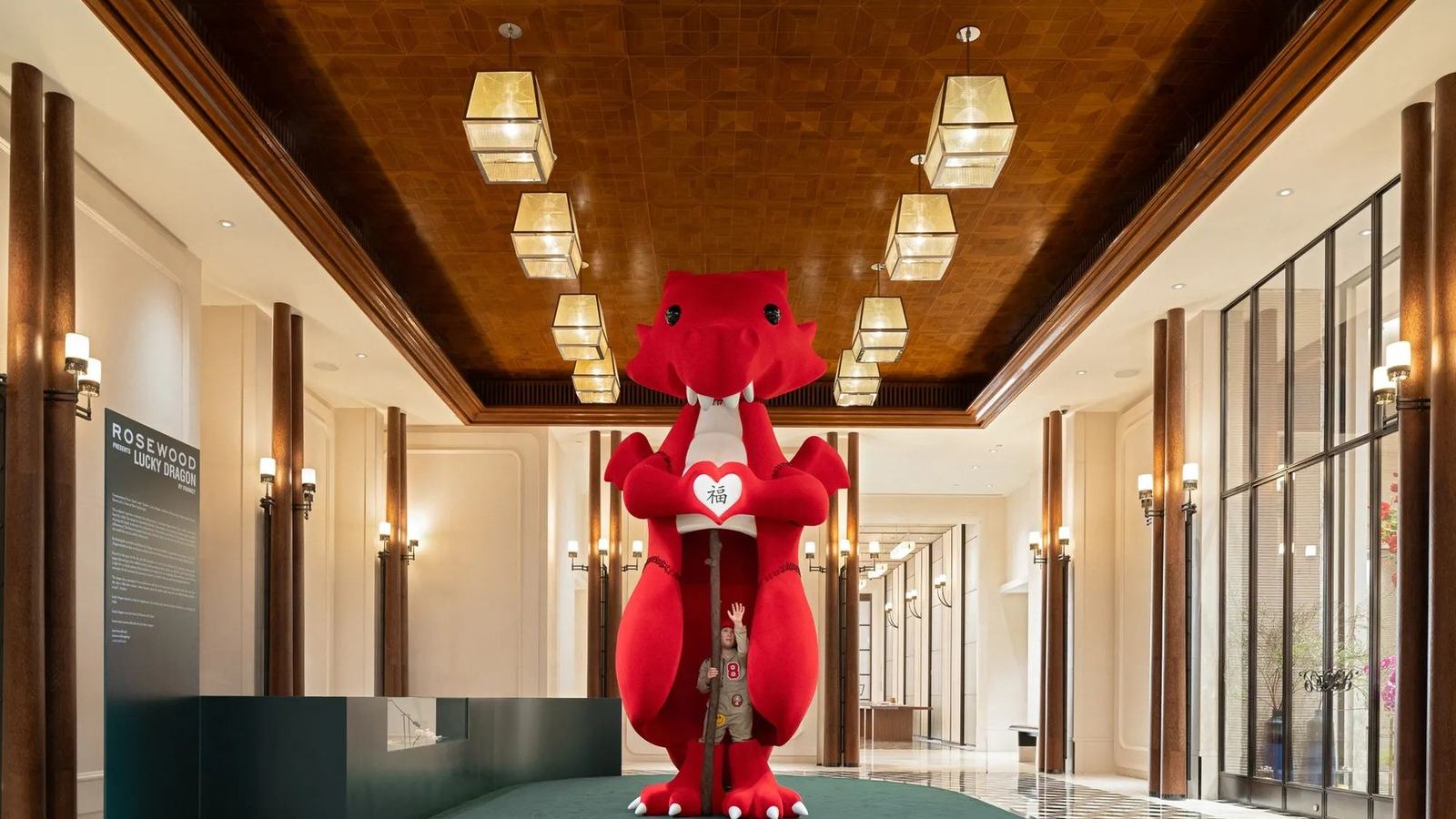
Rosewood Hong Kong's 2026 Art Month programme used contemporary installations and culinary encounters to explore joy, tradition and belonging across the city.
Art Month across the hotel
Rosewood Hong Kong's 2026 Art Month programme included a presentation called Lucky Dragon, using artistic and culinary experiences to explore questions of joy, belief and belonging. The programme was announced in March, with events scheduled between 10 March and 22 April.
The intention was to make a hotel into a cultural meeting place during a period when Hong Kong attracts collectors, gallery professionals and visitors interested in international art. Some activities were designed for staying guests, while others formed part of a broader calendar of creative encounters.
Heritage as a living subject
The title Lucky Dragon evokes symbols and narratives with long histories across Chinese cultural traditions. Contemporary artists can approach such imagery through new materials and perspectives, considering how familiar stories take on meaning for different generations.
A sensitive presentation should acknowledge that cultural symbols do not have a single universal interpretation. Their significance depends on context, and viewers benefit from learning why an artist has chosen a particular reference rather than assuming it is simply decorative.
A hotel offers a different type of audience
Visitors encountering an installation in a hotel may have arrived for dinner, a meeting or a short stay rather than an exhibition. That makes the experience different from visiting a specialist gallery, where audiences usually expect explanatory labels and an uninterrupted period of viewing.
An effective hospitality art programme can make creative work accessible without reducing it to background decoration. Opportunities to learn about the participating makers and the concepts behind their work can make an unexpected encounter more rewarding.
How culinary programming contributes
Rosewood's programme included experiences that connected food and artistic ideas. A thoughtfully designed meal can draw on the same local histories, textures and seasonal references as a visual artwork, creating a multi-sensory way to encounter a place.
Such a collaboration depends on the quality of the cooking as well as the concept. Strong service, accurate explanations and sensitivity to culinary traditions remain essential if a themed experience is to feel authentic rather than superficial.
Hong Kong as a collecting centre
Hong Kong's art market is supported by auctions, international galleries, fairs and private collections, many of which bring visitors to the city at the same time. Hotel exhibitions can offer a complementary programme that helps visitors connect between scheduled appointments.
For collectors, these experiences can be valuable introductions to artists or creative practices that fall outside their usual specialism. Any interest in acquiring work should still be followed by normal research into provenance, condition and the artist's broader record.
An example of cultural hospitality
Lucky Dragon's announced exhibition window ended in April 2026, so the programme should not be described as currently open in October. Its editorial relevance lies in the way a major hotel uses cultural events to create conversation between visitors and its local community.
The model demonstrates that luxury hospitality need not revolve solely around private amenities. It can also create spaces where unfamiliar ideas, artistic practices and cultural histories are shared with an international audience.