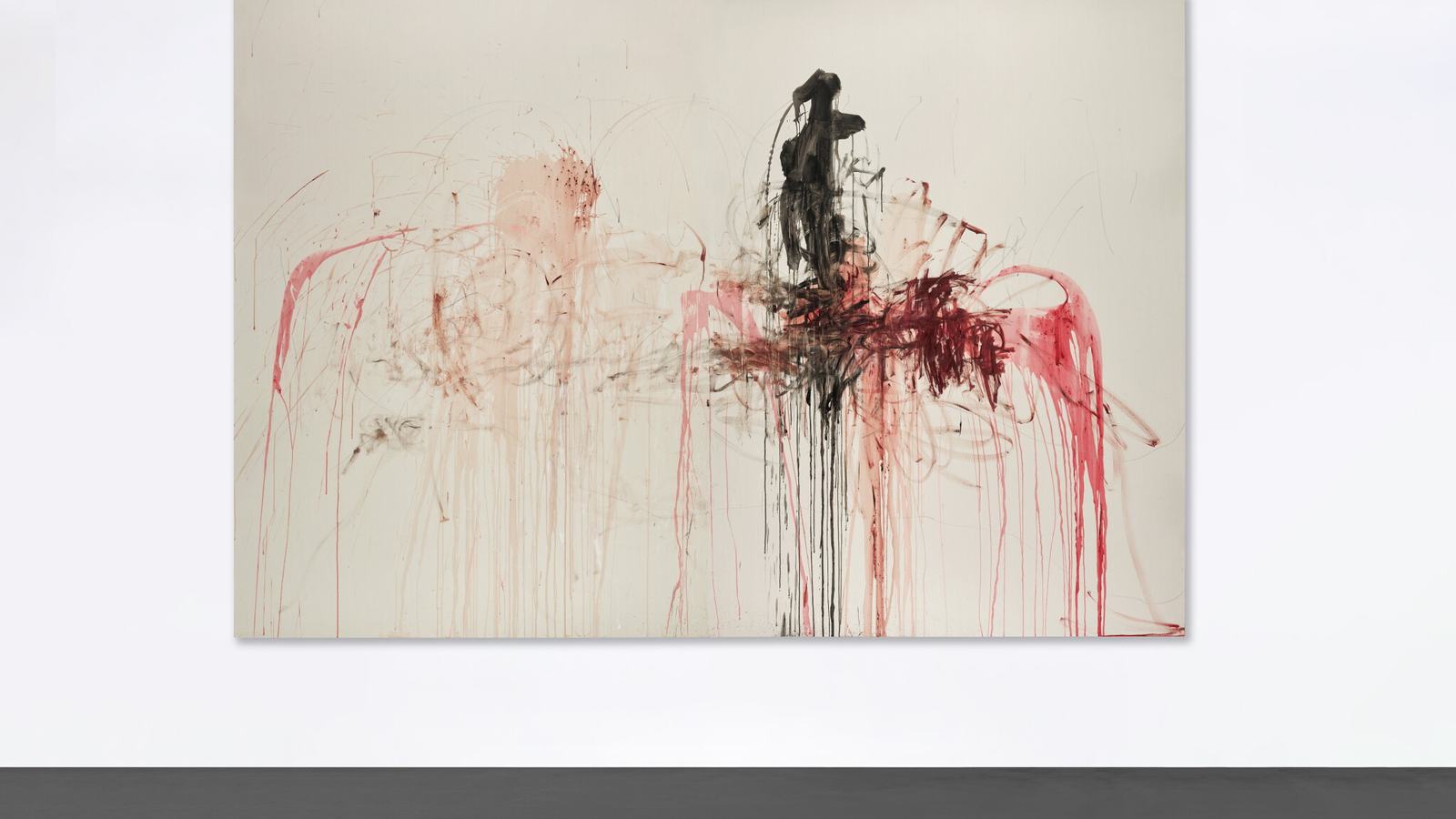
Sotheby's is offering Roy Lichtenstein's 1976 Entablature, a 12-foot-wide acrylic, sand and graphite canvas from the artist's estate, estimated at $700,000 to $1 million.
Scale can completely change the experience of collecting, and Roy Lichtenstein's Entablature is designed to dominate its setting. The 1976 canvas stretches more than twelve feet across, comes directly from the artist's estate and carries a Sotheby's estimate of $700,000 to $1 million.
The work is architectural in both subject and scale
Entablature measures roughly 140 by 366 centimetres and uses acrylic, sand and graphite on canvas. The wide horizontal format echoes the architectural source embedded in its title, turning decorative building language into a graphic field that occupies the viewer's physical space.
For a private owner, dimensions of this kind immediately shape the acquisition decision. The work needs a residence, gallery or other environment with enough wall length and viewing distance to allow the composition to operate as intended rather than simply fitting between existing furniture.
Direct estate provenance supports confidence
Sotheby's lists the provenance as the Estate of Roy Lichtenstein followed by descent to the present owner. That direct chain reduces the number of historical transactions a buyer needs to reconstruct and gives the work a clear connection to the artist's own holdings.
The painting is also documented in the Roy Lichtenstein catalogue raisonné. Together, those records create a strong documentary framework for long-term stewardship, insurance and any future loan to an institution or transfer between generations.
Exhibition history adds institutional context
The work appeared in the 1979 exhibition Mirrors and Entablatures at the Fine Arts Center Art Gallery of the State University of New York at Stony Brook. It was later shown by Paula Cooper Gallery in a 2011 exhibition devoted to Lichtenstein's Entablatures.
That history helps a collector understand the work as part of a defined series rather than an isolated object. Exhibition records can also guide curators and advisers when assessing how the painting has been interpreted publicly and where it sits within the artist's broader practice.
Large works demand ownership infrastructure
The $700,000 to $1 million estimate is only one part of the ownership proposition. A work more than twelve feet wide requires professional transport, appropriate access routes, secure storage options and careful planning if it is moved between homes or loaned for exhibitions.
Those requirements are familiar to ultra-high-net-worth collectors who already manage complex physical assets. The real luxury is not merely being able to acquire a major work, but having the space, staff and professional network required to preserve and display it properly over decades.
Official sources: www.sothebys.com.
Source
Sotheby's