The Ars in Campania exhibition in Reims continues until February 2027, bringing 22 artists together to explore the landscapes of Champagne.
Ruinart has extended its contemporary art programme beyond the autumn Art Basel Paris fair with an exhibition in Reims that is scheduled to remain open until 28 February 2027. The exhibition, Ars in Campania, opened at the Cellier on 24 October 2026 and brings together works by twenty-two artists represented in the champagne house's collection. Curated by Alice Audouin and presented by the City of Reims, the project examines the natural and human forces that have shaped the landscapes associated with Champagne.
The exhibition follows another element of the house's Conversations with Nature programme: a large-scale installation by Japanese artist Tadashi Kawamata at the Grand Palais in Paris. LVMH's official account of 29 October describes the two occasions as connected stages in a broader artistic initiative. For visitors considering a trip to Champagne this winter, the Reims exhibition offers an opportunity to encounter contemporary art in the region that provides the subject of the works, rather than solely through the setting of an international fair.
A collection organised around a landscape
The works assembled at the Cellier approach Champagne through a variety of perspectives. LVMH's announcement identifies Julian Charrière, Eva Jospin, Tomás Saraceno and Pascale Marthine Tayou among the participating artists. The selection considers aspects of the region's natural history, including the chalk associated with its geological past, and the environmental changes affecting its contemporary landscapes.
This provides a different way to consider a region often encountered by international travellers primarily through its wine estates, cellars and hospitality. A landscape can be viewed as a place of production, a source of cultural identity and a complex natural system. Art allows those perspectives to be placed alongside one another without necessarily adopting the language of agricultural or scientific reporting.
The announcement does not give a complete catalogue of every work on display. Visitors interested in the contribution of a particular artist should therefore consult the exhibition organiser for the current programme and details of the installation. The dates of the exhibition establish the intended period of presentation, but individual works and access arrangements may be subject to changes.
From the Grand Palais to Reims
At Art Basel Paris in October, Ruinart presented a monumental installation by Kawamata beneath the glass-covered exhibition space of the Grand Palais. The artist is known for employing recovered timber and furniture in constructions that transform the spaces they occupy. The company's account emphasises the change in scale and the temporary quality of these installations.
Such characteristics are relevant to collectors because they challenge some of the conventional assumptions about how works of art are encountered and preserved. A painting may normally be moved between exhibition spaces while maintaining the same dimensions and arrangement. An installation can be closely connected to the spatial conditions of its presentation, and its relationship to the surrounding architecture may be central to the experience of the work.
The appearance of Kawamata's project in Paris was part of the autumn fair and should not be mistaken for an ongoing exhibition at the Grand Palais. The current visitor opportunity described by LVMH is the separate collective exhibition in Reims, which continues the programme's examination of nature through a broader selection of artists.
Material, impermanence and the art of reuse
Kawamata's choice of reclaimed materials raises questions about the previous lives of the objects entering an artwork. A piece of timber may retain signs of earlier use, while elements of furniture can bring familiar proportions into an unfamiliar composition. Their relationship to the finished installation may be quite different from the role they served before being incorporated into it.
The use of recovered material does not automatically establish the overall environmental footprint of an artwork. Transportation, construction methods, installation and eventual dismantling also form part of its physical existence. The artistic significance of the material can nevertheless involve considerations beyond those of an object made entirely from newly produced components.
For a collector accustomed to acquiring singular works intended for long-term display, an ephemeral installation may introduce a different set of questions about ownership and documentation. It can be important to establish what constitutes the artwork, what role particular materials play and whether its installation in another location is contemplated by the artist. Those matters should be discussed with the relevant studio or gallery in the event of a potential acquisition.
A relationship between art and a luxury house
Conversations with Nature is described by LVMH as a programme through which Ruinart invites an artist to investigate the relationship between people and the environment. This form of patronage differs from merely displaying a work alongside a commercial product. A commission or creative collaboration can give artists access to a subject, place or institutional framework through which a new body of work may develop.
The connection with a luxury house does not determine the artistic interpretation of each participating work. The perspectives of the individual artists can differ from one another, even when they are brought together around a common theme. An exhibition curator can develop relationships between these perspectives through the choice and arrangement of work.
For visitors, it is useful to distinguish the house's communication about the programme from the actual experience of seeing the artworks. The published account establishes the involvement of the participants and the subject of the exhibition. It cannot replace the encounter with the individual objects or the curatorial information available at the venue.
Understanding the chalk beneath Champagne
The reference to chalk in the exhibition's thematic description connects the present-day region to a much older geological history. Sedimentary deposits associated with ancient marine environments form part of the distinctive physical setting of Champagne. Their relationship to the soils and landscape can provide a subject for artistic reflection as well as for the study of the region's viticulture.
An exhibition examining such a landscape can bring attention to timescales that extend far beyond those normally associated with production and consumption. The geological formation of a region, subsequent changes in its environment and contemporary agricultural activity involve very different periods. Artists may use materials, images or spatial arrangements to make aspects of those relationships visible.
The programme's reference to climate change adds a contemporary dimension to this discussion. The published description does not set out a scientific assessment of the region's future conditions, nor should the exhibition be understood as providing one. Its purpose is artistic, although the questions it raises may encourage visitors to consider the natural systems on which economic and cultural activities depend.
An autumn gastronomic collaboration in Paris
Alongside its participation in the Paris fair, Ruinart also arranged gastronomic experiences at Cheval Blanc Paris, pairing its wines with dishes developed for the occasion. The announcement places this collaboration within the same autumn programme rather than identifying it as a continuing winter offer.
The relationship between food, wine and visual art can appeal to travellers who want to approach a destination through several senses and disciplines. A restaurant may offer an experience shaped by service, ingredients and the surroundings in which the meal is presented, just as an exhibition can be influenced by its physical context.
For a guest visiting Reims after the Paris programme, however, it is important to distinguish the earlier dining arrangements from currently available experiences. Any proposal involving a private meal, cellar visit or tasting should be confirmed with the relevant provider. The October announcement does not establish that the Paris gastronomic programme can be reproduced at a later date in another setting.
Incorporating a museum visit into a private itinerary
The exhibition period extends across the winter, allowing travellers to consider it as part of a longer visit to Champagne or an excursion from elsewhere in France. A stay built around cultural interests may include architectural visits, contemporary art and time exploring the relationship between the city and the surrounding wine-producing landscape.
A private itinerary should allow adequate time for the exhibition and take account of the venue's published opening arrangements. The announcement does not specify the full visitor timetable, any admission fee or the possibility of private access. Those details need to be established through the City of Reims or the venue before the visit is arranged.
Visitors who also wish to explore the region's estates should confirm their availability independently. A cultural exhibition and a visit to a champagne house are separate activities, even when their subjects overlap. Planning them together can provide a more complete understanding of the setting without assuming that access to one includes access to the other.
Looking beyond the international art fair
The Reims presentation places work from a corporate art collection within a civic exhibition context. Its scheduled duration gives visitors substantially more time to engage with the programme than was available during the short autumn fair in Paris. It also brings a discussion about natural landscapes into the location with which the collection and its patron are closely associated.
For collectors of contemporary art and travellers interested in the cultural dimensions of luxury, the connection between the two exhibitions is worth noting. The large installation in Paris presented one aspect of the initiative, while the Reims exhibition brings the work of twenty-two artists into a wider conversation about the Champagne region. Ars in Campania is scheduled to continue until 28 February 2027. Future exhibitions and any opportunities to acquire individual artworks remain matters for the organisers and relevant galleries.
Primary source: LVMH official Ruinart feature, 29 October 2026.
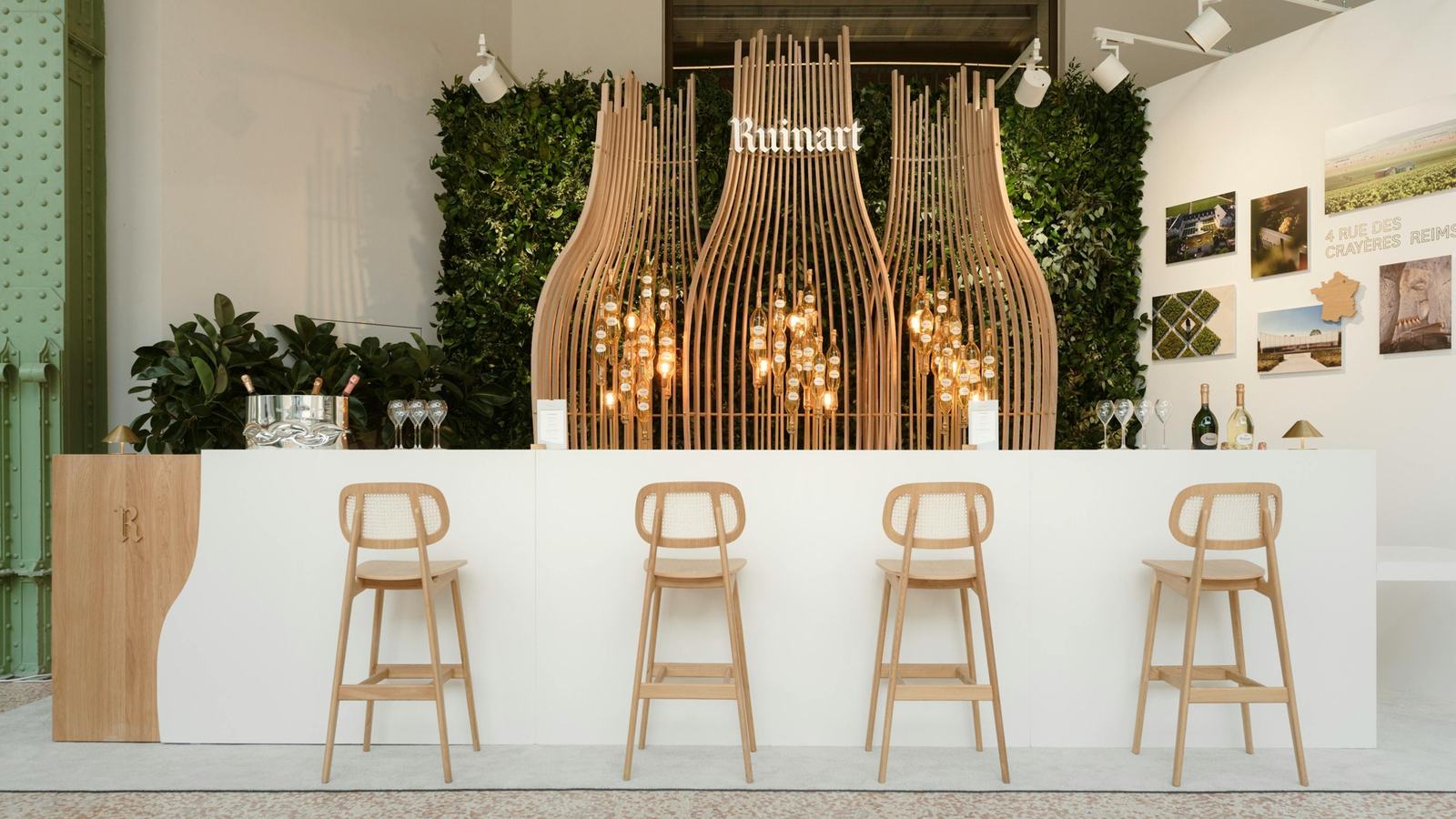
Photo: Ruinart / LVMH official editorial gallery, October 2026; earlier Paris programme, not a photograph of the Reims exhibition. Official source.
