Saint-Gaudens National Historical Park brings sculpture, studio practice, bronze memorials and landmark American gold-coin design into one rewarding New England cultural excursion.
A Sculptor's Landscape in New Hampshire
Saint-Gaudens National Historical Park in Cornish, New Hampshire, is an unusually revealing destination for anyone interested in American sculpture and collecting. The former home and workplace of Augustus Saint-Gaudens preserves the relationship between a celebrated artist, the objects he made and the environment in which those objects developed. For a superyacht owner whose interests extend to art, patronage or architectural craftsmanship, it offers substance beyond a conventional museum stop.
The setting is not a coastal arrival point, and it should be planned as an inland cultural excursion within a broader New England itinerary. That distance from a yacht berth is part of the value: the visitor leaves the rhythms of the marina behind and spends time considering how artists worked, collaborated and presented their achievements. The surrounding gardens and views also show how landscape could become an active part of a creative practice.
The National Park Service describes the property as an informal centre of the Cornish Colony of artists and preserves galleries, the sculptor's house and studio spaces. The grounds allow the works to be encountered at changing distances and in different light. Instead of passing from one isolated museum object to another, guests experience an entire setting shaped around art.
The Little Studio and the Making of a Monument
The Little Studio is central to understanding the sculptor's working method. The National Park Service explains that Saint-Gaudens adapted an earlier building when he first came to Cornish in 1885 and that a purpose-built studio, designed by George Fletcher Babb, replaced it in 1904. Its generous light and relationship with the grounds made it a space for the artist's own design and modelling.
That history is valuable because finished bronze can conceal the years of development behind it. A large public memorial begins with research, drawings, clay studies, models, revisions and decisions about scale and casting, none of which are apparent when it is seen from a city pavement. In the studio, visitors can begin to understand the distance between the first idea and a monument designed for a prominent urban setting.
The National Park Service notes that Saint-Gaudens worked with selected assistants as well as alone, while other studio staff used additional working spaces. The image of a completely solitary artistic genius misses the practical organisation required for major commissions. This has relevance for contemporary patrons and collectors, who often need to understand the distinction between an artist's hand, a studio's execution and later authorised editions.
Bronze Works, Public Memory and Careful Interpretation
Examples and recasts of major works around the park include tributes to Abraham Lincoln, Admiral David Glasgow Farragut and the 54th Massachusetts Regiment. These subjects are not simply demonstrations of modelling skill. They carry histories of military service, emancipation, public commemoration and the changing ways in which a society chooses to represent itself.
The memorial to the 54th Massachusetts is a particularly serious starting point for conversation, because its subject is a Black Civil War regiment and the people whose service challenged established racial hierarchies. A thoughtful visit asks not only how the relief was composed but also whose historical voice the work expresses. The park's interpretation helps bring human context to what could otherwise be admired only for technique.
The distinction between an original commission and a recast matters here. The park expressly identifies recasts among the works displayed on the grounds, so visitors should not assume every outdoor bronze is the first object installed at its historic location. For collectors, that nuance is familiar: edition, provenance, foundry, date, documentation and the artist's intentions can be as important as the surface beauty of a piece.
From Monumental Sculpture to Gold Coin Design
Saint-Gaudens also occupies a special place in the history of American coin design. At President Theodore Roosevelt's request, he developed designs for new gold denominations in the early twentieth century, including the ten-dollar Eagle and twenty-dollar Double Eagle. The National Park Service describes the work as a progression from drawings and clay reliefs to plaster models used in preparation for minting.
These coins connect fine sculpture to objects produced for circulation, yet their design language remains recognisably ambitious. Relief depth, edge treatment, readable lettering and the translation from a larger model into a small metal surface make coinage a demanding form of art and engineering. In this sense, a coin and a large bronze monument are different answers to a related problem of making form legible at scale.
The park's New Gallery includes examples of the gold coins and preliminary models, according to the National Park Service. That combination allows visitors to compare a finished numismatic object with evidence of how a design developed. Anyone interested in collecting coins should distinguish educational interpretation from investment guidance: the park experience explains artistic history, not the present market value or authenticity of a particular specimen.
Gardens, Galleries and the Cornish Colony
The estate's designed outdoor areas provide a transition between studio work and the larger natural landscape. Formal gardens and views towards Mount Ascutney were part of the visual life of the property, and seasonal colour changes the way bronze surfaces appear. Visitors who are attentive to light and composition may find the quieter outdoor settings as memorable as the galleries.
Saint-Gaudens' presence helped draw other artists and cultural figures to the Cornish area. The National Park Service describes the property as an informal focus of that community rather than a centrally planned artistic institution. This social dimension matters: inspiration came through conversations, friendships and a place where working artists could test ideas among their peers.
A considered itinerary can begin with the historic core and then move between the Little Studio, galleries, memorials and garden areas without attempting to photograph every object. Allow time to look at the same work from several positions. The movement of the viewer changes the reading of sculpture, particularly reliefs and compositions designed for a particular setting.
Planning a 2026 Art-Focused Shore Excursion
The park's 2026 seasonal guidance says the main buildings operate Thursday through Monday until 31 October, while the grounds remain open during daylight throughout the year. Seasonal access to Aspet, the historic house, depends on staffing and published hours. Confirm details close to the visit, as the availability of a studio interior should not be inferred from the broader opening of the grounds.
Guests can use the National Park Service's visit information, its guide to the historic core and the account of the coin designs to tailor their interests. The park also advertises ranger-led interpretation, including programmes about the meaning of its bronze monuments. It is worth checking the current programme calendar rather than relying on an old itinerary.
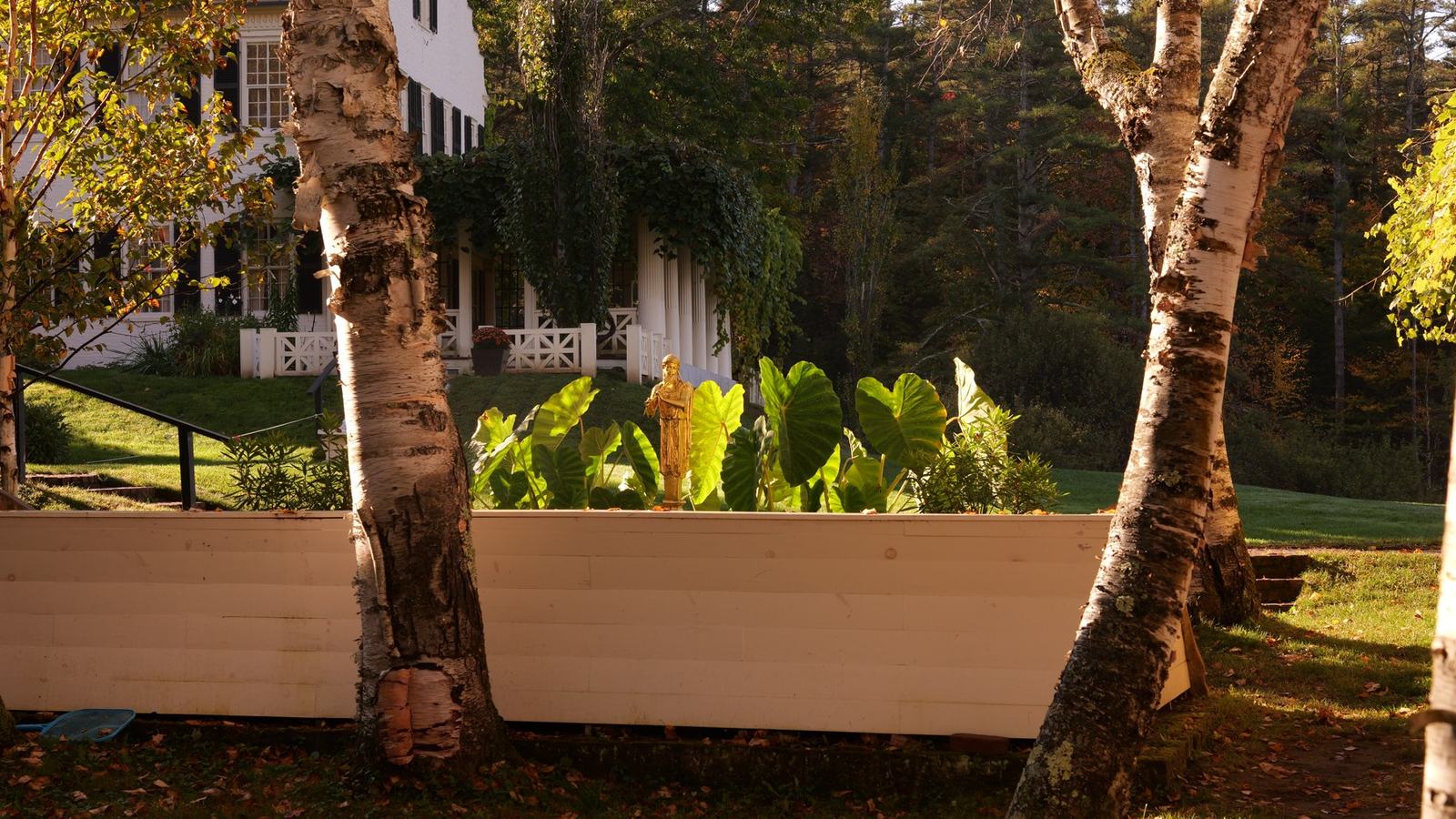
The official NPS photograph used with this feature shows sculpture within the park setting and is not a generated image. More importantly, the visit rewards the kind of attention that collecting at its best requires: observation, provenance questions, respect for historical context and a willingness to reconsider a work after learning how it was made. It is a different kind of luxury experience, measured in understanding rather than exclusivity.