An original expedition guide to Sitka's complex island coast, official large-yacht moorage arrangements, Kiks.ádi Tlingit heritage and responsible wildlife viewing.
Sitka Sound: a northern Pacific yacht arrival
Sitka occupies a striking position on the outer coast of Southeast Alaska, with the island landscape of Baranof Island rising behind a network of islands, passages and working harbors. For a capable expedition superyacht, the appeal lies in the contrast between a sophisticated base on board and a shore that feels unmistakably Alaskan. Forest, sea, traditional culture and maritime history all sit close together, yet the weather can make apparently short excursions genuinely demanding. A Sitka itinerary is therefore best designed around good decisions rather than a fixed sequence of scenic stops.
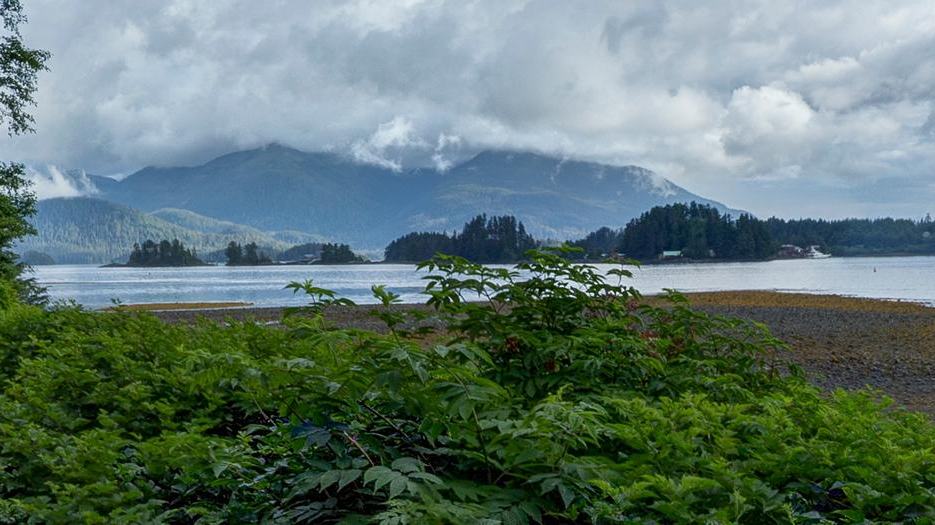
The first view of the coast can be an unforgettable part of the journey, particularly when low cloud lifts from the mountains and the islands beyond the approach come into focus. It would be a mistake, however, to treat the protected appearance of a harbor photograph as evidence of benign sea conditions. Swell from the Gulf of Alaska, local winds, kelp, reefs and changing visibility all deserve serious attention. The captain should plan the approach using current charts, notices and a forecast tailored to the relevant waters, with conservative arrival margins.
Sitka is also different from a purpose-built luxury resort harbor. Fishing vessels, floatplanes, tour boats and public infrastructure share a living waterfront where professional courtesy matters. The best owner experience begins with arrangements made discreetly in advance, correct radio procedure and realistic expectations about alongside space. Guests are then free to experience the town as a real coastal community rather than a theatrical backdrop for an expedition photograph.
Moorage, provisions and the Sitka harbor system
The City and Borough of Sitka Harbor Department says it operates Crescent, Sealing Cove, ANB, Thomsen and Eliason harbors, with facilities serving commercial, recreational and charter craft. Its separate Port Facility, commonly called the City Wall, is described as accommodating larger vessels. That does not mean a yacht can arrive and claim a section of quay: a skipper must confirm berth eligibility, current availability, draft limits, manoeuvring room and service arrangements directly with the city. The appropriate solution for a large yacht may be a confirmed shoreside berth, a properly surveyed anchorage or a combination of yacht and tender transfers.
The city's harbor regulations explain that transient moorage is assigned by harbor personnel when a vessel arrives and that visiting vessels need to register with the harbormaster. The captain should discuss arrival plans early, maintain a working radio watch and avoid assuming that another boat's vacant stall is available. The harbor also offers water and other basic visitor services, but the expedition team should verify current utilities, waste arrangements and deliveries before the yacht enters port. For an owner-hosted voyage, practical logistics arranged invisibly are part of the luxury.
Sitka makes a useful transition between shipboard life and a working town. Supplies, fresh provisions, local transport and guide arrangements can be coordinated while the vessel remains in a secure location. It is sensible to preserve enough spare time for a shift in weather or delayed delivery instead of booking every tender movement to the minute. A well-managed harbor call also gives the crew an opportunity to inspect small craft, refuel responsibly and prepare for the more exposed passages that lie outside the island shelter.
The Tlingit coast and the National Historical Park
Sitka National Historical Park is an essential shore visit because it tells a story far older and more complex than the arrival of the modern yacht. The National Park Service describes the park as the site of conflict between Indigenous Kiks.ádi Tlingit people and Russian traders, and explains the importance of the preserved landscape to cultural memory. A visit should begin with that context rather than treating the waterfront and totem poles as decorative attractions. The coastal trail, cultural exhibits and nearby historic sites can turn an attractive afternoon walk into the most memorable educational experience of the voyage.
Visitors can explore the park's totem pole collection and, when access is offered, learn more about the Russian Bishop's House and the wider period of Russian colonial history. The park's official resources emphasise contemporary Tlingit culture as well as the past, a distinction worth maintaining when planning an interpretation-focused excursion. A local guide or a ranger-led activity may offer useful context, but programme schedules change. The yacht's concierge team should check availability and accessibility instead of promising an experience that is seasonal or already fully booked.
The shoreline around the park shows why Sitka offers more than an architectural heritage stop. The forest meets the intertidal zone, with views across the sound and an environment shaped by tides, shore ecology and the weather. Guests can return to a comfortable yacht with a stronger understanding of the country around them. Good photography is welcome; respectful engagement with the place, its custodians and its environmental rules is more important than collecting a photograph at every landmark.
Wildlife excursions without disturbing the habitat
Bird life, seals, sea lions and occasionally whales can enrich a passage through the surrounding waters, but wildlife viewing needs an ethical frame. The nearby Alaska Maritime National Wildlife Refuge protects important marine and island habitats, and its visitor information should guide any proposed trip toward a seabird colony or sensitive shore. An island that looks like an inviting tender landing from a distance may be an important nesting place or a location with restricted access. Observation from the vessel, at an appropriate distance, can often deliver a richer experience than unnecessary landings.
The captain and expedition guide should plan wildlife activity around the animals rather than instructing the tender to chase a sighting. Slow approaches, a stable observation position and a willingness to move away when behaviour changes all support more responsible encounters. In any whale area the bridge team must use the relevant approach distances and navigation requirements, maintain a reliable lookout and account for the risk of a whale surfacing unexpectedly. Good hospitality here means helping guests witness an environment while leaving its rhythms undisturbed.
Small craft are particularly useful when moving along a complex coastline, but tenders have different limits from the mother ship. A tender used for filming or viewing needs reliable communications, adequate fuel reserves, a clearly agreed return time and suitable survival equipment. Cold water can make a routine transfer serious very quickly. A crew that can cancel an attractive photo excursion without negotiation has made the right investment in the owner's experience.
Designing a flexible expedition through Southeast Alaska
Sitka can be a destination in its own right or a carefully chosen stop on a longer Alaska itinerary. Connections toward the inside passages, the islands of the Alexander Archipelago and other Southeast Alaska communities offer very different operating conditions from the exposed Pacific approaches. Routes that appear direct on a small-scale map may involve tidal streams, narrow passages, fog, floating timber and limited safe shelter. A vessel's draft, air draft and manoeuvring characteristics have to shape the itinerary before anyone chooses a guest landing.
The National Weather Service Juneau forecast office provides marine forecast products relevant to Southeast Alaska. A captain should use current forecast zones and warnings, combined with local navigation information and the vessel's own observations; an old promotional itinerary has no authority over today's conditions. It is wise to identify more than one safe stopping option and to let the guests know that the route may move with the weather. A relaxed day discovering Sitka itself can be a better decision than fighting uncomfortable conditions to meet a distant reservation.
There is also a compelling argument for travelling more slowly. An owner may enjoy watching working boats leave in the morning, visiting a museum or arranging a seafood-focused meal while the crew prepares a later departure. The luxury is not measured by the number of miles covered but by how much attention the yacht can devote to the place. Expedition travel becomes richer when the programme deliberately leaves room for the unexpected: a clear view across the mountains, changing birds along the coast or a conversation with a knowledgeable local guide.
Practical preparation for an enjoyable Sitka yacht visit
Before arrival, the yacht's team should confirm its intended moorage with Sitka Harbor Department and verify whether port access, immigration or other arrival formalities apply to the voyage's actual route and flag. The bridge should be working from current hydrographic products and official navigation notices; the deck team should confirm fendering, shore connections and tender launching arrangements. Guests need appropriate clothing for coastal Alaska even when the forecast is favourable. Waterproof outer layers, footwear with dependable grip and the option of remaining comfortably on board all improve the experience.
Shore appointments deserve the same care as navigation. The National Historical Park has its own operating information and guided activities; cultural interpretation, private transfers and wilderness excursions should be confirmed through legitimate local providers. Sensitive places are not improved by a larger group or by a more elaborate photo opportunity. A small party with time to listen will often enjoy a deeper visit than a tightly timed series of stops. Food and hospitality on the yacht can then reflect the local setting without pretending that a working fishing port is a private beach club.
Ultimately, Sitka offers something rare in luxury cruising: an expedition destination with serious maritime character and remarkable access to cultural history. Its harbors are real, the sea demands respect and the wildlife belongs to its habitat rather than to an itinerary. For a well-equipped superyacht with a disciplined crew, those conditions are part of the attraction. The most satisfying voyage will be the one that leaves time for the scenery, treats people and nature with respect and remains ready to change course when the coast asks it to.