An ultra-luxury Baa Atoll island guide focused on Soneva Fushi's private villas, culinary variety, marine conservation and realistic superyacht transfer planning.
A private-island interlude in Baa Atoll
Soneva Fushi presents a distinctive proposition for superyacht owners visiting the Maldives: the opportunity to exchange the independence of a vessel for a deeply private tropical residence without abandoning an ocean-focused itinerary. Situated in Baa Atoll, the resort describes jungle villas and overwater retreats that place guests beside the reef rather than inside a conventional high-rise hospitality complex.
The choice is especially relevant when a cruising party wants several days together ashore. Large private villas can accommodate family members who prefer a stable base while other guests continue diving or exploring from the yacht. Soneva promotes signature accommodation with up to eleven bedrooms, giving organisers options for multigenerational groups that cannot be matched by a typical hotel suite.
That flexibility does not automatically mean a superyacht can anchor beside a villa or berth directly at the island. The captain and local agent must establish permitted approaches, protected marine zones, tender arrangements and transfer procedures with the resort before finalising the itinerary. Environmental restrictions are part of the destination, and luxury travel works best when they are treated as conditions to respect rather than obstacles to ignore.
Space, architecture and the value of privacy
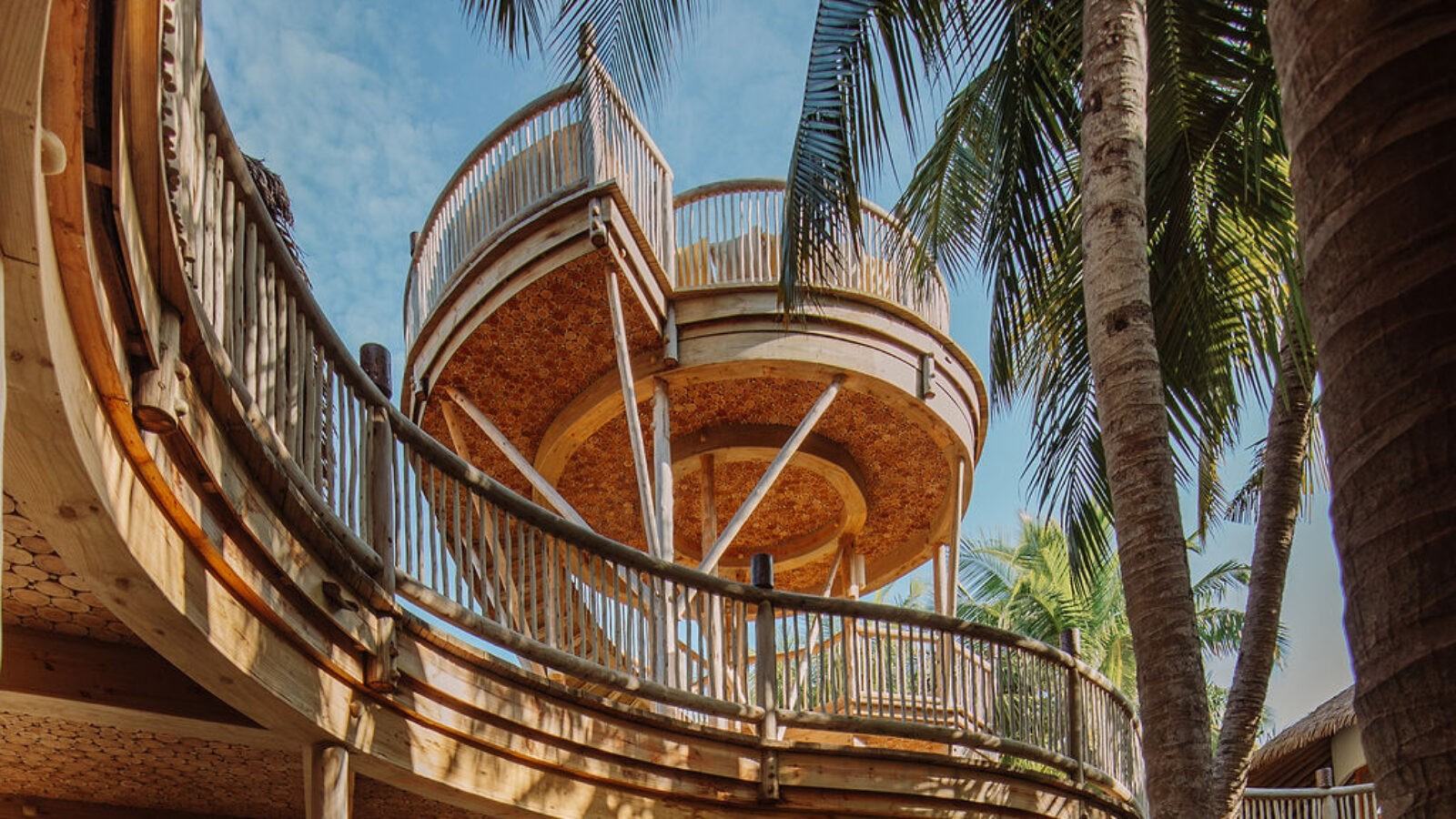
Soneva Fushi's beach residences are placed within the island's vegetation, with outdoor living areas opening toward sand and sea. The brand also offers overwater villas with broad decks and retractable-roof elements, giving different groups distinct relationships with the setting. A party centred on young children may prefer direct beach access, while couples could be drawn to the greater separation of an overwater retreat.
Among the resort's larger offerings, villa layouts provide space for several generations to meet without sharing every room. For superyacht families this is important: some guests may be comfortable sleeping aboard, while others value a dedicated bedroom, a private pool or easier access to land-based activities. A combination stay can be designed without assuming every member of the party has the same preferences.
Privacy is as much operational as architectural. Organisers should request detailed floorplans, guest access rules, staff arrangements and the degree of separation between buildings and shared paths. It is also worth discussing how outside visitors, security teams and personal staff are accommodated. An impressive villa photograph says little about those details, yet they determine whether a high-profile group can unwind.
Dining that goes beyond the expected
Soneva describes more than a dozen culinary options, including meals among the treetops and experiences shaped around the island's natural setting. The variety is attractive to a group staying for several days: menus and venues can change rather than reproducing a formal yacht dinner every evening. The resort also highlights its round-the-clock treat rooms, which add a more informal element to the food programme.
For owners who enjoy fine dining, the greatest value is usually a carefully arranged sequence of experiences rather than an attempt to sample everything. One night may suit a chef-led occasion for adults; another may be devoted to children, simple food and an early finish. Special dietary needs, wine expectations and accessibility should be discussed with the team directly, especially when the party includes guests of different ages.
A useful comparison with onboard dining is the freedom from provisioning and galley schedules. The yacht's chef and crew can concentrate on marine operations while guests experience a different kitchen and setting. That benefit only materialises if bookings are made in advance and any celebration, private venue or visiting-chef event is confirmed as available on the actual dates.
Conservation and underwater expectations
Soneva connects its resort identity to conservation, including the Aquaterra marine research and coral-regeneration work. This gives a potentially valuable educational dimension to a private-island stay for families interested in the ocean rather than simply spending time beside it. The company's Glass Studio and Maker's Place also link the visitor experience with reuse and creative work.
For yacht guests, the conservation theme should lead to practical questions. Which areas are open to guided snorkelling, what permissions are needed for diving, and how are tender routes separated from sensitive reef systems? The answers should come from current local regulations and qualified marine operators. An appealing photograph of a reef is not enough to determine where a vessel may safely operate.
Parents may find a guided, age-appropriate marine experience more memorable than another watersport session. This is particularly true when a resident expert can explain reef restoration, lagoon ecology and the limits of human intervention. Guests should distinguish educational programmes and conservation ambitions from verified scientific outcomes; the former are meaningful experiences without needing inflated claims about the latter.
Astronomy, wellbeing and island rhythm
Soneva Fushi promotes astronomical experiences at its observatory with a resident astronomer, a welcome contrast to the daytime emphasis on sea and beach. For children and adults alike, viewing the night sky away from a major city can be an absorbing part of a longer stay. The specific programme, weather conditions and telescope availability should be verified for the proposed dates.
The resort also stages visits by guest experts in fields such as cuisine, sport and wellbeing. These rotating experiences are a reason to check its current calendar rather than assume that a particular personality or class is always offered. A superyacht trip can be built around a planned event, but the owner's schedule may be more flexible if the stay is anchored by permanent facilities and selected private experiences.
Even with extensive programming, the island's greatest attraction may be its pace. A group can separate for a morning and reunite for dinner without long vehicle transfers or constant itinerary changes. That rhythm is especially useful after several days at sea, when some guests want activity and others want stillness. The practical challenge is to leave enough unscheduled time for the resort to feel like a retreat.
Planning an exceptionally well-run yacht-linked stay
Before confirming accommodation, the captain and guest-services team should identify the yacht's intended location, authorised marine movements, weather alternatives and luggage-transfer plan. The Maldives is an island geography with meaningful distances and environmental sensitivities. Seamless service for guests depends on resolving those questions before anyone boards a tender, not after they arrive near the resort.
The hotel's reservations team should separately confirm villa staffing, meal reservations, activities and any requirements for private security or additional personal staff. A large villa may offer generous bedroom numbers but still have operational limits on events and visitors. The entire party should receive clear joining instructions and an agreed point of contact for changes in the day's programme.
All resort descriptions here are based on Soneva's official Fushi pages, including its villa, dining and conservation information. Villa inventory and experiences can change, and neither public material nor this article establishes permission for a particular superyacht to anchor near the island. With that distinction understood, Soneva Fushi can become a rare high-value complement to a carefully planned Indian Ocean voyage.
Source
Soneva