Sotheby's schedules a Geneva Fine Watches auction and Mandarin Oriental exhibition, bringing Patek Philippe, Rolex, Cartier and independents into one sale.
Geneva's autumn watch calendar comes into focus
Sotheby’s has scheduled its next Geneva Fine Watches sale for 27 October to 10 November 2026, bringing a selection of established and independent watchmaking names together in one autumn programme. The auction house identifies Patek Philippe, Rolex, Audemars Piguet, Vacheron Constantin and Cartier among the makers represented in its presentation. Independent brands also form part of the offering, a distinction that matters to collectors whose interests extend beyond the biggest names.
The sale is timed for Geneva, a city whose horological specialists, manufacturers and international clients already make it a natural gathering point for serious collecting. In its published sale information, Sotheby’s lists a public exhibition from 5 to 10 November at the Mandarin Oriental, Quai Turrettini 1, with viewing hours of 10am to 6pm. Prospective bidders should verify appointment arrangements and any changes directly with the auction house.
These announced dates describe the auction window and exhibition rather than a promise that every watch will be available for handling throughout the period. Collectors making plans from elsewhere in Europe or from a yacht itinerary should allow time for advance enquiries and condition review. Relying on a single photographed catalogue page rarely supplies the information needed for a major acquisition.
The attraction of several watchmaking traditions
Patek Philippe and Vacheron Constantin draw interest from collectors of complicated and classically constructed mechanical watches, while Rolex is associated with a different tradition of everyday durability and recognisable design. Audemars Piguet brings another perspective through its sport-luxury and complicated pieces, and Cartier occupies a distinctive place where case design and jewellery-making history intersect. A sale combining these houses is therefore not one market with one set of buying criteria.
Sotheby’s also points to leading independent watchmakers in its Geneva selection, reflecting the importance of smaller workshops to knowledgeable collectors. An independent piece may appeal for its movement architecture, finishing, production history or the designer’s individual approach rather than solely for brand familiarity. Because output and support arrangements vary widely, buyers need to research the specific maker and reference before bidding.
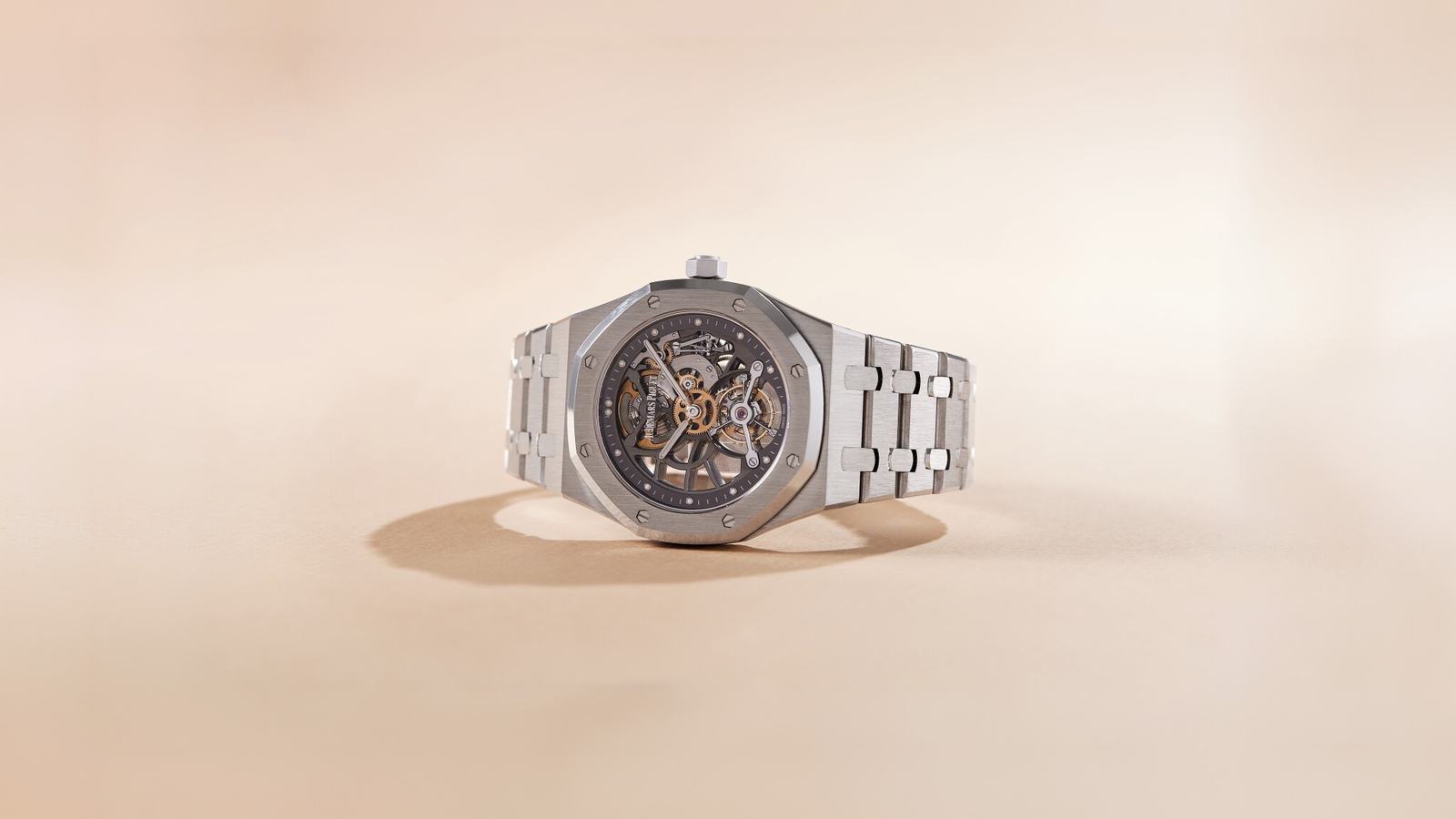
One of the pieces illustrated in the auction presentation is a platinum skeletonised Royal Oak Tourbillon created for the model’s fortieth anniversary, reference 26511PT.OO.1220PT.01, dated circa 2012. Its inclusion in the published material offers a concrete example of the technical and aesthetic interests represented. It should not be treated as evidence of an estimate or final sale price unless Sotheby’s provides those figures in a particular lot listing.
Condition can matter more than a compelling photograph
The first serious question for a collector is usually whether an object is what the listing says it is, followed closely by how it has been kept. Original components, refinishing, replacement dials or hands and the completeness of accompanying documentation can all influence a watch’s appeal. A clean-looking photograph cannot settle those questions, especially with vintage pieces whose histories may be complicated.
Service records also deserve careful assessment because a recently serviced movement is not automatically the same as one retaining all historically appropriate parts. Manufacturer documentation, independent expertise and an auction house’s own condition report serve different purposes, and buyers should understand the limits of each. Sotheby’s offers specialist contacts and sale enquiries, which are the appropriate route for obtaining item-specific information.
Collectors who intend to wear a watch while travelling at sea will also weigh practicality against rarity. Water resistance, case condition and availability of appropriate servicing are individual technical questions, not assumptions that follow from a luxury brand name. A rare complicated piece may be better suited to a controlled collection environment than frequent exposure to salt, impact and humidity.
Exhibition viewing and a considered bidding strategy
The Mandarin Oriental exhibition gives buyers an opportunity to move beyond digital imagery and assess scale, legibility and finishing directly. That can be especially useful when comparing watches from different eras and makers, where nominal case dimensions tell only part of the story. Viewing also makes it easier to identify which additional reports or questions warrant specialist follow-up before the auction closes.
Sotheby’s states that consignments are being accepted and invites owners to request a complimentary valuation through its watch specialists or online portal. That means the published sale description should be treated as a current programme rather than a guarantee that its eventual full catalogue will remain unchanged. Collectors should confirm the final lot list, bidding conditions, buyer’s premium and payment procedures before placing offers.
International buyers need to consider the full landed cost of a purchase rather than only the winning bid. Applicable taxes, import rules, insurance and secure transport can differ according to the buyer’s circumstances and the object’s destination. A Geneva purchase intended for a residence, storage facility or superyacht should be planned with those obligations in mind, rather than treated as a simple retail transaction.
Why the autumn programme matters to yacht owners
For owners accustomed to commissioning individual yacht interiors and maintaining collections in several locations, mechanical watches are another discipline in which personal taste meets specialist craftsmanship. Yet the auction environment is distinct from ordering a bespoke object: the buyer is assessing an existing article with a particular history, specification and condition. Competition does not diminish the need to choose carefully.
The value of this Geneva event lies in the ability to compare several approaches to high-end horology within a focused exhibition and sale calendar. The key verified facts are the 27 October–10 November auction dates, the 5–10 November viewing at the Mandarin Oriental and the mix of watchmaking names identified by Sotheby’s. Estimates, availability and the outcome of individual bids should be checked against the final catalogue, not inferred before the sale.
Source
Sotheby's