Sotheby’s 30 October Hong Kong Chinese Art auction features 88 lots, including Ming and Qing ceramics, imperial vases and historic sculptural works.
A separate October sale for Chinese decorative arts
Sotheby’s Hong Kong has scheduled its Chinese Art auction for 30 October 2026, with a published catalogue of 88 lots spanning ceramics, works of art and historic decorative objects. The auction forms a separate offering from the house’s Possessing the Past event, held in the same city that day.
The sale concentrates on highly specialised categories of material, particularly imperial and earlier Chinese ceramics whose value can depend on subtle differences in glaze, kiln production, reign marks and physical condition. For collectors exploring a new area, these distinctions can be harder to evaluate than familiar signatures or dates on Western paintings.
Bidding information and the detailed lot catalogue are available from the auction house, including a programme of advance exhibitions at the Hong Kong Maison. The presence of an object in a prestigious auction is not itself evidence that every aspect of attribution has been independently established.
Imperial porcelain from successive dynasties
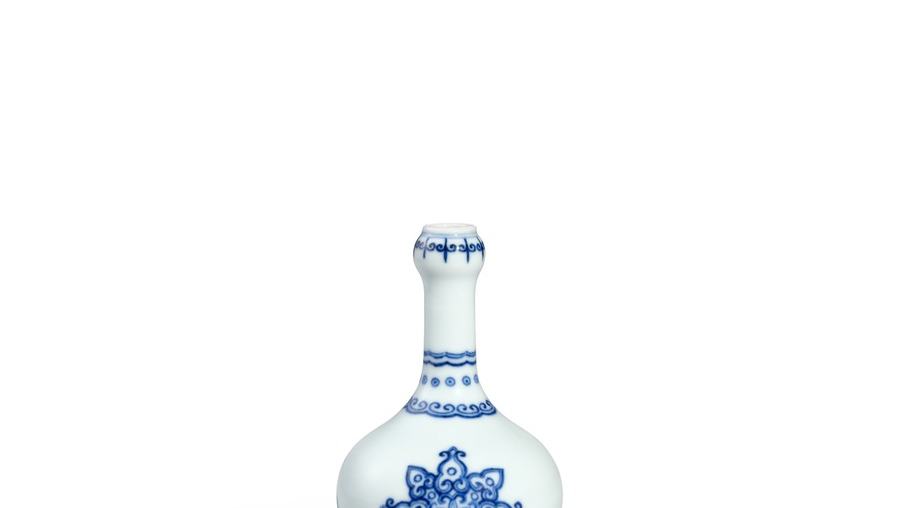
Among the catalogue entries is a miniature blue-and-white lotus-pattern garlic-mouth vase described as bearing a Yongzheng-period mark, as well as a celadon-glazed narcissus bowl in imitation of Ru ware. These pieces illustrate the long history of collecting earlier Chinese ceramic traditions and adapting them for later imperial workshops.
A pair of Kangxi-period wucai dragon-and-phoenix bowls appears alongside an especially rare Xuande-marked blue-and-white lotus bowl and Qianlong-period vessels. Their decoration and forms point to different moments in the changing tastes of the imperial court.
The house also lists Jun-inspired glazes, famille-rose decoration and underglaze copper-red work, techniques that demand different kinds of expertise to authenticate and assess. Lot notes can guide the initial conversation, but buyers should study detailed photographs, written condition reports and any available examination history.
Exceptional works from the Ming and Yuan periods
The selection includes a Ming Yongle-period blue-and-white jar featuring a makara dragon motif, a subject combining ambitious ceramic production with striking decorative imagery. The catalogue also draws attention to a Yuan-dynasty blue-and-white fish jar, an object type important to understanding the development of large-scale cobalt-blue decoration.
Other entries include an early Ming Junyao flowerpot and a series of Qianlong-period wares, broadening the range beyond bowls and smaller scholar’s objects. Some pieces are large, complex or fragile, making physical storage and future conservation as consequential as the final hammer price.
For an owner considering prominent display of antique ceramics in a private home or on a yacht, environmental stability and secure installation matter. The motion and vibration experienced aboard a vessel can make permanent display of fragile historical material inappropriate without tailored specialist advice.
A technical market where condition matters greatly
Each lot will have its own bidding terms, estimate and condition documentation, and the catalogue does not establish the price it will eventually achieve. Comparison with other auction results requires close attention to restoration, dimensions, provenance, marks and the distinction between contemporary and later decoration.
International buyers should investigate cross-border movement rules and any permits before placing a bid, as requirements can differ for culturally significant or older objects. Packing, insurance and conservation planning may also be important for delicate pieces travelling between continents.
The 30 October sale provides a concentrated opportunity to examine a broad range of Chinese historical craftsmanship in one location. Its attraction for collectors is the chance to study individual examples and their scholarship, not an assumption that all items will follow the same pricing trend.
Source
Sotheby’s Hong Kong