Sotheby’s 30 October Hong Kong sale, Possessing the Past, offers 76 antiquities and scholar’s objects spanning Chinese dynastic and prehistoric periods.
A collecting history brought together in Hong Kong
Sotheby’s Hong Kong is preparing a dedicated auction entitled Possessing the Past for 30 October 2026, bringing together a selection of Chinese antiquities, scholar’s objects and historic decorative works. The published catalogue lists 76 lots, providing collectors with a focused view of objects that have passed through different cultural and private-collecting settings.
The event is not a museum exhibition or a report of completed transactions, and estimates or catalogue descriptions must not be mistaken for confirmed sale prices. Sotheby’s plans live bidding on 30 October, with its Hong Kong Maison presenting the material in advance.
The auction’s title refers to the changing meanings of historical objects as they move between their original circumstances, subsequent collections and the present market. For collectors accustomed to acquiring significant art or displaying pieces at a private residence or aboard a large yacht, those shifts in context can form part of the intellectual appeal.
Personal objects linked to Edward T. Chow
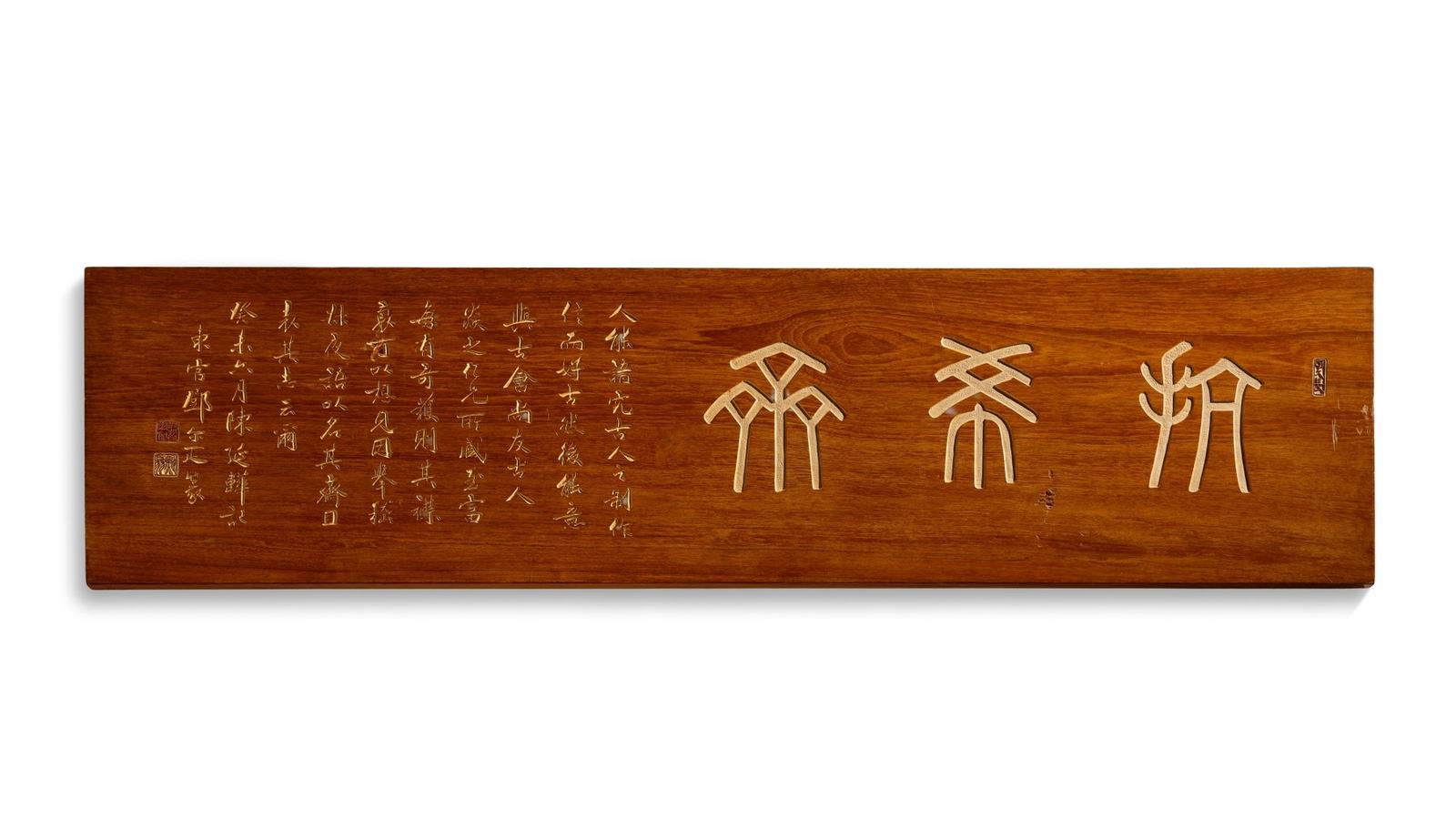
Among the opening lots is a hall-name plaque made for the renowned collector Edward T. Chow, with inscriptions attributed to Chen Hanguang and Deng Erya. The catalogue also includes a white and brown jade dragon seal later carved for Chow, and a so-called chicken-blood soapstone seal worked for him by Feng Kanghou in 1970.
Such objects are attractive for more than their materials, since inscriptions can connect a particular item to a named collector or episode in its history. Establishing exactly when marks were added, and distinguishing original manufacture from later personalisation, remains a specialised matter for provenance research.
Prospective bidders should study the auction-house condition reports and provenance information rather than assuming every historical association is confirmed to the same standard. Scholarly objects of this kind can combine genuine historical importance with complex questions of authorship and later use.
Jade, bronze and ceramics span different eras
The catalogue lists imperial white and russet jade associated with the Qianlong period, along with a Southern Song Guan cup and a Northern Song dragon-handled cup. The variety illustrates how materials and courtly taste changed over centuries while certain traditions of scholarship and display remained central.
One of the more historically ambitious entries is the Xi Zun, a late Shang-dynasty bronze ritual wine vessel with an inscription that the catalogue interprets as describing an offering banquet. The dating and translation are matters of archaeological and historical analysis rather than something that can be established by a photograph.
Other objects range from a Liangzhu-period jade cong to an imperial Songhua inkstone and carved lacquer. Those different categories attract specialist communities, and the criteria for judging condition, rarity and completeness can differ considerably from those used in the modern-art market.
Viewing and due diligence before bidding
Sotheby’s has scheduled the sale for 30 October in Hong Kong, following an exhibition period that lets registered visitors assess selected objects in person. Detailed viewing hours, registration terms and any reserve arrangements should be checked through the official auction page before making travel arrangements.
With ancient art, collectors should also investigate legal export and import requirements in the destination country, including restrictions that may apply to objects of archaeological interest. Acquisition due diligence is especially important where a piece has passed through multiple jurisdictions over an extended period.
This focused sale offers another entry point into Chinese historical collecting at a time when privately owned masterpieces are increasingly being interpreted through their ownership history. It gives buyers the chance to study a coherent group of objects, but responsible purchase decisions depend on the individual lot rather than the reputation of the catalogue as a whole.
Source
Sotheby’s Hong Kong