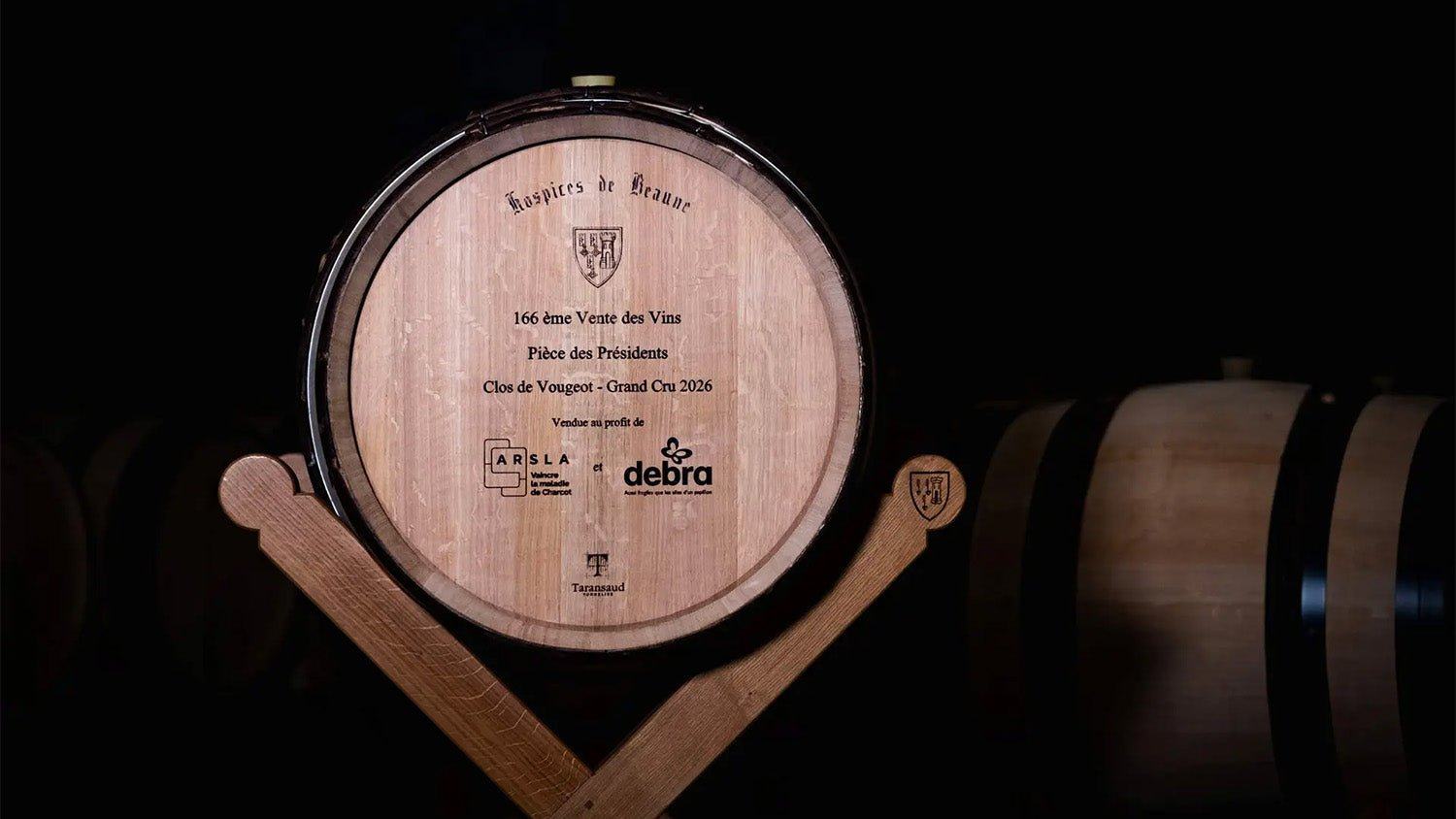
Sotheby's catalogue for the 166th Hospices de Beaune wine auction lists 450 lots ahead of the 15 November event, linking Burgundy barrel collecting with a historic charitable institution.
Wine collecting and philanthropy, 12 November 2026. The Hospices de Beaune auction is scheduled for 15 November. The published 450-lot catalogue is not a completed sale and no overall auction result is known at the time of this report.
Burgundy's historic charity sale approaches Sotheby's is preparing the 166th Hospices de Beaune wine auction, scheduled for 15 November 2026 in Burgundy, with an official catalogue displaying 450 lots. The sale is one of the region's best-known annual events, bringing together collectors, merchants and wine enthusiasts around wines associated with the Hospices de Beaune charitable institution. The distinction between an auction catalogue and a completed auction matters: the 450 figure refers to listed lots on the organiser's site, not 450 lots already sold, and no final revenue total has been established for this year's event. The auction's importance also cannot be measured only by price. For centuries the hospital institution has been associated with local healthcare and charitable provision, while its vineyards have become part of Burgundy's cultural identity. The modern annual sale links that history with international demand for fine wine and the personal involvement of those who purchase barrels or participate through specialist merchants.
An institution with roots in the fifteenth century The Hospices de Beaune traces its origins to 1443, when the Hôtel-Dieu was founded in the town of Beaune. The distinctive historic hospital building remains one of Burgundy's most recognisable architectural landmarks, but the institution's wine connection has developed through land donations and the long-term stewardship of vineyards. The modern auction is the 166th edition in an annual tradition rather than the 166th year of the hospital's existence. Keeping those histories separate is useful when understanding the event's ceremonial and economic importance. The sale is not an ordinary disposal of a private cellar. It is connected to a charitable institution whose identity reaches far beyond wine, and the proceeds and associated publicity have a wider context. Collectors may value the history as much as the eventual bottles, although their actual purchase must still be judged by the wine, its provenance and the terms of sale.
The auction catalogue contains a broad range of cuvées Sotheby's official listing includes wines labelled Beaune Premier Cru, Pommard Premier Cru, Volnay Premier Cru and other established Burgundy appellations. A cuvée name may honour an individual benefactor or a historical connection with the Hospices. The same wine name can appear repeatedly across the catalogue because separate lots represent separate units offered for bidding. Thus a figure such as 450 listed lots should not be confused with 450 different vineyards or 450 unique wine styles. Understanding the distinction is essential for buyers building a coherent collection. The catalogue's lot structure may allow a purchaser to pursue several units of a favourite cuvée, or a broader selection spanning different appellations. The quality and eventual drinking style will depend on vineyard, vintage conditions and subsequent maturation rather than the fact that multiple lots share the same label.
Barrel purchases create different ownership responsibilities The event is frequently associated with purchasing Burgundy while it is still in the barrel, before the final bottled wine becomes available to drink. For many clients, this is a different proposition from taking delivery of mature bottles at a conventional auction. The buyer may need arrangements for élevage, bottling, handling and eventual distribution through a négociant or other specialist. Exactly which services are covered by the price and which are separately charged should be established from the current auction's published terms and the chosen intermediary. A successful bid is only one step in a process extending well beyond auction day. Collectors accustomed to purchasing finished grand cru bottles may find the administrative and technical responsibilities unfamiliar. A competent wine adviser can help translate a barrel purchase into a realistic programme for storage, delivery and long-term enjoyment.
The 2026 vintage is still a developing wine Auctioned wines associated with the 2026 harvest are not ready-to-drink mature bottles. Their eventual character will be shaped by the quality of the fruit, winemaking decisions and the maturation that follows the sale. Early tastings can be informative, but they cannot establish how every bottle will perform after years in a cellar. Weather patterns, grape ripeness, acidity, tannin and the condition of barrels all form part of the discussion, but definitive claims require reliable observations from the relevant vintage. Sotheby's has published tasting-focused editorial material in advance of the event. Collectors should use that material as a starting point rather than as a guarantee of later quality. A wine's appeal may develop over time in ways that neither the highest bidder nor the most experienced critic can predict with certainty when the sale first takes place.
Beaune and Pommard illustrate the choice facing bidders Among the visible catalogue entries are Beaune Premier Cru cuvées such as Dames Hospitalières and Guigone de Salins, alongside Pommard Premier Cru and Volnay Premier Cru offerings. These are recognisable names within Burgundy's wine landscape, yet their differences are not reducible to a single hierarchy of price. Some buyers may favour a particular terroir; others may seek an annual sequence or an allocation with a family connection. The association of a cuvée with a historical figure can add narrative depth, but it should not displace an assessment of the wine's likely character and the terms under which it will be matured. For a collector planning a significant purchase, it is sensible to identify preferred appellations, the quantity needed and the expected holding period before bidding becomes competitive. A disciplined approach can preserve the pleasure of collecting without allowing the event's atmosphere to determine every commercial decision.
The charitable connection changes the setting A purchase at the Hospices de Beaune is inevitably different in character from buying a bottle solely for investment or consumption. The auction is associated with a long tradition of community benefit and the preservation of an institution recognised throughout Burgundy. Collectors may regard their involvement as support for that tradition, though their payment is still governed by the auction's commercial and legal conditions. It would be incorrect to assume that every component of a buyer's invoice is a tax-deductible donation in their home country. Such treatment depends on applicable law and the nature of the payment. International clients with charitable intentions should seek the relevant advice rather than take a general inference from the institution's status. The most meaningful participation may combine an appreciation of Burgundy with a genuine understanding of the cause and its history.
International bidders face practical decisions Sotheby's places the sale within its international auction operation, attracting interest from clients who may not live in France or have easy access to a Burgundy maturation facility. These buyers must plan for transport, storage, applicable taxes and documentation well in advance. Currency, payment deadlines and the identity of any merchant handling the wine can affect the overall cost. Because the wine may still be in the barrel, the process is not necessarily comparable to shipping a case of finished bottles from a bonded warehouse. Owners with multiple homes or yachts should consider where the wine will be preserved for its long maturation. Stable, specialist cellar storage is more appropriate than frequent movement or exposure to variable conditions aboard a vessel. The final experience will depend as much on careful stewardship after purchase as on the excitement of a successful bid.
Hospitality in Beaune offers another dimension Many wine collectors regard a visit to Beaune as part of the appeal. The town offers opportunities to explore its architecture, restaurants and relationships with the vineyards that give the region its reputation. Participation in the auction can be complemented by visits arranged with producers and specialist guides, subject to availability and any restrictions in force. A client seeking a quiet, private experience may prefer a smaller tasting rather than the most crowded part of the auction calendar. The event's ceremonial prominence can make hotel bookings and transport arrangements more demanding, but the official wine sale should not be confused with a guaranteed programme of private dinners or exclusive estate access. Those experiences need separate invitations or confirmed bookings. What the auction unquestionably supplies is a major focal point for Burgundy's annual international calendar.
Results will provide a different kind of market evidence Once the auction closes, realised prices can provide evidence about demand for particular lots and appellations in the 2026 vintage. Even then, interpretation will require caution. A high result might reflect competition for a specific cuvée, the event's charitable purpose, a special allocation or the preferences of a small number of bidders. It would not automatically prove that all Burgundy wine prices rose by the same percentage. Similarly, an auction total would need to be compared with the correct number and type of lots and with the terms under which those prices were recorded. At present, the published catalogue is a statement of what is offered, not what has been achieved. Readers interested in market analysis should look for Sotheby's formal post-sale results rather than infer a revenue figure from catalogue estimates or individual previews.
What is confirmed before the 15 November sale The 166th Hospices de Beaune wine auction is scheduled for 15 November 2026 and is presented by Sotheby's with 450 lots visible in its official catalogue. It includes a broad range of Burgundy wines, with repeated lots of named premier cru cuvées and an emphasis on the connection between collecting and a historic charitable institution. The sale has not yet concluded as of this report. No final aggregate revenue or list of successful bidders is available in the source used here. For wealthy collectors, the opportunity is to participate in an established Burgundy tradition while acquiring wines that require patient management after purchase. The most responsible approach is to understand the particular cuvées and bidding terms, and then attend to élevage, storage and eventual delivery with the same care given to the purchase itself. The next definitive milestone will be Sotheby's post-auction outcome.
Primary source: Sotheby's, 2026 official 166th Hospices de Beaune auction catalogue, closing 15 November.