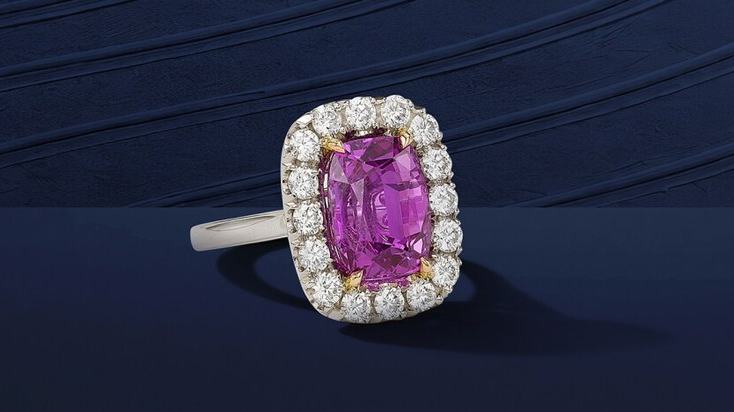
Sotheby's London Fine Jewelry auction runs from 12 to 25 November 2026, bringing pieces by Cartier, Van Cleef & Arpels and Bulgari alongside antique gems and period jewellery.
Rare jewellery collecting, 12 November 2026. The online sale has opened, but this report does not invent particular lot estimates or claim that any object has already sold.
A new London sale enters the calendar Sotheby's has opened a London Fine Jewelry auction running from 12 to 25 November 2026, offering a collecting opportunity that spans period jewellery and pieces associated with established luxury maisons. The auction house identifies Cartier, Van Cleef & Arpels and Bulgari among the names represented and describes a selection extending from objects of historical interest to modern gemstone and diamond designs. The sale is listed as L26051. The public catalogue information available for this report establishes dates and general scope, but not a verified description of every individual lot or its estimate. A responsible preview should therefore explain the collecting opportunities without manufacturing headline diamonds or sale values. For wealthy collectors, this type of online event can be an efficient way to compare pieces across styles, provided buyers take time to study the objects and the contractual terms that accompany a bid.
Jewellery may appeal as design, history or personal memory A serious jewellery collection can be organised around many different purposes. Some collectors seek exceptional coloured gemstones, while others concentrate on the work of a particular design house or the changing forms of jewellery in successive periods. An important piece may also mark a personal event and retain meaning beyond any financial valuation. The combination of historical and contemporary objects in Sotheby's sale allows different approaches to coexist. The difficulty is deciding which qualities are essential to a particular collection and which are merely fashionable. A buyer drawn to an unusual gemstone may have different priorities from one seeking a representative Cartier design. A coherent acquisition strategy makes it possible to assess a piece against existing holdings without assuming that a famous signature or a large estimate automatically makes it the most interesting choice.
Recognised maisons do not make every object interchangeable Cartier, Van Cleef & Arpels and Bulgari each have long design histories, yet not every signed piece is equal in rarity, craftsmanship or desirability. Collectors should examine the period in which an object was made, the construction, stones, any maker's marks and the existence of supporting documentation. A vintage jewel may reflect a house's important historical design language, but its condition and the extent of later alterations still matter. A contemporary piece may offer cleaner documentation or simpler maintenance without commanding the same historical interest. The existence of a celebrated brand on the catalogue page should prompt closer study rather than replace it. Where signature authenticity is material to the value, a buyer should request specialist advice and any records available through the auction house. Misidentification or later modifications can alter the financial and cultural interpretation of a jewel.
Gemstones require evidence beyond visual attraction Diamonds, sapphires, rubies, emeralds and other stones can differ enormously in appearance and value even when basic weights are similar. Colour, clarity, cut, treatment and origin are among the questions specialist buyers may need to investigate. A published photograph offers only a starting point because lighting, camera settings and digital displays can make colours difficult to judge consistently. Laboratory reports may clarify important properties but should be read carefully, including any limitations on an opinion of geographic origin. Treatment disclosures can materially affect desirability and care. The buyer should also examine whether a stone has been reset or adapted from an earlier jewel. A collector aiming to assemble a significant gemstone group will benefit from clear records for each acquisition, rather than relying on the memory of an impressive viewing.
Period jewellery brings conservation questions Older pieces can exhibit workmanship and materials that are difficult to replicate. That makes their preservation particularly significant. Settings may be fragile, old repairs may need scrutiny and certain stones can be vulnerable to heat, chemicals or mechanical shock. A qualified conservator or specialist jeweller can help determine whether a piece is suitable for regular wearing or better treated primarily as a historical object. Cleaning that seems routine for modern jewellery may be inappropriate for delicate older settings. A collector should also consider whether the object retains original fittings and whether changes were documented. The right approach is not always to restore a piece to a new appearance. Evidence of age can be integral to its historical character, and excessive interventions may reduce rather than increase long-term interest.
Viewing dates offer a chance for direct examination Sotheby's lists London exhibition sessions on 20, 21, 23 and 24 November ahead of the auction's 25 November close. Direct viewing can reveal features that are difficult to communicate through photographs, including the scale of a jewel, how it sits on the body and the quality of small details. It also provides an opportunity to seek clarification from specialists. Clients should confirm viewing arrangements and whether particular lots are available to examine at the intended time, rather than infer unrestricted access from the general calendar. Private advisers can help prepare questions in advance and ensure that a viewing is not consumed entirely by the visual excitement of a display. For clients unable to travel, detailed condition reports, images and video discussion may be helpful, though none is identical to physical inspection.
The online process still calls for auction discipline An online format can make a high-value purchase appear straightforward, but the contractual and financial obligations are substantial. Buyers should confirm registration rules, bidding increments, applicable premiums, taxes, payment deadlines and arrangements for collection or shipment. Time zones matter when a sale has a fixed closing schedule, and automated bidding may create commitments that cannot easily be reversed. A client who is considering several lots should establish a combined spending ceiling before bidding, including the possibility of winning more than one piece. Auction estimates are guidance rather than fixed sale prices. The total invoice can be higher than the hammer amount, while delivery charges and insurance can add to the cost. For clients with holdings across borders, customs and other rules may influence the final financial position.
Jewellery custody is part of wealth administration The portability of fine jewellery makes it attractive to owners who move frequently between residences or travel by private aircraft and yacht. Portability also increases the need for secure custody, accurate inventories and clear insurance arrangements. A collection should have high-quality photographs, descriptions and a record of where individual pieces are held. Some owners prefer specialised vault storage, while others retain jewels for regular use; each strategy has different risks. When objects move internationally, appropriate documentation may be needed to establish lawful ownership and customs status. A family office should coordinate records among the owner, insurer and any professional advisers while respecting confidentiality. It should also define who is authorised to release or transfer an item. A major purchase creates continuing administrative responsibilities, not merely an entry in a jewellery box.
Resale value is not a guaranteed return Fine jewellery can store significant value, but it is not a market in which every retail purchase converts neatly into an equivalent auction sale. The secondary market takes account of condition, fashion, provenance, treatment, documentation and the costs of selling. Some extraordinary stones or historic signed pieces may attract strong competition, but ordinary examples can be much less liquid. A collector acquiring jewellery for pleasure should avoid assuming that a catalogue estimate represents an amount instantly available in cash. Independent valuations for insurance and estate purposes may also use different assumptions from those relevant to auction resale. Understanding those distinctions can help families plan without reducing every acquisition to an investment claim. A well-chosen jewel may remain personally important even when market conditions fluctuate.
Ownership succession benefits from early planning Many important jewellery collections eventually pass between generations or become part of a trust, foundation or estate. Clear documentation helps successors understand what each object is, whether it was gifted or purchased, and whether there are restrictions or important historical details. A family may choose to preserve a group as a whole, distribute objects among heirs or sell selected pieces. These choices have personal as well as legal implications. A collection that includes substantial gemstones or signed historical pieces may warrant independent appraisal and specialist advice before it is divided. Regular inventory updates can prevent misunderstandings and make it easier to insure objects appropriately. The story of a jewel may include the people who wore it and the circumstances of its acquisition, information that can disappear if not recorded.
What is known as the London sale begins Sotheby's Fine Jewelry sale L26051 runs from 12 to 25 November 2026, with London exhibition dates listed for 20, 21, 23 and 24 November. The auction house highlights historic jewellery and work by Cartier, Van Cleef & Arpels and Bulgari, alongside diamonds and coloured gemstones. Specific lot prices or final sale results are not supplied by the source material used for this article, and none are claimed. Serious participants should consult live lot records, condition reports and conditions of sale for accurate particulars. For ultra-high-net-worth collectors, the attraction lies in the chance to compare individual works of jewellery across periods and styles while maintaining the discipline required for substantial purchases. A celebrated maison may attract attention, but the quality, history and documentation of each object ultimately deserve the closest scrutiny.
Original source: Sotheby's, London Fine Jewelry sale L26051, 12–25 November 2026.