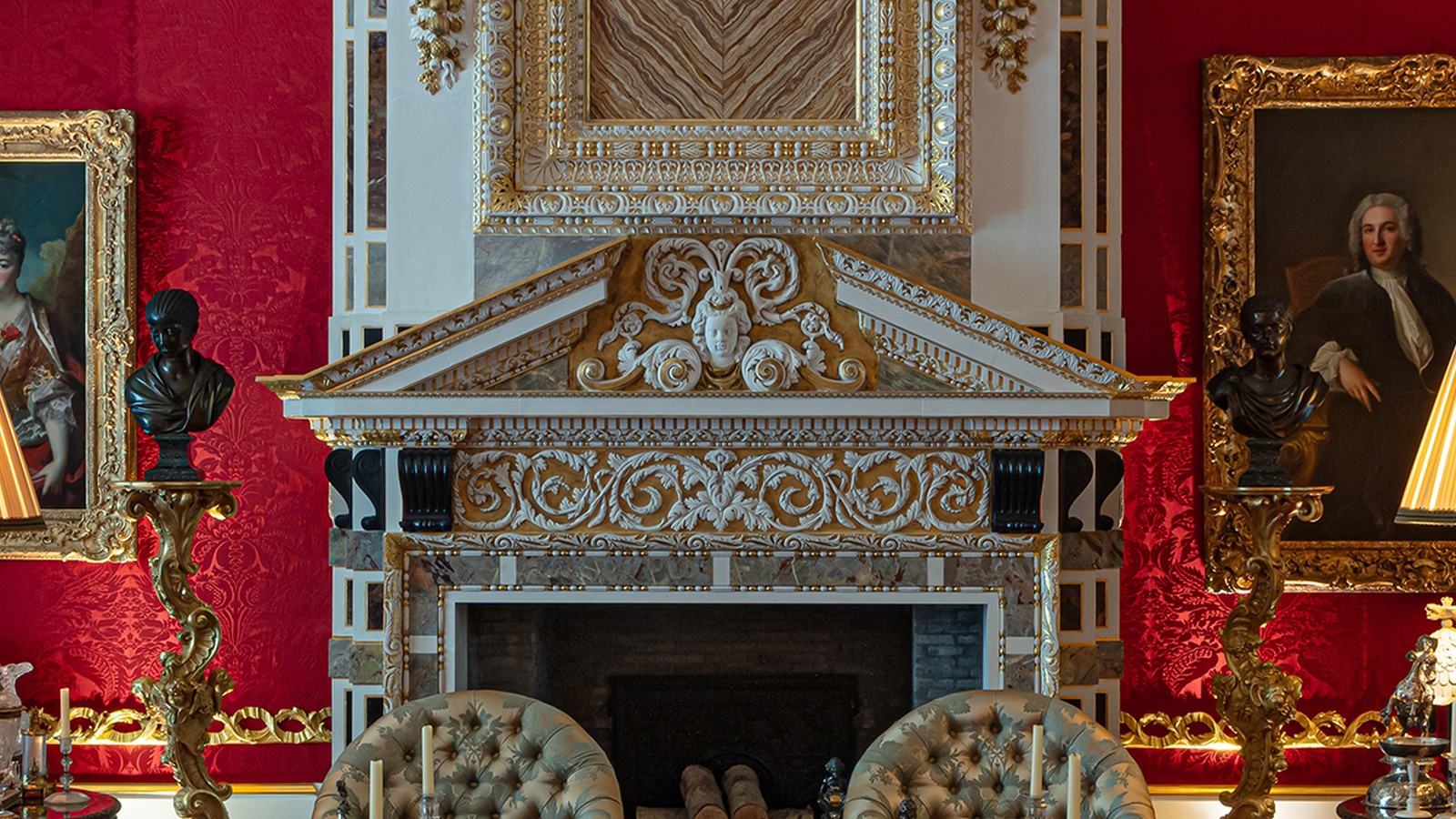
Sotheby’s Paris will offer the residence collection of Sheikh Hamad bin Abdullah Al Thani across a series of November sales covering decorative arts, silver and Art Deco interiors.
Sotheby’s Paris will open a major series of November sales drawn from the residence of His Highness Sheikh Hamad bin Abdullah Al Thani, bringing an unusually complete private interior to market. The evening sale on 4 November focuses on the most important pieces from the principal reception floor and Art Deco rooms, with giltwood, marble, silver and silk among the materials represented.
The collection was assembled over decades in close collaboration with decorator Alberto Pinto, giving the sale a coherent decorative identity rather than the feel of a miscellaneous estate dispersal. For collectors of exceptional interiors, that coherence is significant because objects can be understood within the rooms and relationships for which they were originally selected.
Avenue Floquet becomes part of the provenance
Sotheby’s is presenting the collection through the story of the Paris residence itself, allowing furniture and works of art to retain a connection to the rooms in which they were displayed. That kind of residential provenance can be valuable because it records not only ownership but the decorative context in which an object formed part of a larger ensemble.
For future owners, photographs, catalogues and sale records can preserve that context even after individual pieces are dispersed. Family offices and collection managers increasingly treat those records as part of the asset, particularly when an object’s significance depends on association with a notable collector or celebrated interior.
Alberto Pinto’s role gives the rooms a design pedigree
The interiors were assembled with legendary decorator Alberto Pinto, whose work became closely associated with grand residences, yachts and highly bespoke private spaces. That connection gives the sale particular relevance to superyacht owners who understand how individual objects can be selected to serve a complete decorative programme rather than stand alone.
A successful interior of this level depends on scale, texture, craftsmanship and proportion working together. Buyers looking at pieces from the collection can therefore assess not only the object itself but how it participated in a sophisticated environment created for a patron with exceptional access to makers and advisers.
The sale sits within a wider multi-part dispersal
Sotheby’s is dividing the residence across several auctions, including an evening sale, a Kunstkammer, Art Deco material, a day sale and an online sale. That structure reflects the depth of the collection and allows specialists in different fields to focus on objects that might otherwise compete for attention inside one enormous catalogue.
For collectors, the multi-part format also creates opportunities to build relationships across categories. A buyer may enter through silver or furniture and then discover porcelain, paintings or objects of vertu that share the same provenance, gradually reconstructing part of the original collecting vision in a new setting.
Major house sales are lessons in long-term collecting
The importance of the sale lies as much in how the collection was formed as in the individual lots. It demonstrates the difference between accumulating expensive objects and building an interior over time with consistent taste, specialist advice and a clear relationship between architecture and collection.
For ultra-high-net-worth owners planning residences or yachts, that lesson is practical. The most enduring private environments are usually created through patient patronage and disciplined curation, with documentation strong enough that the story of the collection survives even when the objects eventually pass to new owners.
Source
Sotheby's