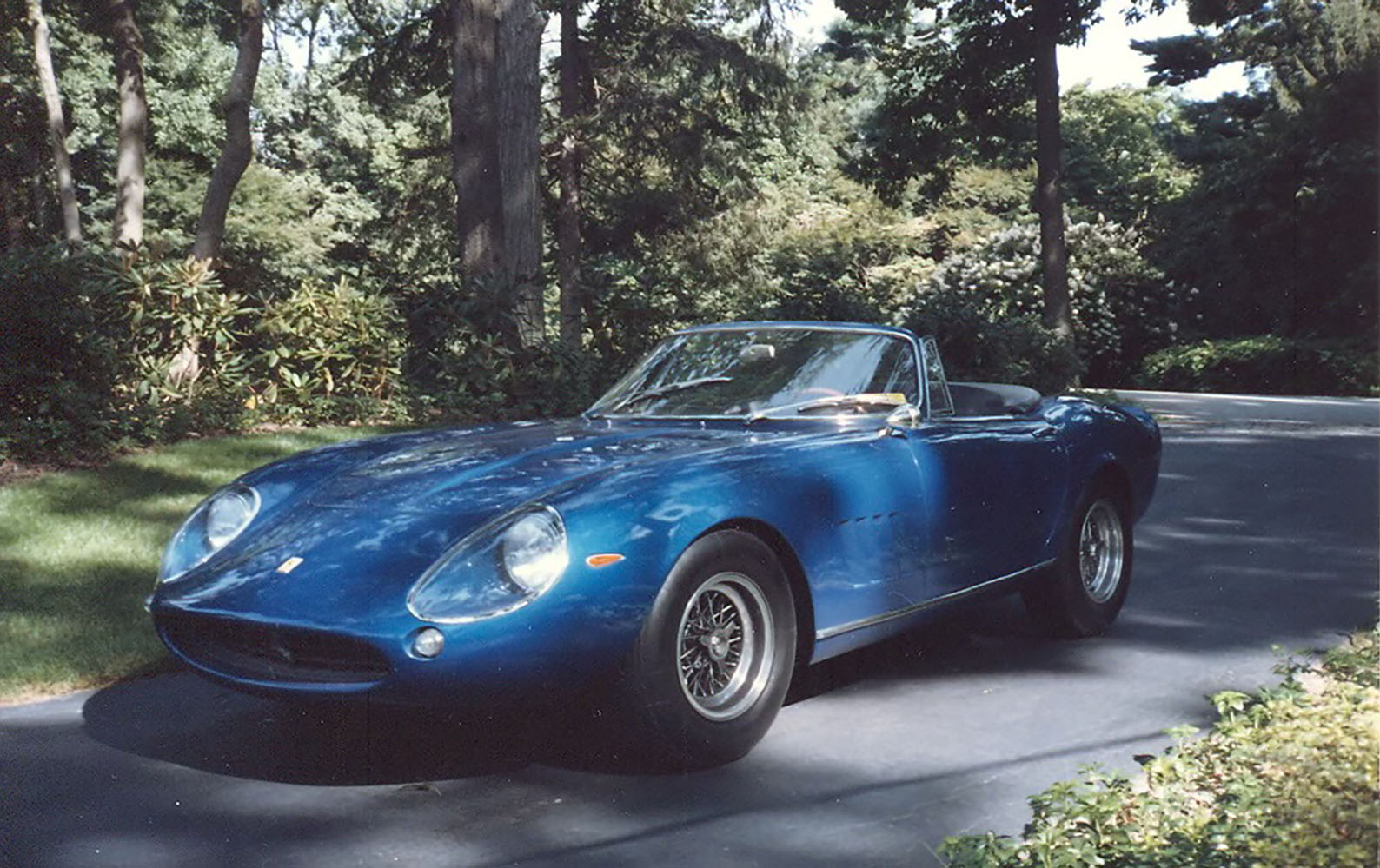
Gooding Christie’s presents chassis 10453, one of ten Ferrari NART Spiders and Steve McQueen’s former car, at its inaugural New York auction this week.
A collector's appointment at the Javits Center
Collectors gathering in Manhattan this week will have an unusual opportunity to examine a Ferrari whose history combines rarity, period modifications and association with one of Hollywood's most recognisable motoring enthusiasts. Gooding Christie’s is offering the 1967 Ferrari 275 GTB/4*S NART Spider, chassis 10453, in its inaugural Rétromobile New York auction with a presale estimate of $15 million to $20 million. The auction house's September consignment announcement identifies Steve McQueen as the car's first owner. The current event timetable places public viewing at the Javits Center from November 19, followed by auction sessions on November 20 and 21. This is the car's first appearance at public auction according to the consignment statement. The estimate is not a sale result or a guaranteed valuation. The opportunity is particularly interesting for collectors seeking an automobile whose history can be understood through the surviving object rather than solely through retrospective accounts of a famous former owner.
The significance of ten examples
Gooding Christie’s identifies this car as the sixth of just ten NART Spiders produced, and the first of two originally finished in Blu Sera. Those details place the vehicle within a very small population of related automobiles. What makes an individual car meaningful within that population is not simply the number produced. A collector may distinguish between cars according to their original construction, equipment, later modifications, survival of historical materials and documented use. In this case the auction publicity emphasises details associated with McQueen rather than presenting the vehicle as an untouched representative of its original production specification. That distinction is relevant to a buyer pursuing a particular aspect of automotive history. A collector who wants the closest possible recreation of factory delivery condition may have different priorities from one interested in preserving changes made during historically significant ownership. Both approaches require careful research, particularly when the market attaches such considerable value to a particular identity.
Delivery to Hollywood
Chassis 10453 was completed in September 1967 and invoiced to Luigi Chinetti Motors before reaching McQueen through Hollywood Sport Cars, according to the auction house. McQueen subsequently changed the finish to a darker metallic blue and commissioned alterations to the seats, including a distinctive stitching arrangement. These changes give the vehicle a character different from an example that retains its original delivered appearance. The auction house also reports that the car was repaired by Junior Conway following an accident on the Pacific Coast Highway. A prospective purchaser should therefore distinguish the originality of major components from the survival of every material or surface exactly as it left the factory. The historical repair and cosmetic work are part of the advertised provenance, rather than necessarily hidden departures from the vehicle's history. At the anticipated level of expenditure, the buyer will want to examine contemporaneous documentation connecting the car with the events and modifications described in its catalogue.
The value of surviving historical material
Gooding Christie’s describes the vehicle as retaining its matching-numbers engine and transaxle, original Scaglietti body and distinctive McQueen-era details. These statements concern several different aspects of the vehicle's identity. The serial-number relationship between major mechanical assemblies and a chassis can support a conclusion about the continuity of the vehicle's construction, while documentary and physical examination may establish additional information about maintenance and repairs. The preservation of an individual painted surface or upholstery detail presents another question, particularly where the auction appeal derives from a historically important owner's preferences. A specialist assessing the car can examine how those aspects of the surviving object correspond to documentary records and photographs. An expensive restoration may reproduce a historically appropriate appearance without preserving the same evidence. Conversely, a largely preserved automobile may require sensitive work in order to remain usable. A buyer should obtain an assessment suited to the intended balance between conservation and future operation.
Forty years in one collection
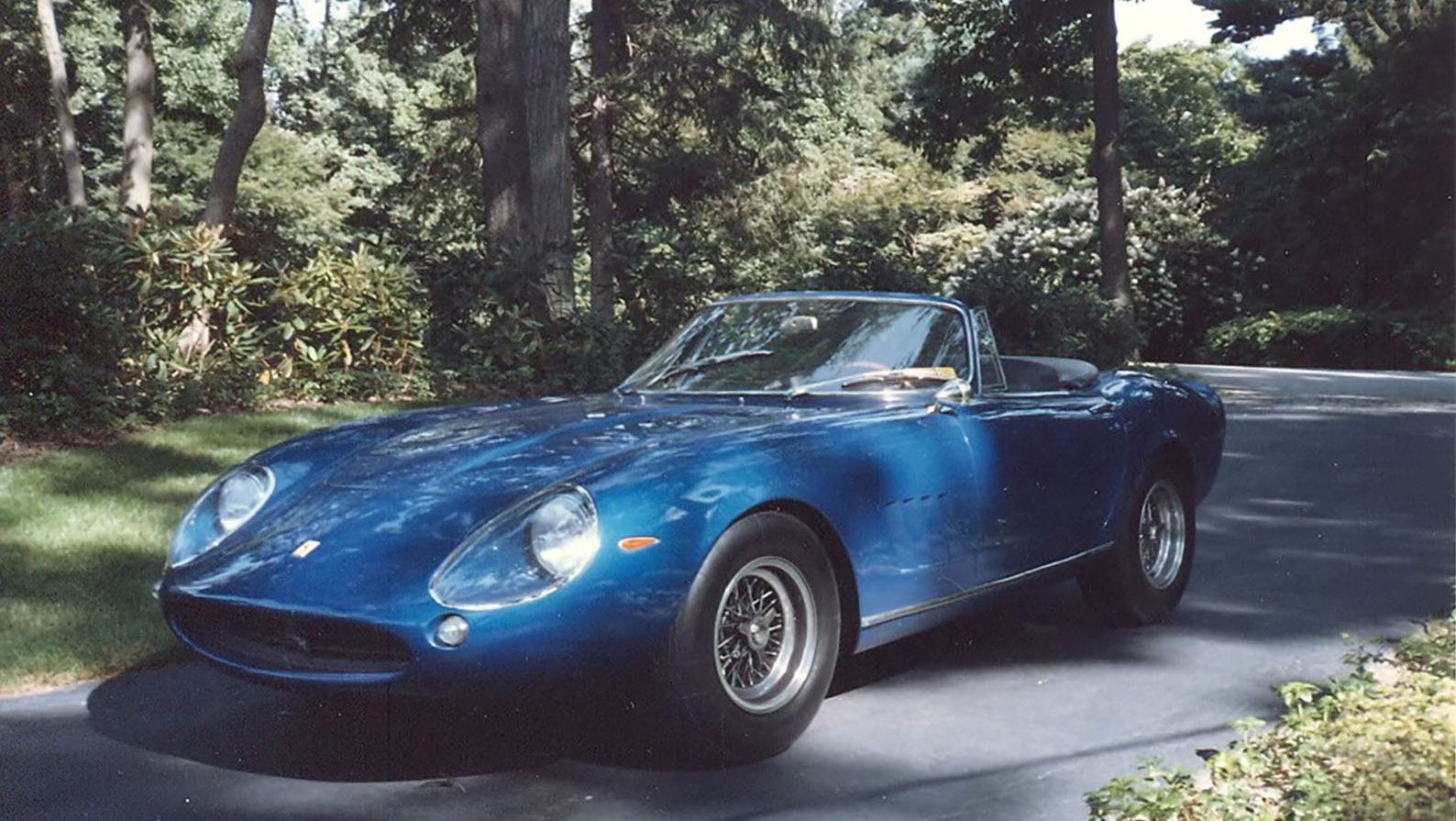
The auction announcement traces the Ferrari to the collection of J. David Kopf in California by 1971. It subsequently entered the consignor's collection in 1986 through Grand Prix SSR, a Long Island Ferrari dealer. Gooding Christie’s says it has remained there for four decades. Its documented public appearances include the 1996 Louis Vuitton Classic at Rockefeller Center and a 2003 Ferrari exhibition at the Chrysler Museum of Art in Norfolk, Virginia. These events provide further reference points in its recent history. The archival photograph accompanying this report dates to approximately 1987, shortly after the car changed hands, and is supplied with the auction announcement courtesy of historian Marcel Massini. It is not evidence of the precise current condition of the Ferrari. For a collector, a long period in established ownership can offer a useful starting point for investigating maintenance records, earlier condition reports and other documents held alongside the vehicle.
An inaugural sale with more than 160 lots
The New York auction places the Ferrari within a broader programme of more than 160 vehicles, motorcycles and automobilia. Other marques represented include BMW, Jaguar, Mercedes-Benz and RUF. The early consignment announcement identifies two additional Ferraris: a 1965 275 GTB with an estimate of $2.25 million to $2.5 million and a 1963 250 GT Lusso estimated at $1.4 million to $1.6 million. Those cars offer a different collecting proposition from the much rarer NART Spider, although each can be assessed according to its own specification and history. The programme also includes the Billy Joel motorcycle collection, which the auction house says will be offered without reserve. Collectors who intend to compare several lots should consult the current catalogue rather than assume that the earliest consignment announcement provides the definitive sale order or unchanged estimates for every item. The event's importance here is its concentration of relatively varied categories of automotive collecting within one Manhattan venue.
Preparing for the auction
The current sale page gives viewing hours of 9 am to 7 pm from November 19 to 21 and lists both auction sessions at 11 am Eastern time. This supersedes the earlier September press release's indication of a public preview beginning on November 18. Access requires admission to Rétromobile, with additional auction-room and up-close viewing arrangements specified by Gooding Christie’s. Those intending to bid should establish their registration requirements directly with the auction house. Its current terms call for bidding requests through Christie’s at least twenty-four hours before the relevant session, identity verification and evidence of the ability to complete purchases. A purchaser intending to use an entity or trust should ensure that the registration correctly identifies the actual intended buyer. The auction house encourages independent inspection of lots and their documentation. A private collector's professional advisers may need to coordinate their enquiries in advance, especially where access to the underside of a vehicle or a more detailed examination depends on the arrangements at the venue.
Purchase price, transport and the subsequent collection
The estimate concerns the anticipated auction value of the Ferrari and not the entirety of the buyer's potential expenditure. The published conditions specify a vehicle buyer's premium of twelve percent on the first $250,000 of a final bid above that threshold and ten percent on the remainder. Tax, duties, transportation and other charges may apply depending on the purchaser's circumstances. The sale conditions also provide for transfer of purchased vehicles to an off-site storage facility rather than collection directly from the exposition. These arrangements are relevant to internationally mobile collections, where a vehicle may be acquired in one jurisdiction and subsequently stored, displayed or used in another. It is particularly important to assess the consequences of relocation and insurance before committing to a bid. A yacht owner who maintains a separate automobile collection ashore may also need to coordinate transfers between multiple residences and exhibition locations. No particular tax or import treatment should be assumed from the advertised auction estimate.
Preserving a particularly individual Ferrari
The opportunity presented this week is a car whose identity reflects both a limited Ferrari production run and the tastes of the person who first commissioned changes to it. The most consequential decision for a purchaser after acquisition may be how to retain the evidence of that history. It may be appropriate to document the present condition extensively before considering alterations, to preserve significant material and to obtain the advice of specialists familiar with the model and its chronology. There is a distinction between maintaining a historical vehicle in a usable condition and removing evidence of the life it has led. The correct balance depends on the individual owner's objectives and the actual findings of qualified inspection. Gooding Christie’s first New York auction provides the public setting in which the market will assess that proposition. Until bidding is complete, however, the eight-figure estimate remains an expectation rather than an established transaction.
Primary source: Gooding Christie’s official consignment announcement, 10 September 2026.
Further official information: Gooding Christie’s current auction timetable and conditions, checked 18 November 2026.
Archival photography courtesy of Marcel Massini, as credited by Gooding Christie’s. The image dates to approximately 1987 and does not depict the car’s current condition. Official source.