TEFAF confirms more than 277 dealers from 27 countries for its March 2027 fair, including nine Showcase galleries and seven focused curatorial presentations.
A landmark gathering of international art dealers
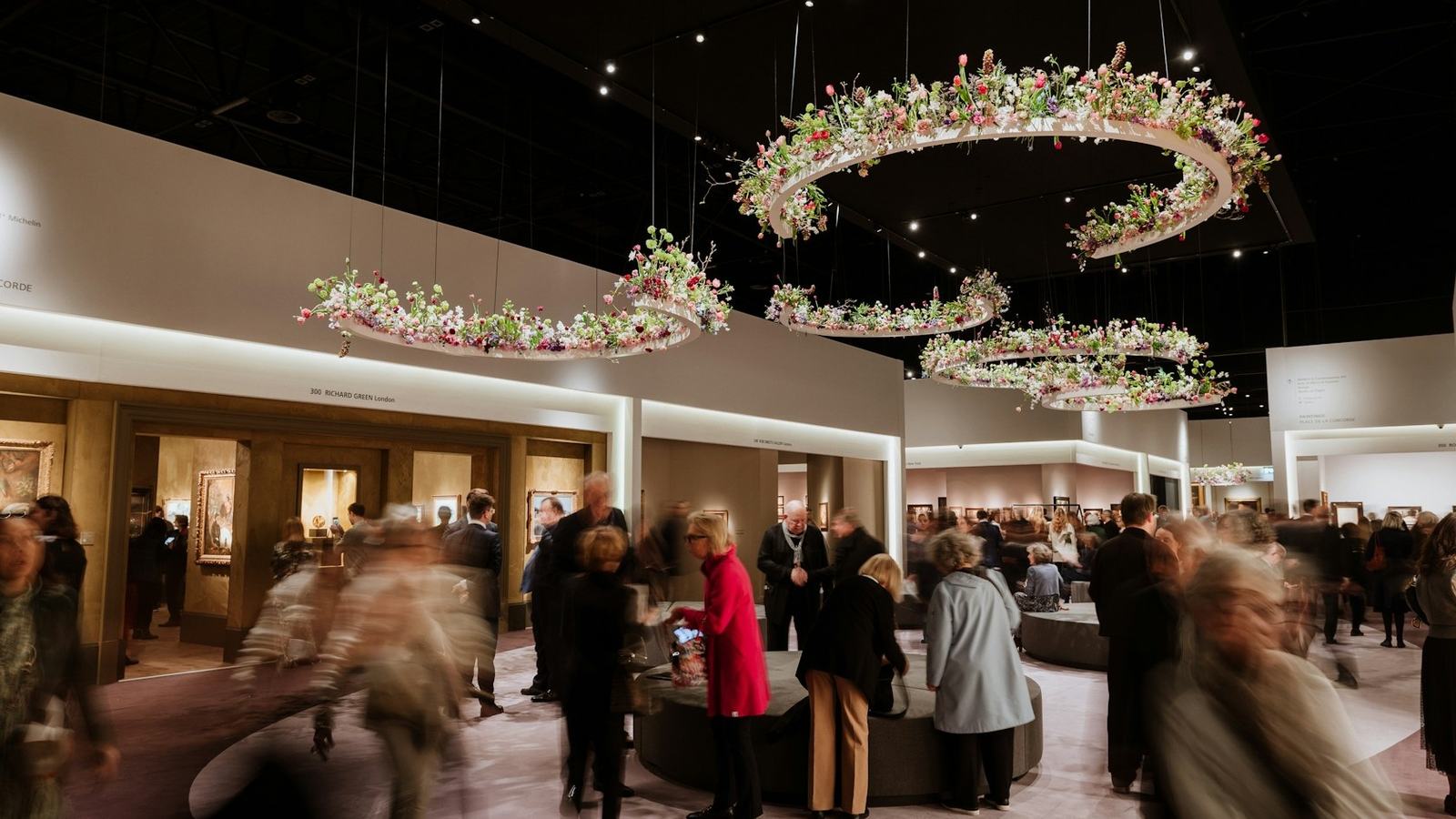
The European Fine Art Foundation has announced the gallery roster for the fortieth edition of TEFAF Maastricht, scheduled for 13 to 18 March 2027 at the MECC exhibition and conference centre in the Netherlands. Invitation-only previews are planned for 11 and 12 March. The November 16 announcement identifies a participating community of more than 277 galleries and dealers representing 27 countries. Among them are nine participants in the emerging-dealer Showcase and seven in the Focus section. For private collectors, the significance of this announcement lies in the opportunity to begin planning an unusually wide-ranging examination of art and decorative objects rather than waiting for individual sale catalogues. The exhibitor roster does not establish the identity, availability or price of every object that will appear at the fair. The accompanying photograph records the 2026 edition, not the environment that will be created for the forthcoming anniversary.
An art fair that brings different disciplines into proximity
A collector visiting a specialist auction ordinarily encounters objects grouped into a particular commercial category. At Maastricht, dealers working in markedly different periods and disciplines share the same venue. That arrangement can be particularly valuable for an owner developing a collection across multiple residences, including an interior designed for a yacht. Comparing an eighteenth-century furniture object, a modern sculpture and a contemporary work on paper in the course of one visit encourages attention to scale, construction and artistic intention rather than simply to the familiar terminology of each market. It also exposes a prospective collector to areas that they might otherwise have overlooked. The fair's international breadth should not be confused with an independent assessment of the financial attractiveness of individual works. Each acquisition involves its own market, condition and supporting documentation. The practical benefit of the exhibition is the possibility of examining many works directly and engaging with specialists whose expertise relates to different kinds of objects.
The emerging-dealer section in its nineteenth year
TEFAF established Showcase in 2008 as a means of introducing younger and developing dealers to its international clientele. The 2027 participants named in the announcement include Galleria Abscondita, Galerie Duponchel, Jonathan F. Kugel and Loeve&Co, alongside Nagas, Nuun Jewels, Den Otter Fine Art, Marco Pesarese Fine Art and Vardaxoglou. Their presence provides a separate point of interest within the larger event. A collector should not assume that an emerging gallery necessarily specialises in contemporary work; a relatively young business may be concerned with much older objects. Equally, the age of a dealer's enterprise is not a direct measurement of the experience of its specialists. TEFAF also announces the fourth edition of the J.P. Morgan Private Bank Showcase Prize, which recognises one participating gallery. The prize is a means of acknowledging dealer talent and should not be interpreted as an endorsement of every individual object offered for sale or as a forecast of its price.
Seven concentrated presentations within Focus
The Focus initiative, introduced in 2024, gives a gallery the opportunity to develop a more concentrated exhibition around a selected subject. The announced participants for March 2027 include Galerie Van den Bruinhorst, Ceysson & Bénétière, Daguet-Bresson, Edel Assanti, Repetto Gallery, Richard Saltoun Gallery and Galerie Maria Wettergren. This format can support an approach to collecting in which research precedes the selection of the object. A coherent presentation may enable the visitor to compare the development of an artist's practice or understand the connections between works drawn from different periods. The precise themes and objects selected for the seven stands have not all been identified in the roster announcement. Collectors planning to meet a particular representative should obtain the gallery's current exhibition information as the fair approaches. The opportunity is to spend time considering a more defined subject within the much larger gathering, rather than attempt to examine all available material with equal intensity.
Examining the evidence behind a work
TEFAF emphasises its vetting procedures as a fundamental element of the fair. For a buyer, these procedures form one part of the evidence relevant to a proposed purchase. Authenticity, provenance, legal title and physical condition nevertheless remain separate matters. A gallery may be able to provide a substantial account of an object's ownership history and its exhibition record, but the significance of any gaps should be assessed in relation to the type and age of that object. A condition report may also identify past conservation work that does not directly affect the attribution. In a substantial acquisition, the buyer should establish which representations form part of the purchase agreement and what supporting records will be transferred with the work. For a household with an existing collection, these records can help later advisers, conservators and heirs understand how the object was acquired. Attendance at a vetted fair does not remove the need for appropriate independent advice when the circumstances warrant it.
The particular constraints of displaying art at sea
An artwork intended for a residence ashore may not automatically be appropriate for a yacht interior. Its dimensions and weight must be considered alongside a reliable method of securing it. A material that is comparatively stable in a controlled gallery may behave differently when subjected to vibration, changes in humidity and temperature, or exposure to sunlight. Some historic objects are particularly sensitive to environmental variation, while others may present difficulties because replacement of their original materials would be undesirable. The decision to place a significant work aboard should therefore involve the yacht's design and management teams and, where appropriate, a qualified conservator. Display arrangements can be developed without sacrificing the intended appearance of an interior, provided that the physical requirements are identified sufficiently early. Alternatively, the owner may decide that a work is better held ashore. The breadth of the Maastricht fair offers opportunities to compare the characteristics of very different objects before making that decision.
Insurance and the movement of an international collection
The announcement identifies AXA XL as the fair's global lead partner. Insurance is particularly pertinent for private collectors who move works between locations. A policy suitable for an object held at one permanent residence may contain conditions concerning transit or other circumstances of use. A yacht's own insurance arrangements should not be presumed to cover valuable artworks automatically or at the same valuation as a specialist fine-art policy. Before moving a purchase, the owner should establish the actual terms of cover, packing and transport arrangements and any export or import requirements. Certain older objects or items incorporating regulated materials may require particular documentation. Where a work passes through several jurisdictions, the scope of the applicable permissions should be established before its departure. These practical questions should also be discussed with the dealer when arranging delivery, rather than postponed until an artwork has already been packed and scheduled for shipment.
Preparing a purposeful visit to Maastricht
The public days extend over six days, following the two invitation-only previews. A collector who wishes to compare several types of work may benefit from identifying a small number of priorities before arriving rather than undertaking a succession of unstructured commercial conversations. The roster includes specialists in painting, sculpture, design, jewellery and rare books, among other areas. A preliminary discussion with a trusted adviser can help determine which dealers are especially relevant to the collection's objectives and where a specialist opinion might be useful. Visitors should establish admission arrangements directly with the organiser, since the announcement of invitation-only dates does not imply that all prospective buyers can attend them. The gallery list is also not a confirmation that a named object has been accepted for display. As individual presentations become known, the details of particular pieces and their commercial availability will provide a better basis for planning specific enquiries.
Forty editions and the next generation of collectors
The announced anniversary connects TEFAF's established relationships with its intention to support new specialist businesses and focused curatorial presentations. For an owner developing a collection over several years, the March event provides a useful occasion to compare methods of collecting and establish relationships with professional advisers. A work's relevance to the collection may depend on its historical or artistic character, its relationship with an existing group of objects, or the practical circumstances under which it will be exhibited. None of those considerations can be resolved by the size of the event alone. The November announcement confirms the proposed dealer community and dates, not sales results or a guarantee of investment performance. Its significance is the opportunity for private collectors to prepare for a concentrated international gathering of art specialists, with enough notice to investigate the areas of greatest personal interest before travelling to the Netherlands.
Primary source: TEFAF official exhibitor announcement, 16 November 2026.
Photography: Maison Rowena, courtesy of TEFAF. The photograph depicts the 2026 fair and accompanies the 2027 exhibitor announcement. Official source.
