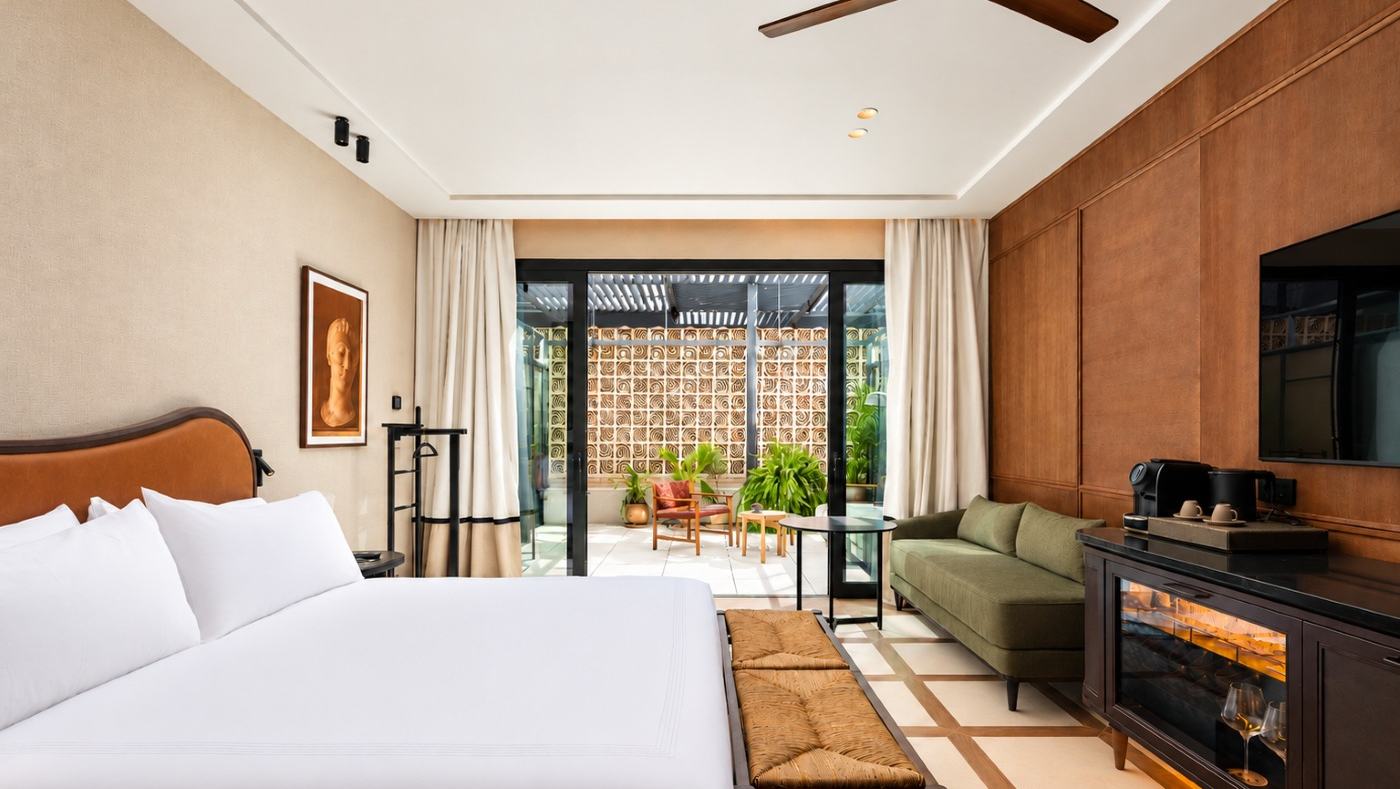
Thompson Seville opens in the historic centre with terrace suites, Andalusian dining, an art collection and a rooftop pool in the Modernist La Gavidia building.
Hyatt has announced the opening of Thompson Seville, a 101-room hotel in the Andalusian capital's historic centre. The announcement of 9 November 2026 identifies the new property as the first Thompson hotel in Andalusia and the second in Spain, following the brand's Madrid opening. It occupies La Gavidia, a Modernist building on Plaza de la Concordia, which has been adapted for hospitality while retaining aspects of its architectural identity. The hotel incorporates privately terraced accommodation, a rooftop pool and a restaurant created with an established Andalusian family business.
For travellers who combine Mediterranean cruising with visits to destinations inland, Seville offers a different environment from the marinas and coastal resorts of southern Spain. Thompson's arrival adds an accommodation option for a trip organised around architecture, contemporary art and the region's culinary traditions. It is an urban property rather than a marina resort, and guests arriving from a yacht will need to arrange the relevant land transfers independently.
Adapting a distinctive twentieth-century building
La Gavidia's architectural character provides the new hotel with an unusual setting in a historic district more commonly associated with earlier architectural periods. Carlos Llansó of Exacorp One and Mario Ronquillo of Estudio 2RDIP led the building's transformation. The interiors were developed by Jorge Lozano and Proyecto Singular, drawing upon the city's light, materials and cultural setting.
Converting an established building into a hotel requires the design team to reconcile its existing geometry with the circulation and service requirements of hospitality. The resulting experience is different from that offered by a property developed on an entirely new site, where the arrangement of accommodation and services can be established from the outset. The architectural value of the existing building may lie in elements that do not necessarily correspond to the most straightforward contemporary hotel layout.
Hyatt describes the conversion as a project that preserves La Gavidia's character. The opening announcement does not set out the extent of individual structural alterations or the conservation obligations associated with the property. The visible result, however, places contemporary design in a setting that already has an architectural identity of its own.
Bringing Andalusian materials into contemporary interiors
The designers have adopted a palette of earthy hues, copper and carmine, with crafted surfaces, latticework and vegetation. The intention is to create a relationship with the local environment without simply reproducing the interiors of a historic palace. Courtyards and terraces provide further opportunities to introduce vegetation and the changing character of the city's light into the hotel.
This approach illustrates how a contemporary luxury property can draw on a destination through the qualities of materials rather than relying on conspicuous historical decoration. A visitor may recognise the connection to the surrounding region through texture, shade and the arrangement of space. Such choices are particularly noticeable when the interior is experienced repeatedly over several days and at different times.
Owners commissioning private interiors may find the same distinction relevant to their own projects. An interior can acknowledge a region's traditions through work by its craftspeople or a considered use of materials without requiring every object to follow a single historical style. The hotel represents one interpretation of that relationship within a commercial hospitality environment.
The accommodation and the importance of a terrace
The 101 rooms and suites range from city-view and deluxe categories to accommodation with private terraces and the signature Thompson Suite. The opening material describes a residential character, with warm surfaces and natural textures. A terrace in a city hotel can provide a particularly useful distinction between room categories, offering personal outdoor space without requiring the guest to use the public areas of the property.
For a couple travelling between residences, the ability to spend part of an afternoon in a private outdoor setting may be as appealing as the size of the bedroom itself. A family visiting the city for a cultural itinerary may have a different set of priorities, including the proximity of individual rooms and the accessibility of their accommodation. These should be assessed against the actual layout of the proposed reservation.
The announcement does not detail the dimensions or maximum occupancy of every suite, and the availability of outdoor accommodation will depend on the room category and booking dates. Guests with particular requirements should request the relevant details from the property. A photograph of one terrace suite does not establish that the same arrangement applies to all of its accommodation.
Casa Mayo and an established Andalusian culinary tradition
The hotel's main restaurant, Casa Mayo, has been developed with Grupo Manolo Mayo, a family-run Andalusian restaurant business whose history dates to 1963. The collaboration gives the property a connection with an established regional approach to hospitality rather than creating a restaurant concept based solely on the hotel's international brand identity.
The announced dishes include tomato salad, rice specialities and cuts of bluefin tuna associated with the traditional almadraba fishery. The menu is intended to draw on seasonal ingredients and familiar regional recipes. Travellers with an interest in Andalusian cooking may find this a useful introduction to the region, particularly if their itinerary also includes independent restaurants and markets elsewhere in the city.
Architect Pablo Baruc designed Casa Mayo's interior, incorporating ceramics, woodwork and glass. Its arrangement includes an open kitchen, a wine cellar, a central bar and a courtyard, with an exterior terrace facing the plaza beneath a magnolia tree. The restaurant has its own connection to the street, allowing it to serve people who are not staying at the hotel.
Dining throughout the day
The hotel's lobby bar offers a less formal environment, with coffee, lighter breakfasts and dishes intended for sharing. Regional ingredients and the city's oranges appear in the published description of the drinks programme. Each evening between six and seven, a daily occasion called La Hora pairs a changing selection of Jerez sherries with a seasonal accompaniment.
The hotel's arrangement of dining and social spaces reflects the different ways travellers may use a city property. A guest visiting Seville's monuments might prefer a lighter meal before leaving in the morning, while someone arranging a meeting may want a more settled setting in the afternoon. A formal dinner is only one possible component of the day.
The opening announcement does not establish current menus, table availability or the cost of private dining. Guests arranging an occasion with several people should discuss the relevant seating options and timings with the restaurant. This is especially important where a meal forms part of a wider schedule involving travel or cultural events.
A rooftop setting above the historic centre
The rooftop contains a pool, bar and fitness facilities. Hyatt describes its gradual transition from a setting for relaxation during the day to a more social environment as evening approaches. The announced food offering includes dishes associated with southern Spain, such as salmorejo and shrimp fritters.
A rooftop can provide a valuable alternative to the streets and enclosed rooms that make up much of a city itinerary. It also offers a different way to appreciate the surrounding skyline and the changing light over the course of the day. Its usefulness will vary according to the weather and the guest's preferred level of activity. Seasonal pool operations, access arrangements and opening times should be confirmed directly.
Contemporary art within the property
A collection curated by the studio of Luisa Olazábal extends through the accommodation and public spaces. Hyatt identifies artists including Jorge Parra, José Cháfer, Kepa Garraza, Nanda Hagenaars, Miguel Gómez Losada and María Morenés among those represented. The works include painting, photography, sculpture and murals, exploring subjects connected to memory, architecture and identity.
For travellers who collect art, the presence of a curated collection can introduce artists whose work they might not otherwise encounter during a hotel stay. It is not a substitute for a visit to the city's museums or galleries, and the works have not been described as available for purchase. Their placement within the hotel allows a guest to encounter them as part of the ordinary use of the building rather than only during a separate exhibition visit.
Private gatherings and cultural travel
The hotel provides 240 square metres of flexible event space distributed across four rooms, alongside an interior courtyard. Integrated audiovisual facilities are intended to support meetings and presentations as well as celebrations. The property's announced cultural programme will incorporate art, music and gastronomy, although individual future events should be confirmed with the hotel.
For a private group visiting Andalusia, the ability to combine accommodation with a meeting room or dining occasion may simplify a multi-day programme. The suitability of the property for an individual gathering will depend on the proposed layout, guest numbers and any need for exclusive use.
Thompson Seville's opening gives visitors a new setting in which to explore the city, combining a converted architectural landmark with locally influenced interiors and dining. The announcement establishes the hotel's opening and its intended facilities, not a guaranteed rate or availability on particular dates. For superyacht owners and other international travellers planning time ashore in southern Spain, the property offers an additional option for a culturally focused inland stay.
Primary source: Hyatt official Thompson Seville opening release, 9 November 2026.
Photo: Hyatt / Thompson Seville, official opening press photograph. Official source.
