The Victoria and Albert Museum has opened Constantinople to Istanbul: One City, Two Empires at South Kensington on 7 November 2026. The exhibition explores approximately 1,600 years of art, design and urban culture in a city that served successive imperial worlds. The museum dates its historical arc from AD 330 to 1922, spanning the Byzantine and Ottoman periods. For visitors interested in architecture, decorative arts and cultural exchange, the opening offers something more expansive than a display of individual treasures: an account of how one city became a sustained centre of artistic production and influence.
London opens a long view of an extraordinary city
The Victoria and Albert Museum has opened Constantinople to Istanbul: One City, Two Empires at South Kensington on 7 November 2026. The exhibition explores approximately 1,600 years of art, design and urban culture in a city that served successive imperial worlds. The museum dates its historical arc from AD 330 to 1922, spanning the Byzantine and Ottoman periods. For visitors interested in architecture, decorative arts and cultural exchange, the opening offers something more expansive than a display of individual treasures: an account of how one city became a sustained centre of artistic production and influence.
The V&A says the exhibition presents more than 200 objects in four main sections. Among the categories are textiles, ceramics, mosaics, metalwork, jewellery, sculpture, manuscripts, paintings and architectural furnishings. That breadth matters because the city's design history cannot be reduced to one monument, religious tradition or material. Works made for palaces, worship, civic spaces and daily life each speak to different kinds of patronage. The exhibition is staged in Galleries 38 and 39 at South Kensington, with advance booking recommended by the museum for its ticketed programme.
From Constantinople's founding to the Ottoman capital
The V&A begins its historical account with the refounding of Constantinople as an imperial capital in AD 330. Over time, the city acquired a political and cultural significance far beyond its walls, connecting routes and traditions across the Mediterranean and neighbouring regions. The museum's narrative moves through Byzantine rule to the Ottoman conquest in 1453 and onward to the end of the Ottoman Empire in 1922. Those dates provide the exhibition's structural framework, not a suggestion that artistic exchange suddenly ceased at political turning points.
For design enthusiasts, continuity and transformation are more revealing than a simple succession of rulers. Cities preserve building traditions, decorative motifs, skilled crafts and social practices even as their political institutions change. New forms emerge when patrons commission different kinds of spaces and objects, while older techniques can be adapted to fresh purposes. Istanbul's position across major routes made it a place where artistic influences met. The V&A uses material evidence to make this long story tangible, allowing visitors to encounter specific objects rather than rely solely on photographs of famous architecture.
The four rooms of an imperial story
The museum identifies four thematic sections: Roman Beginnings, Heaven and Earth, Power and Reach, and Life in the City. Roman Beginnings examines the city's foundation and infrastructure, including the systems, defences and symbolic spaces through which an imperial capital operated. Heaven and Earth considers how Christianity shaped imagery and architecture in Byzantine society. These sections bring together politics, faith and visual culture without assuming that any one object can summarise a civilisation. They encourage visitors to connect artistic decisions with the institutions that commissioned them.
Power and Reach turns to the public spectacle and material culture of the Ottoman court, including silk, jewels, ivory, silver and gold. Life in the City explores the varied languages, faiths and everyday settings of a cosmopolitan centre, including coffee houses, music and leisure. The V&A also addresses changing nineteenth-century tastes and European influences. Taken together, the four sections make the subject broader than an imperial chronology; they create space for the choices of makers, traders and ordinary urban residents as well as powerful patrons.
Textiles, metalwork and the expression of authority
Among the material highlights outlined by the V&A are fine silks, historical dress, precious metalwork, ceramic tiles and patterned surfaces. These were not merely optional embellishments around a city's principal history. Colour, texture, jewellery and carefully worked metals communicated hierarchy, belief, wealth and belonging. A viewer can learn much from the relationship between a material and its intended setting: cloth worn in a procession has a different purpose from a textile preserved in a domestic interior or a fragment incorporated into an architectural scheme.
The exhibition offers an opportunity to consider the labour behind spectacular surfaces. A precisely worked piece of metal or a richly patterned textile reflects specialised skill as well as the resources of a patron. Conservation and display may make historical objects appear serene today, but their original creation required countless decisions about design, materials and technique. The museum's account does not publish exhaustive costs or workshop contracts for the objects in the exhibition, and visitors should distinguish what can be learned from their visible qualities from what the surviving records specifically establish.
Objects that carry the city's complicated identity
The museum's public highlights include a tenth-century Byzantine casket, an eleventh-century devotional object, early Byzantine jewellery and an Ottoman coffee pot, among other loans and collection pieces. These examples illustrate the range of functions represented: religious, domestic, decorative and ceremonial. Individual labels are essential for provenance and precise dating, especially where the museum identifies an object only approximately by period or place. An exhibition on a complex city benefits from such specificity because its history was made by many communities and workshops rather than one uniform tradition.
The V&A also notes paintings, manuscripts, works on paper and architectural furnishings among the objects brought together. A visitor interested in visual culture can follow not just how motifs travelled but also how different media carry information. A manuscript gives a different kind of access to the past from an ornament, while a ceramic tile may reveal how a decorative scheme was intended to function across a building. The strongest reading is comparative. No single discipline tells the whole story, and the exhibition's 200-plus works are intended to support a more layered account.
An artistic crossroads with a maritime dimension
Istanbul's setting on the Bosphorus is integral to its historical identity as a place of movement between seas and continents. The exhibition is principally about art and design rather than yachts or contemporary shipping, and it would be inaccurate to describe it as a maritime exhibition. Even so, its underlying subject is relevant to visitors who travel by sea. Ports and capital cities become centres of exchange precisely because people, materials and ideas pass through them. The city's artistic traditions reflect that broader capacity to connect cultures across geographical boundaries.
For owners and charter guests exploring Istanbul or the wider eastern Mediterranean, the London exhibition offers a useful intellectual introduction to the city's layers of history. It does not replace visiting museums, historic neighbourhoods or architectural sites in Türkiye, nor should the two experiences be treated as interchangeable. Viewing historical objects in a carefully curated setting can prepare travellers to look more closely at building details, textiles and patterns encountered later. That may be the most practical connection between a London cultural season and an interest in sophisticated travel under sail or power.
The legacy that travelled beyond the city
The V&A states that the display concludes by considering the influence of Byzantine and Ottoman art on nineteenth-century Europe. It highlights examples from the museum's holdings, including the work of William Morris. This final perspective prevents the city's story from ending at its own geographic boundaries. Designs are reinterpreted as they travel; an ornament may find a new context, and an unfamiliar technique can become part of another artistic vocabulary. Such exchanges complicate any easy division between what is local, foreign, original or borrowed.
Contemporary designers and collectors can draw a useful lesson from that history. Referencing a long tradition responsibly requires attention to its meaning and makers, not just the extraction of an attractive pattern. The exhibition encourages a deeper form of looking at designs that have passed across cultures and centuries. That has relevance for bespoke interiors, where clients frequently request inspiration from distant places or historic eras. A well-informed commission should understand sources and context, not merely reproduce the outward appearance of a museum object.
Practical details for the new exhibition
Constantinople to Istanbul: One City, Two Empires opens to the public on Saturday, 7 November 2026, at V&A South Kensington, Cromwell Road, London. The museum lists weekday admission at £25 and weekend admission at £27, with concessions and advance booking available. The V&A's accompanying article, updated on 6 November, says the exhibition is due to close on 9 May 2027. Visitors should confirm the latest prices, opening times and ticket availability with the institution before booking, particularly around holidays or special events.
For a thoughtful visit, the four-section structure provides a straightforward route: begin with infrastructure and imperial beginnings, consider the relationship of sacred art to public authority, examine luxurious materials at court and finish with the city's everyday social life. This ordering follows the organiser's own themes, not a claim to dictate how the galleries must be experienced. A second look at selected objects may be more satisfying than rushing through every item. There is time for both the headline historical narrative and the small details that reveal skilled hands.
Why this opening matters beyond London
This exhibition stands out in the November cultural calendar for its scale, historical reach and clear attention to the objects through which a city's identity can be reconstructed. More than 200 works across a 1,600-year span allow the museum to address successive political worlds while maintaining a focus on material culture. For international readers who value travel, collecting, design and the experience of historic places, the result is a compelling cultural destination in its own right, regardless of whether a visit to Istanbul is already on their itinerary.
The V&A's official exhibition page and its detailed introductory article support the central facts, dates and curatorial structure of this report. Interpretations about the relevance of design history to bespoke interiors and sophisticated travel are editorial observations, not statements attributed to the museum. Superyacht Guide's interest lies in the quality of craft, the intelligence of cultural exchange and the way great places shape the objects we choose to preserve. The London opening offers an unusually rich opportunity to examine all three together.
Primary source: original announcement; corroborating source: additional first-party or industry material. Report dated 7 November 2026. Announcements and operating plans may change; editorial interpretations are distinguished from confirmed facts.
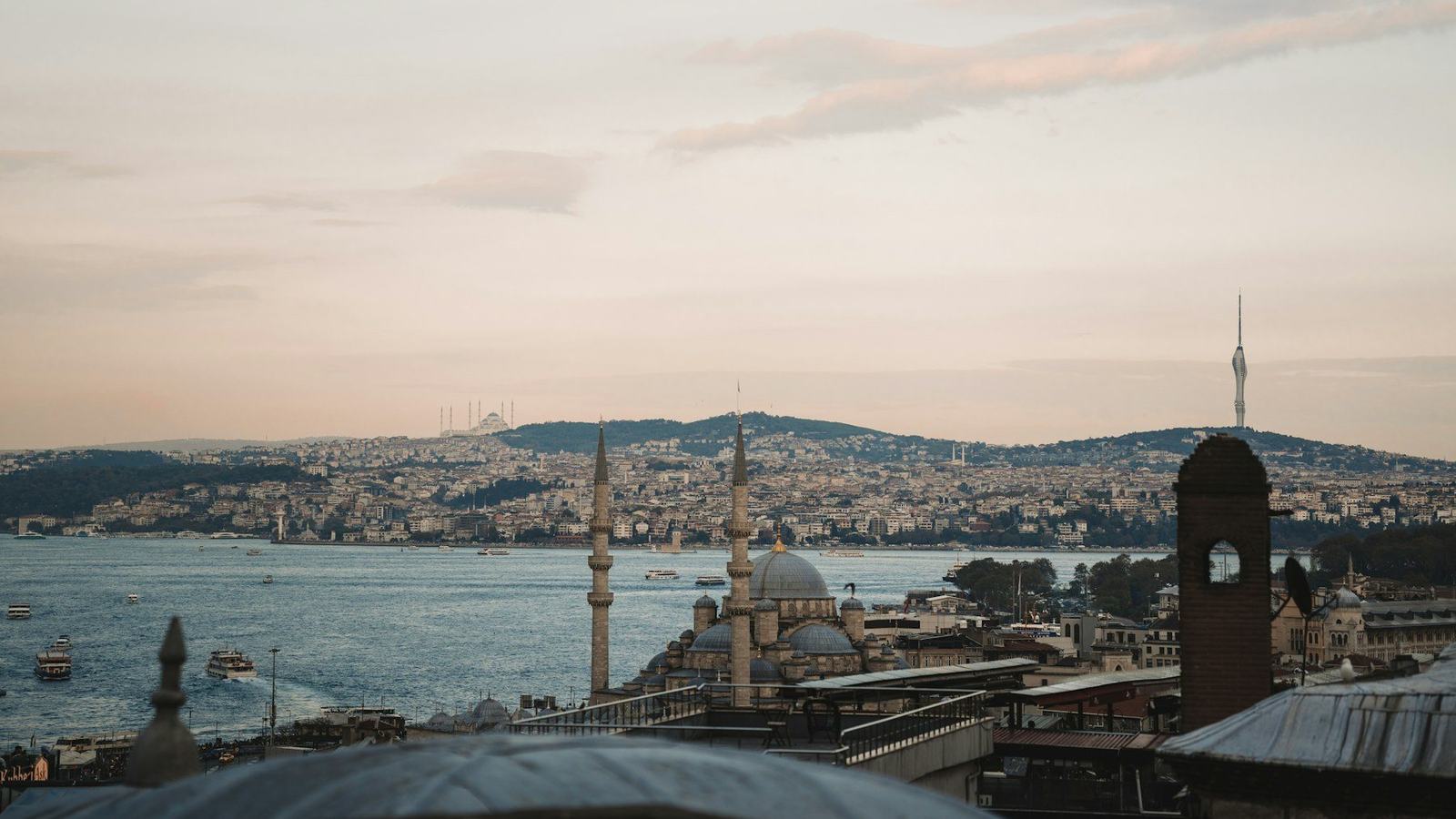
Editorial photograph: photographer and original image — Spenser Sembrat / Unsplash License; Istanbul skyline and Bosphorus, illustrative view of historic city; not the V&A exhibition or a displayed object. Cropped and resized under the Unsplash License. Illustrative photograph only; it does not show the 2026 event or named product.
Source
www.vam.ac.uk