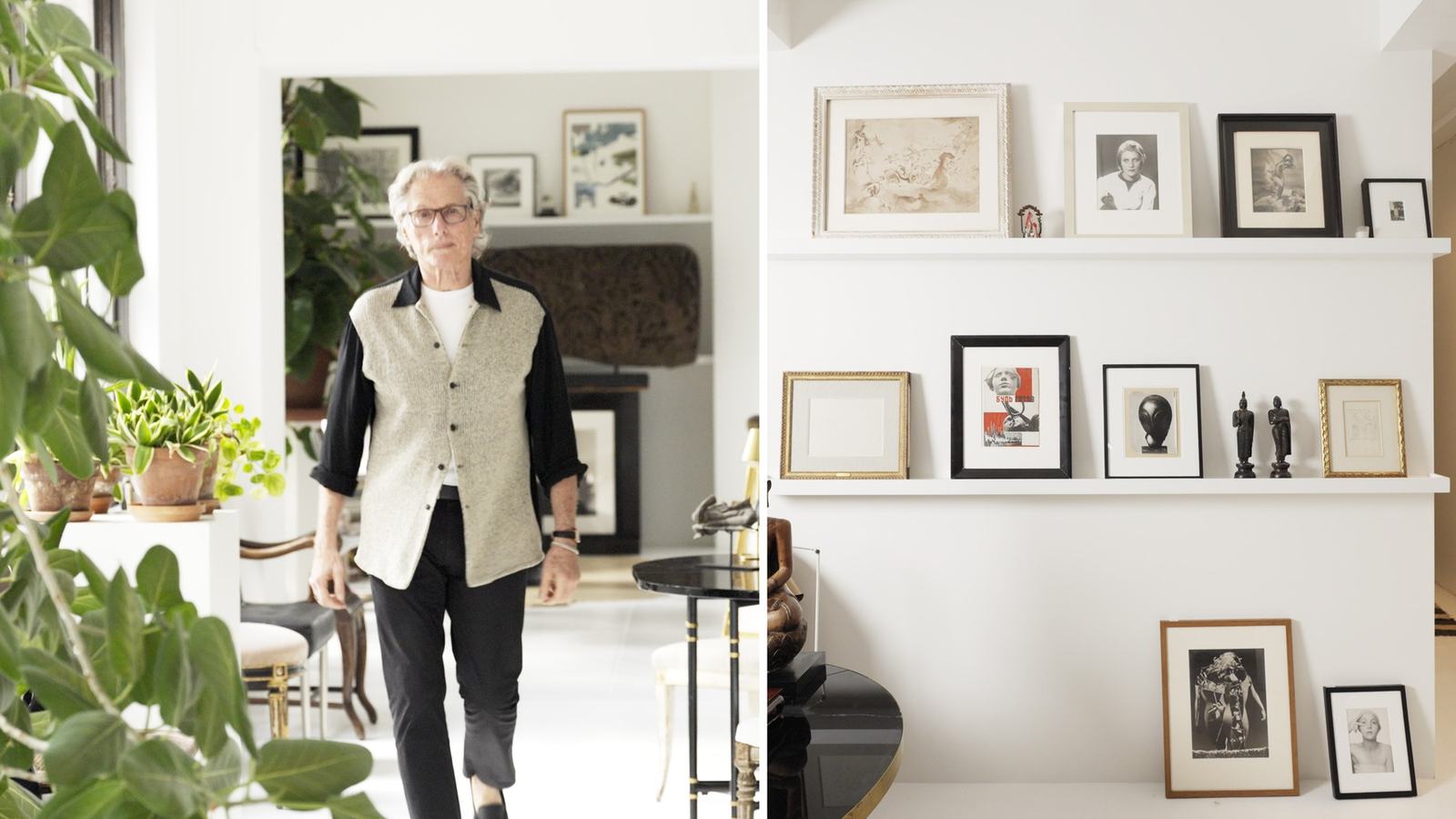
Interior designer Vicente Wolf's collection of nearly 200 photographs, built over almost fifty years, goes to Christie’s New York in live and online auctions in October.
A designer's private eye becomes public
Christie's is presenting The Vicente Wolf Photography Collection in New York this October, bringing almost two hundred photographs assembled by the celebrated interior designer to the market. An online auction runs from 8 to 22 October, with a live sale on 22 October and a public exhibition from 16 to 21 October. Wolf gathered the collection over nearly half a century, developing an eye for experimental European work and historically important American photography.
The event offers something quite different from a conventional survey of expensive names. An interior designer's personal collection demonstrates how a two-dimensional image may acquire meaning through repeated encounters in the privacy of a home. Here the objects are not simply decorative additions: rare printing processes, unusual compositions and evidence of the photographer's working method are central to their appeal.
Avedon's encouragement began an extended search
Wolf has traced the beginnings of his collecting to encouragement from photographer Richard Avedon, who recognised his interest in the medium. His acquisitions eventually ranged across Italian Futurism, Russian Constructivism, European Surrealism and American Modernism, alongside later works by photographers such as Diane Arbus and Francesca Woodman. The resulting group reflects curiosity rather than a narrow commitment to one artist or period.
For an owner building a significant collection, that example raises a useful question about purpose. Buying the most famous work in each category can produce an impressive inventory, but it does not necessarily create a coherent environment for living. Developing a disciplined interest in process, subject and the interaction of objects may provide a stronger basis for a collection that can be enjoyed privately and loaned publicly.
Early photographs are exceptionally demanding objects
Highlights include Edward Steichen's 1921 photograph of Thérèse Duncan on the Acropolis, early photographic modernism and an unusual version of Dorothea Lange's Migrant Mother. Christie's has also identified work by Man Ray, Lee Miller, Alexander Rodchenko and Varvara Stepanova. Some images survive in small numbers and have histories of editing, retouching or preparation for publication that add another layer of evidence.
Print dating and process may determine whether a photograph is an exceptional acquisition or a later, more widely available impression. Buyers should examine paper, stamps, inscriptions, print history and possible conservation interventions. Two copies of a famous image can have entirely different historical significance. Technical expertise is especially valuable where attribution or the date of printing is uncertain.
Modernist experimentation moves across borders
Wolf's holdings reflect the energy with which photographers in the early twentieth century approached machinery, movement, montage and the human body. A photograph could be manipulated, cropped or painted, challenging the expectation that a camera only records appearances. Later documentary images developed a different relationship with evidence, politics and public memory, making the range of the collection intellectually demanding.
The fact that one owner brought these works together can illuminate affinities that a museum's chronological arrangement might obscure. Displaying them successfully requires attention to scale, light exposure and the need for rest periods away from illumination. Fine photographs can be sensitive to ultraviolet light and humidity, and owners should think carefully before installing vulnerable works in a glass-walled waterfront property.
From private enjoyment to public auction
Christie's is offering the collection through both live and online formats, which permit different audiences to participate and give buyers time to review individual lots. Estimates vary widely, so a collector should approach each print through condition, provenance, edition details and personal importance rather than anticipating a uniform premium for Wolf's ownership. The auction house's material is a starting point for research.
For an experienced buyer, the October exhibition provides a chance to compare surface, tonal range and scale directly. The resulting sales may help reveal demand for historically significant photographic prints, but a hammer result should not be confused with their broader cultural value. Wolf's personal selections remain a compelling case study in how an accomplished designer can make collecting a serious and sustained intellectual pursuit.
Source
Christie's Press Office