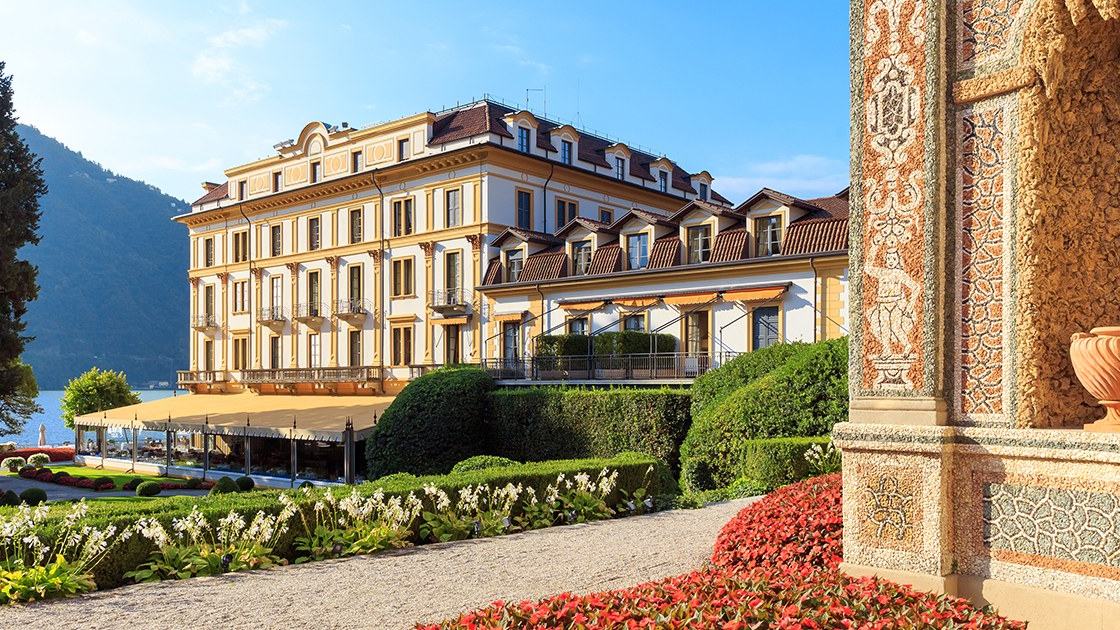
Villa d’Este’s private villas range from intimate Mosaic House to the expansive Villa Garrovo, extending the hotel’s Lake Como hospitality into private homes.
A different kind of Lake Como address
Villa d’Este is one of Lake Como’s longest-established luxury hotel estates, known for landscaped grounds and a waterfront setting at Cernobbio. For travellers looking beyond a conventional hotel suite, the property also has a collection of four private villas. Their layouts and capacities vary considerably, allowing a party to choose between a compact retreat and an entire family residence. They offer a degree of separation from the hotel’s public spaces while remaining part of its hospitality environment.
The official press information identifies Villa Cima, Villa Garrovo, Villa Malakoff and Mosaic House. They are different properties rather than interchangeable versions of the same accommodation. Villa Cima has four bedrooms within approximately 650 square metres; Villa Garrovo offers six bedrooms across roughly 700 square metres. Villa Malakoff is around 300 square metres with four bedrooms, while Mosaic House is an intimate one-bedroom residence of approximately ninety square metres.
Those numbers give a starting point, but floor plans tell a fuller story. A six-bedroom villa may suit a family reunion or a gathering of close friends, whereas a one-bedroom house will appeal to a couple seeking privacy without extensive domestic space. Guests should compare bedrooms, stair access, terraces and staff accommodation before reserving. The right residence is the one that supports the actual people travelling, not simply the one with the largest measurement.
Historic architecture and contemporary expectations
The appeal of Lake Como lies partly in the relationship between architecture, water and the surrounding mountains. A historic villa can make those relationships unusually personal, inviting guests to occupy rooms that feel closer to a home than to a standardized hotel. The same heritage character may introduce practical constraints, including old stair arrangements, uneven external surfaces or complex circulation between bedrooms. Such details are worth exploring when booking for older relatives or younger children.
Villa d’Este’s grounds and lakeside views contribute to the experience even when a guest chooses to remain close to the residence. A quiet breakfast on a terrace can be as significant as an elaborate trip around the lake. Those bringing professional photographers or planning a private gathering should confirm permissions, especially where other guests and heritage interiors may be affected. Exclusive accommodation does not imply exclusive rights over the entire hotel estate.
The four villas also offer different relationships to the main hotel. Some guests will want quick access to dining, spa services and leisure amenities; others will prefer a more self-contained rhythm. It is sensible to ask precisely which hotel facilities are available to villa residents and whether any require advance reservations. A written service schedule helps a party with personal staff coordinate discreetly with the property team.
The wider estate and life beside the lake
Villa d’Este operates a substantial hotel in addition to its private residences, with restaurants, landscaped parkland and leisure facilities that have helped define its reputation. One of the estate’s recognisable features is a swimming pool extending into the lake environment. The apparent tranquillity of the water should not be mistaken for freedom to swim anywhere; guests should use designated areas and follow the property’s safety guidance.
Lake Como is well suited to carefully arranged boat excursions, visits to lakeside towns and a slower appreciation of villas and gardens. Water conditions, navigation rules and busy seasonal traffic can affect how pleasant a journey feels. The captain of a visiting yacht or a hired local vessel should control its operating decisions. A hotel concierge can coordinate reservations, but marine safety and permissions are responsibilities for the appropriate operators.
Dining is another reason not to overfill the schedule. An evening at the hotel can be complemented by a thoughtfully chosen restaurant in the region, though bookings may require considerable notice in popular periods. Guests with dietary restrictions should share details before travel. More broadly, the lake’s character becomes richer when visitors pay attention to its communities and history rather than treating every shore as a private playground.
Arranging a family residence with confidence
A private-villa stay can have more moving parts than a hotel booking. Different bedroom needs, arrivals from multiple airports and expectations about food service should be gathered into one clear brief. Clarify whether private dining, housekeeping, security or transport is included, or charged separately. The villa’s size alone cannot answer those questions. Good planning lets the hotel deliver personal service without a constant series of interruptions.
Lake Como’s roads and waterfront access deserve specific attention. A prominent villa may still sit behind routes unsuitable for large vehicles or hurried transfers. Guests combining a hotel stay with a private yacht visit should verify permitted embarkation points and coordinate luggage separately. Weather can change water-transfer plans at short notice, making an adaptable ground alternative useful. A memorable arrival is one that works smoothly rather than merely looks impressive.
Villa d’Este’s four residences show how differently private accommodation can be interpreted within one historic estate. From Mosaic House to Villa Garrovo, the choices are about party size, privacy, architecture and the rhythm of lake life. For experienced luxury travellers, the strongest proposition is the opportunity to combine the individuality of a residence with the surrounding services and enduring atmosphere of a Lake Como institution.