VIRTÙ at Four Seasons Tokyo at Otemachi has been recognised among Japan's ten leading bars by Tatler Best Bars Asia Pacific, adding to its Asia's 50 Best Bars and global honours.
Ultra-luxury cocktail culture, 12 November 2026. VIRTÙ's new inclusion in Tatler's 2026 Japan Top Ten Bars is a distinct accolade from the bar's earlier Asia's 50 Best and global rankings; these results should not be conflated.
A Tokyo bar gains another international distinction VIRTÙ, the cocktail bar on the thirty-ninth floor of Four Seasons Hotel Tokyo at Otemachi, has been recognised among Japan's Top Ten Bars in Tatler's Best Bars Asia Pacific programme for 2026. The hotel announced the distinction on 9 November, identifying it as the third consecutive year in which VIRTÙ has received a Tatler Best recognition. It follows previous honours, including a Best Service award and placements in other bar rankings. Such distinctions can be useful to travellers planning a special evening, but they should be understood precisely: the Tatler inclusion is a national top-ten designation within a wider Asia-Pacific programme, not a new claim that VIRTÙ has become the world's number-one bar. A sophisticated bar can be judged in several ways—drinks, design, service, atmosphere and consistency—and different award systems use different methods. The value of this latest news is its specificity, not an exaggerated superlative.
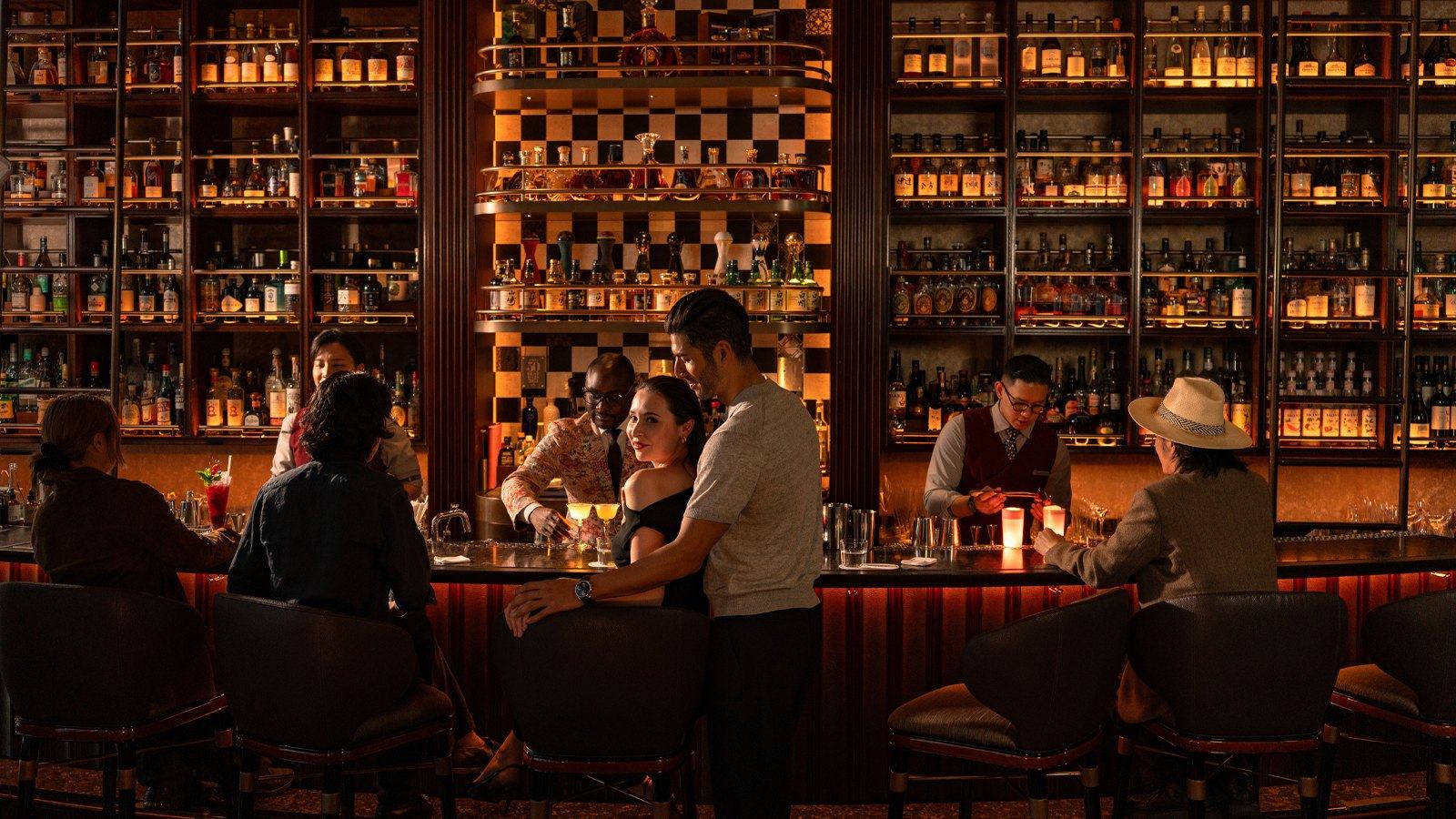
Parisian influence meets the modern Tokyo skyline The bar's design is described as a conversation between Parisian romance and Tokyo's contemporary energy. With high-level views across the city and an interior drawing on Art Deco glamour, the setting is intended to make the experience feel different from a conventional ground-floor hotel lounge. The surrounding architecture, lighting and view can be central to why a guest chooses a bar for a memorable evening. Yet a striking room does not automatically create a satisfying cocktail experience. Seating, acoustics, the ease of conversation and how attentively the team manages the pace of service matter just as much. For private travellers, the balance between an animated social atmosphere and discretion can be particularly important. The public announcement does not specify exclusive-use areas or guarantee a secluded table, so such requirements should be discussed directly with the venue.
Rare French spirits form part of the identity Four Seasons describes a beverage programme built around vintage French liqueurs, rare cognacs, Japanese spirits and seasonal elements. These ingredients are not valuable simply because they are expensive. A vintage liqueur may have different flavour characteristics and preservation needs from a new bottling, while a rare cognac can be exceptionally subtle in a well-designed drink. A bartender's judgement lies in knowing when to make an ingredient central and when to avoid overpowering it with additions. Collectors sometimes prefer to enjoy rare spirits neat, while others value a cocktail that reveals an unfamiliar dimension. Neither approach is inherently superior. A guest interested in an unusual bottle should ask about provenance, serving conditions and price before ordering, particularly where rare stock may be offered in small quantities or under special arrangements.
Japanese spirits add another dimension The programme's use of Japanese spirits provides a natural counterpoint to French ingredients. Different whiskies, shochu and other distillates can bring a distinctive range of aromas and textures, but the phrase 'Japanese spirit' is not itself a guarantee of rarity or excellence. A considered cocktail should use the ingredient for its character rather than as an exotic label. Guests unfamiliar with a particular spirit may appreciate a concise explanation from the bartender and an opportunity to understand how the drink is constructed. In a hotel that welcomes international visitors, this is a useful part of hospitality: helping a guest discover something without making them feel uninformed. The connection between French and Japanese traditions can be expressed through precision, balance and presentation, though the final drink should remain enjoyable rather than serve as an elaborate theoretical exercise.
Keith Motsi leads the bar team Head Bartender Keith Motsi described the Tatler recognition as meaningful in a region known for intense creativity and competition in cocktail culture. The hotel credits the wider team's warm, intuitive hospitality alongside the drinks themselves. A bar associated with a recognised individual still relies on service professionals, preparation staff and management to maintain standards on busy evenings. A guest may remember an unusual cocktail, but often returns because the team knows how to welcome them and respond to their preferences. For ultra-wealthy travellers, this can include an ability to manage conversations discreetly, anticipate pacing and make appropriate recommendations without pressure. Such service cannot be reduced to a recipe or a dramatic garnish. The hotel's announcement identifies the leadership and philosophy, but every guest experience will still depend on the staff present and circumstances of that particular visit.
Tatler's selection is different from the 50 Best rankings The source says the Tatler Best 100 Bars Asia Pacific is compiled through editorial nomination and independent jury reviews, drawing on a regional network of hospitality professionals and critics. It also notes that VIRTÙ was ranked number 26 in Asia's 50 Best Bars 2026 and number 48 in The World's 50 Best Bars 2026. These are distinct ranking systems and should not be merged as if one organisation issued all three awards. A bar may perform differently across them because the criteria, regional scope, voters and timing differ. A responsible article should report each result under its proper name. The combination of recognitions does suggest sustained attention from professional observers, but it does not mean that every guest will prefer the bar to all competitors. Personal taste remains an important element of hospitality.
A high-altitude location changes the experience The thirty-ninth-floor setting can be a significant part of the appeal, offering a view of Tokyo very different from an intimate street-level cocktail bar. It may suit a traveller who wants to mark an occasion or appreciate the city after a busy day of meetings. The view is also subject to weather, lighting and seating position, and no particular panorama can be guaranteed merely by making a reservation. A well-designed venue must balance the attraction of the windows with the comfort and quality of interior seats. Some guests may prefer quieter corners even when they do not offer the most expansive outlook. An experienced hospitality team should be able to help guests choose what is suited to their occasion, but that requires advance communication where particular preferences matter. A high-end bar is valuable for its total experience, not for the elevation number alone.
Cocktail collecting is not the same as bottle collecting Some private clients collect important spirits at home, while others seek out bars that offer combinations they would never prepare themselves. The two interests overlap but are different. A home collection emphasises provenance, storage, labels and access to rare bottlings, while a bar provides the skill of preparation, interaction with specialists and an atmosphere that cannot easily be transported. At VIRTÙ, the combination of French liqueurs and Japanese spirits is part of the stated identity. Guests interested in a particular producer or vintage should ask whether it is currently available; the press release does not provide a fixed inventory. Nor does it publish a universal price for an exceptional cognac tasting. A discerning guest can make the most of the visit by discussing preferences with staff rather than assuming the most expensive ingredient will produce the most rewarding drink.
Design and service create an integrated luxury offering Regional Vice President and General Manager Uday Rao highlighted the combination of cocktails, personalised service and decor in the hotel’s response to the award. This reflects a familiar challenge in luxury hospitality: the best elements need to feel integrated rather than assembled as separate selling points. A beautifully decorated bar may be memorable on first entry, but guests can quickly notice weaknesses in service timing or the clarity of a drinks menu. Conversely, exceptional staff can make a modestly furnished space memorable. VIRTÙ aims to combine a distinct visual language with demanding cocktail craft and a consistent approach to guests. The award is encouraging for the hotel, yet a sustained reputation depends on maintaining that standard beyond the occasion of a press release. A visitor should regard rankings as helpful information, not as a guarantee of a personal outcome.
Tokyo's cocktail scene gives the honour context Tokyo has a long reputation for precision and attention in beverage service, with bars that approach ice, mixing technique and guest interaction as crafts requiring years of development. It also has venues that deliberately challenge traditional styles through unusual ingredients and contemporary presentations. VIRTÙ's French-Japanese identity places it within this varied landscape rather than claiming to represent all of Japanese cocktail culture. For an international visitor, exploring more than one style of bar can be rewarding. The Tatler recognition adds one more reason to consider the Four Seasons venue, but the city's broader hospitality scene is too diverse to be reduced to a single ranking. A thoughtful evening might include a calm, classic drink, a more experimental preparation and a conversation with the person making it, without requiring every choice to be internationally famous.
What the new distinction establishes VIRTÙ at Four Seasons Hotel Tokyo at Otemachi has been included among Japan's ten leading bars in Tatler's 2026 Best Bars Asia Pacific selection, the third consecutive year of recognition in that programme. The bar operates on the hotel's thirty-ninth floor and is associated with rare French liqueurs, cognac and Japanese spirits, under Head Bartender Keith Motsi. The hotel separately reports its number 26 position in Asia's 50 Best Bars and number 48 in the global 50 Best Bars ranking for the same year. These are verified named distinctions, not a single composite award. The next meaningful story would require an independently confirmed new development such as a major menu introduction or new recognition. For now, the appeal to wealthy travellers is a distinctive setting in which careful cocktail making, service and Tokyo's skyline can be enjoyed together.
Primary source: Four Seasons Tokyo at Otemachi, 9 November 2026, VIRTÙ in Tatler Japan Top 10 Bars.