Christie's presents William I. Koch's collection in New York on 17–18 November, led by Monet and Cézanne works each estimated at $12m–$18m.
Collector's preview, 11 November 2026. Christie’s forthcoming sales are scheduled for 17–18 November. All dollar values below are presale estimates or previously reported results, not predictions of the forthcoming auction outcome.
A sailor and collector places part of a lifetime's art before the market Christie's has announced a group of paintings and works on paper from the collection of William I. Koch for its November 2026 sales in New York. For Superyacht Guide readers, the identity of the collector adds an unusual maritime dimension. Koch is an America's Cup winner as well as an industrialist and art collector, according to the auction house. The works being offered are art, not yacht memorabilia, but they provide a window into a life in which major collecting and competitive sailing have both played significant roles.
Christie's says the selection is expected to achieve more than $40 million across its 20th Century Evening Sale and related Impressionist and Modern Art sales. That expectation is a presale statement by the seller's auction house. It is not a result, a guarantee or a valuation of Koch's whole collection. The 17–18 November programme gives the public an opportunity to look closely at paintings that have remained in private ownership for decades, while collectors decide whether to bid or simply attend the previews.
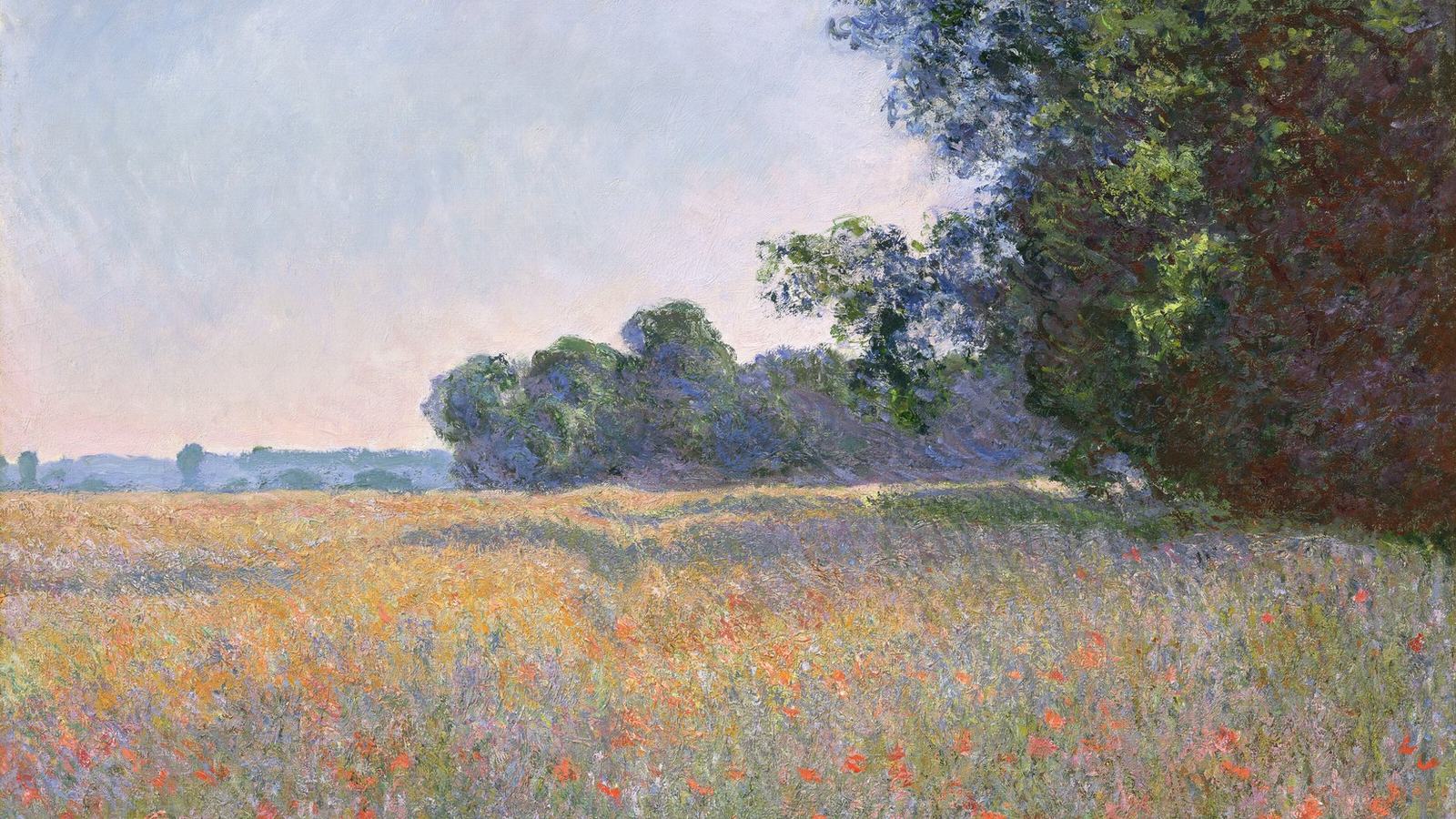
Monet's 1890 landscape leads the Impressionist group Claude Monet's Champ d'avoine et coquelicots, painted in 1890, is a leading work in the announcement. Christie's gives it an estimate of $12 million to $18 million and says Koch acquired it in 1985. The subject brings together oats and poppies near Giverny, where Monet explored fields, gardens and changes of light. The painting is a recognisable landscape, but its interest also lies in the relationship between blocks of colour, natural growth and the shifting atmosphere of a scene observed outdoors.
The auction house places the work in the period when Monet was developing his approach to repeated subjects and changing conditions, including the grain-stack paintings that would become central to accounts of his work. This is a specific art-historical context; it should not be inflated into a claim that the painting is a unique prototype for a later series. Serious buyers should examine catalogue scholarship, condition reporting and the exact provenance. For other visitors, seeing the painting in person may matter more than the estimate, because surface and colour cannot be fully judged from a computer screen.
Cézanne's still life provides a deliberate contrast Paul Cézanne's Tasse, verre et fruits, dated to around 1877, is also estimated at $12 million to $18 million. Christie's says Koch bought it in 1986. The subject is a tabletop arrangement, but its construction is quite different from the Monet landscape. Cézanne's attention to shape, the relationship between colours and the arrangement of objects reflects an alternative path toward modern painting. The two works make a useful pair for visitors because they show how painters working within a broad historical period could pursue very different questions.
The comparison is artistic, not a proposed choice between two equivalent investments. A Cézanne still life and a Monet field picture have different histories, condition issues, audiences and market comparables. Identical estimate ranges do not make them interchangeable. The outcome for either painting will depend on the particular work and its reception in the auction room. Buyers should also distinguish a hammer price from the total paid after buyer's premium, taxes and any other applicable charges.
Matisse and Degas widen the historical view The collection is not limited to its two leading estimates. Christie's identifies Henri Matisse's La bayadère, dated 1929, with an estimate of $5 million to $7 million. It also lists Edgar Degas's Scène de ballet, a work combining pastel with monotype, at $3 million to $5 million. The auction house notes a provenance connection between the Degas and the Philadelphia collector Annie Riddle Scott, who acquired it on the recommendation of Mary Cassatt. Those are significant details but should be examined in the formal catalogue rather than treated as a substitute for documentation.
The broader selection also includes works by Rodin, Chagall, Miró and Diego Rivera, according to Christie's. A private collection spanning several schools and generations is interesting because it reveals individual choices rather than the systematic coverage of a museum. Such breadth can reflect a collector's curiosity, changing tastes or opportunities encountered over many years. The catalogue may help trace those decisions; the presence of several famous names alone does not explain them.
What long ownership adds to the story Monet acquired in 1985 and Cézanne acquired in 1986 have been associated with Koch for roughly four decades. That does not establish what either will sell for, but it matters for understanding how the works came to market. The last public sale of an important painting may have been many years earlier, making current pricing comparisons difficult. A long-held work can also be familiar through exhibitions and reproductions while remaining seldom available to purchase. Ownership history and exhibition history therefore warrant separate consideration.
Provenance research has a practical and ethical role. Collectors should consider ownership documents, export restrictions, restoration records, authenticity and any unresolved claims tied to a particular object. These checks must be specific, avoiding casual insinuations about a work merely because it was made in Europe before major political upheavals. An auction catalogue is an important starting point; additional independent professional advice may be appropriate before an acquisition of this scale.
The collection has already appeared in other specialist sales Christie's says this November presentation follows other sales of material from Koch's holdings. It reports that a June 2025 single-owner wine sale achieved $28.8 million and that a January sale of American art realised $84 million. Those are past results, given by the auction house, and should not be added mechanically to the forthcoming estimate as if they formed one consolidated current valuation. Wine, American art and European modern painting are distinct markets with different liquidity and buyer interests.
The sequence also shows that a major private collection may be dispersed through several carefully grouped events. An owner deciding to sell can choose between public auction, private treaty and other routes, each with trade-offs around timing, publicity, confidentiality and fees. It would be speculative to infer Koch's personal motives beyond what is stated publicly. Christie's quotes him expressing a desire for new collectors to enjoy the pieces and share that enjoyment with others; the comment gives the sale a human dimension without answering every commercial question.
The America's Cup connection is cultural rather than transactional Koch's maritime reputation makes this sale interesting to a superyacht audience, but there is no basis to suggest that any yacht is part of the art offering or that the sale funds a marine project. Competitive sailing and ownership of large yachts demand different daily disciplines from fine-art collecting. They do, however, share certain habits: specialist advice, capital commitment, exacting maintenance, team selection and an appreciation of objects built or created to exceptional standards. Those parallels are editorial observations, not claims made by Christie's.
For a yacht owner travelling to New York, the sale week may be a cultural addition to an itinerary. A visit can be valuable even without any intention to bid. Guests might compare the Monet with the Cézanne, consider the collector's personal range or attend a specialist presentation where available. Those possibilities should be confirmed directly with the auction house. No private tour, appointment or privileged viewing is implied by the public announcement.
Practical questions before a major artwork changes hands Successful acquisition involves more than identifying an attractive picture and setting a bidding limit. A buyer must know the condition, conservation history, export and import requirements, insurance arrangements, secure transport needs and where the object will live. The environment aboard a yacht is different from a controlled gallery: movement, humidity, sunlight and periods without specialist supervision can create serious concerns for vulnerable works. Professional conservators should advise on any proposal to display a valuable original at sea.
Collectors may prefer to keep such paintings in a suitably managed land-based collection and use yachting to reach exhibitions, artists and museums. Either way, stewardship continues after the sale. Documentation should remain accessible, condition reports should be updated when appropriate and future handling should be planned before moving a work. The same care applies to a private owner who never expects to sell; conservation does not begin only when an auction estimate appears.
What the November sales will actually establish The 17–18 November New York auctions will provide observable prices only for works that sell and for which results are published. Christie’s estimate for the group and estimates for individual paintings are confirmed as presale guidance, but final bidder participation and totals remain unknown at the time of this preview. It is important to separate an aggregate expected outcome, individual estimates and the eventual premium-inclusive results. None should be mistaken for a precise measure of the value of the worldwide Impressionist art market.
Beyond the numbers, the Koch offering brings together a distinct collecting identity and a strong group of modern paintings. The same individual associated publicly with an America's Cup victory has assembled works by Monet, Cézanne, Matisse and Degas that will now be scrutinised by a new audience. That intersection of sailing, culture and collecting is sufficient reason for attention. The story deserves to be followed through the actual auction results, rather than reported as a record or triumph before a paddle has been raised.
Primary source: Christie's Press Office, The William I. Koch Collection.
Photo licence and source
Claude Monet, Champ d'avoine et coquelicots (1890). Public-domain faithful reproduction of Claude Monet's 1890 painting from Wikimedia Commons. This is the exact Monet work named in Christie's sale announcement, not a Christie's press photo. Public-domain image source.
