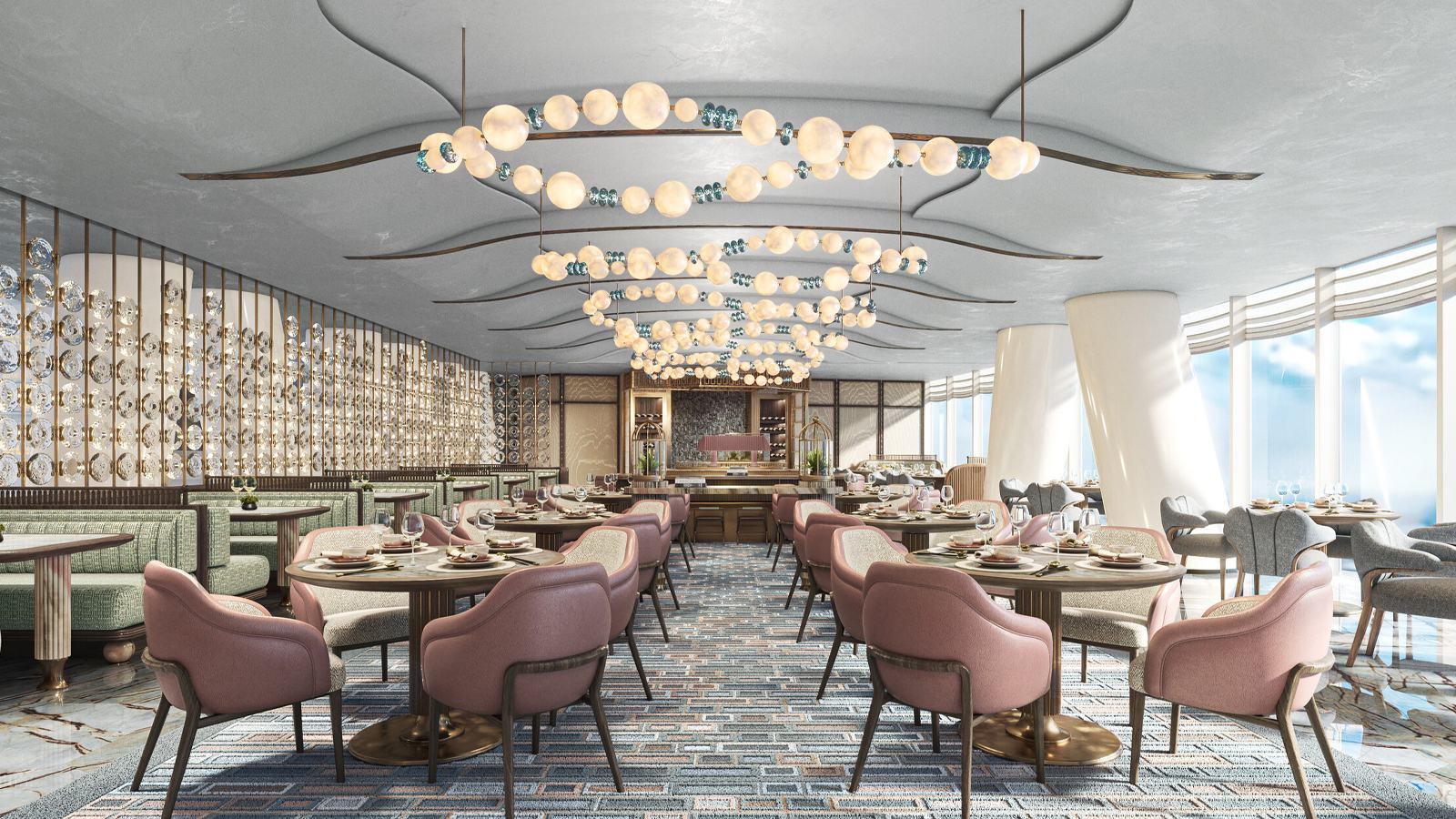
Yu Yue Heen has reopened after a complete transformation, pairing Michelin-starred Cantonese cuisine with AB Concept interiors shaped by Cantonese Opera and Lingnan culture.
Yu Yue Heen at Four Seasons Hotel Guangzhou has reopened after a complete transformation of both its interior and culinary expression. Set on the 71st floor, the Michelin one-star restaurant now uses Cantonese Opera as a design language, while the menu continues to explore Cantonese technique, Lingnan ingredients and contemporary presentation.
AB Concept turns the dining room into a stage
The redesigned interior takes rhythm, gesture and emotional tension from Cantonese Opera rather than copying theatrical decoration literally. Curved glass screens, lacquered surfaces and restrained lighting create layers that change as guests move through the 71st-floor space.
The city beyond the windows becomes part of that stagecraft. Guangzhou’s skyline and Canton Tower provide a constantly shifting background, allowing the restaurant to feel connected with the city rather than enclosed in a self-contained luxury interior.
Private rooms reinterpret operatic characters
Six private dining rooms are each shaped around the character and ceremonial dress of different Cantonese Opera roles. The concept allows colour, material and atmosphere to vary from room to room while preserving a coherent cultural idea across the restaurant.
For private clients, these rooms also provide the discretion expected from top-level dining in a major business city. The design gives privacy more personality, turning a functional requirement into part of the cultural experience.
The menu follows the same rhythm as the room
Yu Yue Heen’s cooking continues to centre on Cantonese precision, ingredient clarity and texture. Dishes including fish-based soup, Shunde rice cake with pork and lobster with garlic cream use familiar techniques and products while presenting them through a contemporary lens.
The key is restraint rather than novelty for its own sake. A restaurant with a Michelin star and strong regional identity has more to gain from deepening technique and sourcing than from disguising traditional flavours under unnecessary visual effects.
Chinese wine and tea extend the sense of place
The beverage programme includes wines from Chinese regions such as Ningxia and Shangri-La alongside selected Chinese teas. This gives the meal another layer of regional storytelling and reduces the automatic dependence on imported European references.
For international luxury travellers, that is increasingly interesting. Exploring contemporary Chinese wine and tea beside refined Cantonese cooking offers a broader picture of the country’s evolving food culture than a meal built around cuisine alone.
Official sources: press.fourseasons.com.
Source
press.fourseasons.com