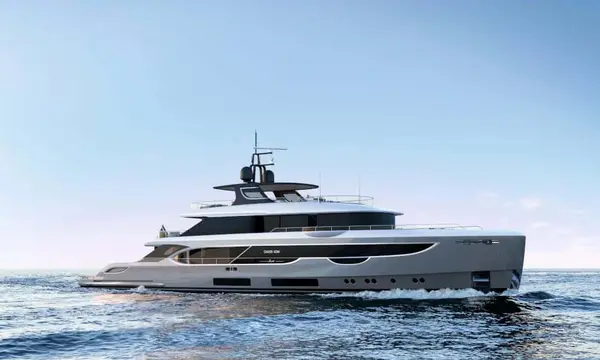
40m Superyacht Running Costs: Crew, Fuel, Berthing and Refit
Running a 40m superyacht requires a substantial annual budget for crew, maintenance, fuel, berthing and other operating costs. Superyacht Guide's 2026 model of 322 …
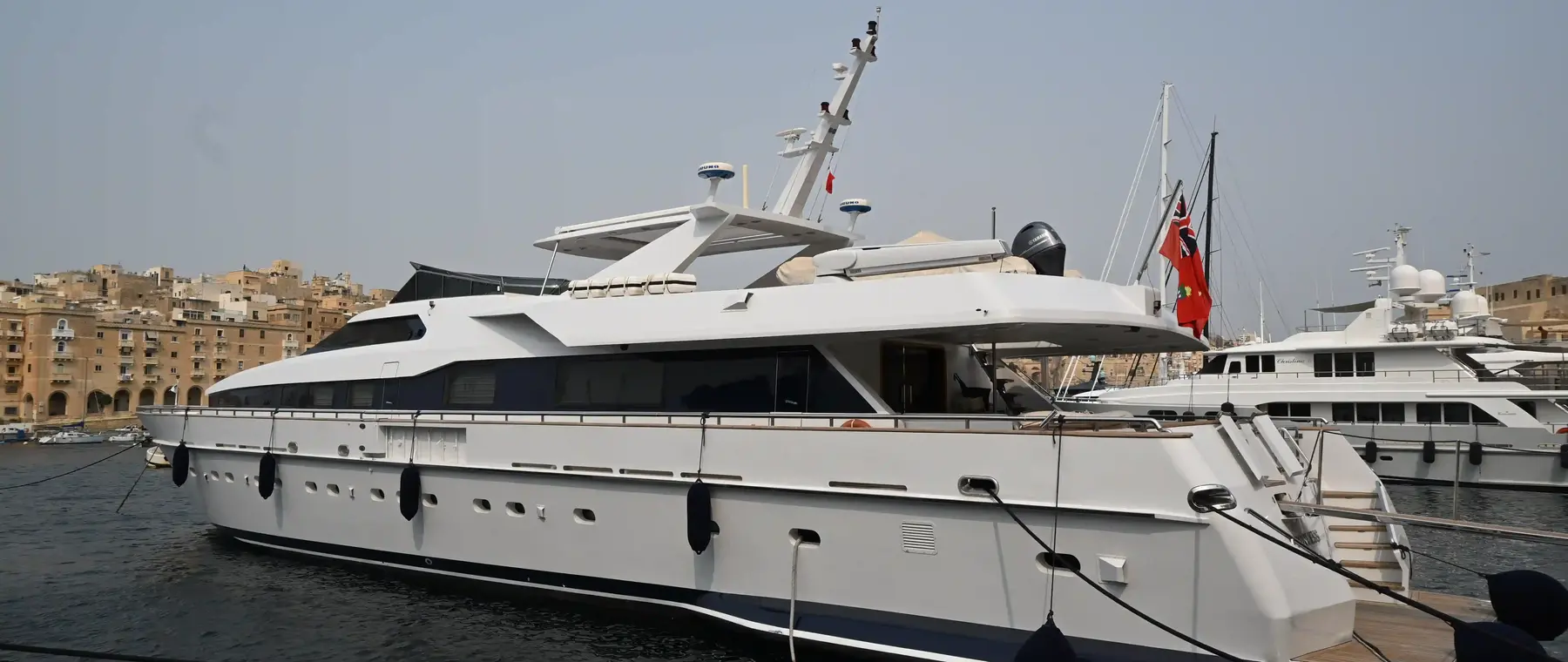
A professionally crewed 30m superyacht can reasonably require around €2 million to €3 million a year to operate, depending on age, use and cruising programme. This 2026 budget shows where the money goes.
A 30-metre superyacht sits at an interesting point in the ownership curve. It is large enough to require a professional crew, formal maintenance, insurance, technical management and serious marina planning, but still small enough that an owner may assume the annual budget will remain relatively modest. In practice, the purchase price is only the beginning.
For a professionally crewed 30m motor yacht, a sensible 2026 planning range is around €2 million to €3 million a year before exceptional capital projects. Rosemont Yacht Services publishes the same broad 30m range, while Fraser Yachts and Camper & Nicholsons both use approximately 10–15% of yacht value as a general ownership benchmark rather than a fixed formula. The real number depends on age, crew structure, cruising programme, fuel use, home port and how aggressively the owner wants the yacht kept guest-ready.
The most useful way to budget a 30m yacht is not to multiply its market value by a percentage and stop there. A bottom-up operating plan should identify the people, machinery, berth, insurance, maintenance and compliance costs that have to be paid whether the yacht cruises for 20 days or 120 days, then add the programme costs created by actual use.
For a modern privately operated 30m motor yacht with a professional crew, Mediterranean base and moderate seasonal cruising, Superyacht Guide would use the following €2.4 million central planning case. It is an editorial model rather than reported accounts for any individual yacht, and the categories should be adjusted to the vessel's real crew list, engine hours, class status, insured value and cruising programme.
Annual cost Central budget Crew salaries & employment€850,000 Crew travel, training, medical & uniforms€100,000 Maintenance & routine repairs€400,000 Major refit & renewal reserve€250,000 Fuel & lubricants€180,000 Marina, port, agency & customs€180,000 Insurance€120,000 Management & accounting€90,000 Class, flag & surveys€60,000 Communications & IT€40,000 Provisions & guest operations€80,000 Tenders, toys & deck equipment€50,000 Total€2,400,000
That central case sits inside Rosemont's published €2m–€3m planning range and is consistent with the broader industry view that annual ownership cost should be built around the yacht's actual operating profile rather than purchase price alone. A lightly used new yacht based in a predictable marina may come in below it, while an older yacht with heavy cruising, frequent guest use or a major yard period can move well above it.
Crew is normally the largest recurring line because a 30m yacht is no longer an asset that can simply be switched off when the owner goes home. Rosemont describes a typical 30m professional complement as roughly four to six crew, while Burgess says crewing typically represents around half of annual running costs across the yachts it manages. That burden includes more than monthly salary: payroll costs, travel, medical cover, training, recruitment, uniforms, food, leave and relief arrangements can all sit behind the headline wage bill.
In the €2.4 million model, direct salaries and employment account for €850,000, with another €100,000 reserved for travel, training, medical and uniforms. Together that is just under 40% of the total, a deliberately moderate assumption for a compact 30m operation; a yacht with rotation, a larger hotel team or heavy charter use can move materially higher.
Routine maintenance is what keeps machinery, paint, teak, HVAC, generators, stabilisers, navigation systems, safety equipment and hotel systems functioning throughout the year. Fraser identifies maintenance as one of the structural costs of yacht ownership and notes that older or more heavily used yachts generally demand more, which is why a 30m budget needs a meaningful maintenance line even in a year without a major failure.
The refit reserve is separate. Classification cycles, paint, machinery overhauls, technology replacement and larger renewal work do not arrive evenly every twelve months, so an owner who budgets only for routine repairs can have an apparently cheap year followed by a very expensive one. Setting aside €250,000 annually in the central case does not mean that exact amount will be spent every year; it is a way of smoothing lifecycle expenditure and avoiding the illusion that major yard work sits outside the economics of ownership. Rosemont likewise highlights major survey and maintenance periods as expenditure owners should anticipate in advance.
Fuel is one of the most variable categories in the budget. A yacht that remains around the western Mediterranean with relatively short passages and long periods alongside or at anchor can have a very different fuel profile from one that repeatedly repositions, cruises at higher speed or operates generators and tenders intensively. The €180,000 central allowance is therefore a planning assumption rather than a fixed annual charge.
Berthing is equally sensitive to location. Monaco's published marina tariffs demonstrate how a 30m yacht can face materially different costs according to season and berth choice, while premium events and scarce seasonal positions create a different commercial environment again. An owner who bases the yacht in a less expensive port and visits premium destinations selectively will therefore have a very different marina bill from one expecting prime berths throughout the Mediterranean season.
Insurance depends on insured value, age, claims history, cruising area and the breadth of cover. Fraser gives a broad yacht-insurance benchmark of approximately 0.5–2% of vessel value, but an owner should budget from an actual specialist marine quotation rather than inserting that range blindly into an operating spreadsheet. The same principle applies to management, flag and class expenses: smaller than crew or maintenance, but part of running the yacht professionally rather than optional extras.
Age is one of the fastest ways to move the budget. Deferred maintenance, obsolete AV/IT, ageing generators, paint deterioration, teak replacement, stabiliser work and machinery overhaul can turn a normal operating year into a yard year, while a newly acquired yacht may reveal technical work that was not obvious from the asking price alone. Superyacht Guide's existing ownership-cost guide makes the same point at larger sizes: length matters, but age, condition, volume, crew and technical complexity can matter just as much.
Usage is the other major variable. A yacht that cruises continuously, carries guests frequently, operates tenders and toys every day and changes ports often will consume more fuel, create more wear, require more provisioning and generate more crew logistics than a lightly used private yacht. Commercial charter can offset part of the owner's net cost, but it can also increase compliance, maintenance, guest consumables and management workload, so gross charter revenue should never simply be deducted from the private operating budget without modelling the extra burden.
A 30m yacht can therefore be relatively predictable to own, but only when the budget is built around the actual vessel rather than the idea of a “30m yacht.” The strongest starting point for 2026 is around €2 million to €3 million annually, with approximately €2.4 million as a useful central planning case for a professionally crewed Mediterranean motor yacht. The owner should then replace each modelled category with real salaries, supplier quotations, berth arrangements, insurance terms and maintenance forecasts before treating the figure as an operating budget.
The bigger lesson is that running cost is not a percentage of prestige. It is the sum of people, machinery, compliance, maintenance and use, and those costs continue whether the yacht is crossing the Mediterranean or sitting quietly at the dock. A disciplined owner therefore budgets for readiness first and lifestyle second, because the yacht can only deliver the latter when the former has already been paid for.
Continue reading
Running a 40m superyacht requires a substantial annual budget for crew, maintenance, fuel, berthing and other operating costs. Superyacht Guide's 2026 model of 322 …
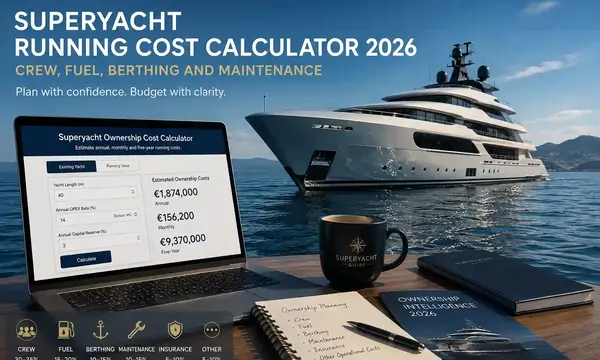
Superyacht Guide's 2026 running cost calculator provides annual, monthly and five-year ownership estimates using either an existing yacht or a planning value. It gives …

A superyacht can function as a full-time home, but continuous living changes crew, maintenance, berthing and operating requirements. We examine the practical and financial …
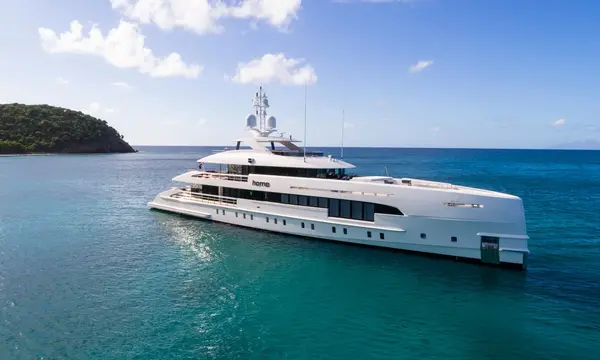
A 50m superyacht can require several million euros a year to keep professionally crewed, maintained, insured, berthed and ready to cruise. Superyacht Guide examines …
Superyacht Guide
Continue into the wider Superyacht Guide.
Business opportunities · Superyacht Guide
Companies serving the superyacht market can discuss clearly identified advertising, sponsorship and business-profile opportunities. Commercial activity remains separate from independent editorial coverage.