Refitted 40m THE JEWEL Joins Northrop & Johnson Sales Fleet
By Superyacht Guide Newsroom · Edited by Superyacht Guide Newsroom
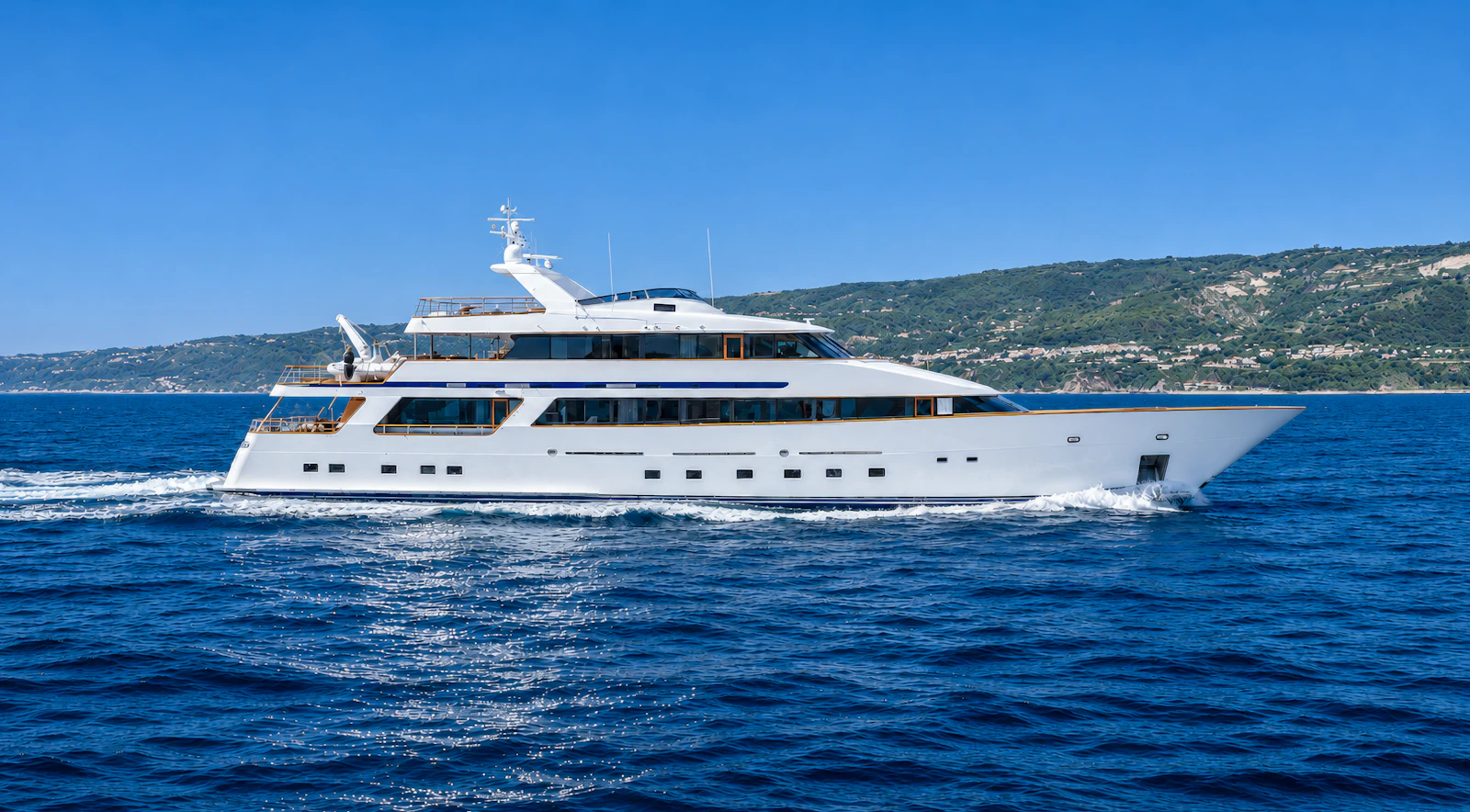
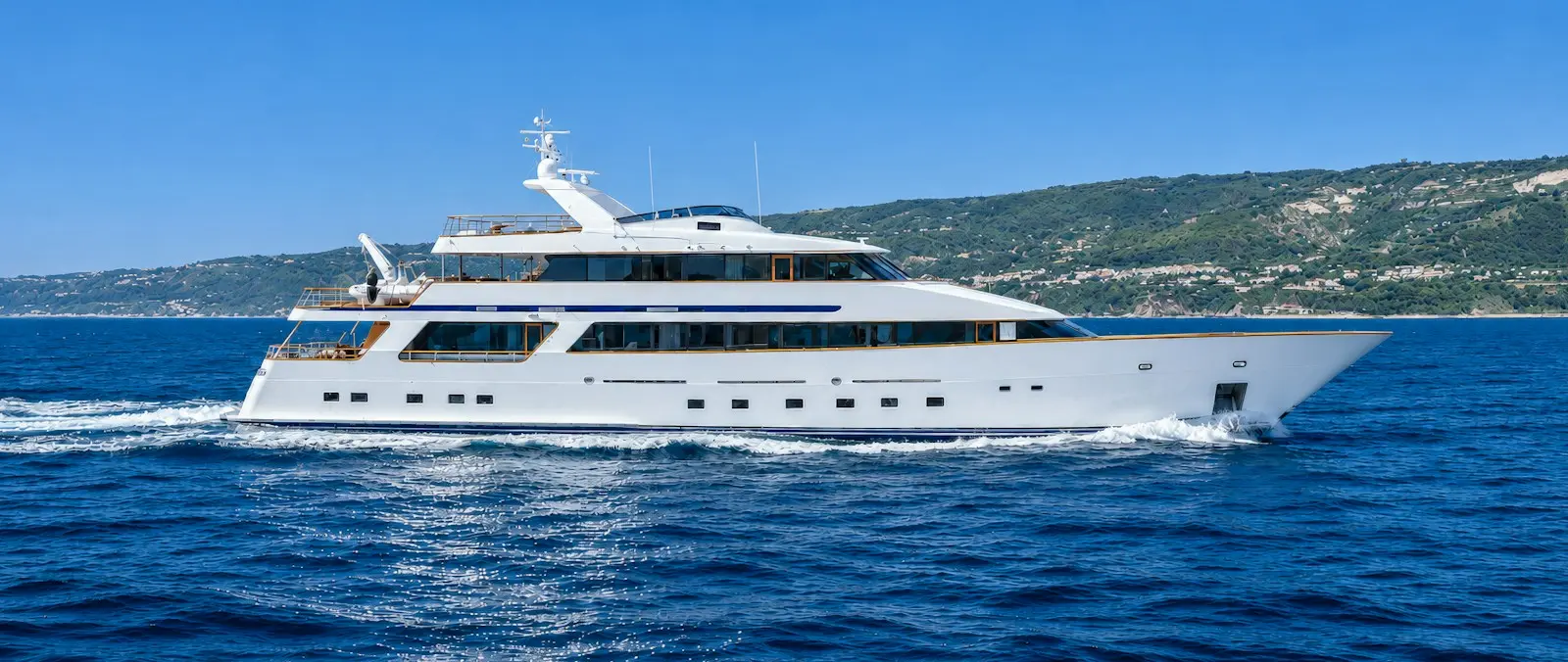
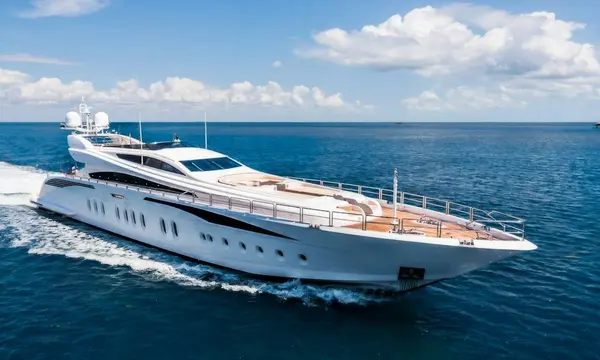
THE JEWEL 40m Northrop and Johnson official 16 November 2026 brokerage release photograph
Northrop & Johnson has listed 40m THE JEWEL for sale following a substantial 2023–24 refit and further technical and cosmetic work through 2026.
Northrop & Johnson announced on 16 November 2026 that THE JEWEL, a roughly 40-metre custom motor yacht built by Elefterios Plessas, has joined its sales portfolio. Matt Palmer and Edoardo Turati are representing the vessel. The brokerage describes a programme of renewal concentrated in 2023 and 2024, with additional work undertaken during the following two years. The significance of the listing lies in the combination of extensive accommodation changes and upgrades to the equipment that supports daily operation. The announcement does not provide an asking price, and there is no basis for describing the vessel as sold or assigning a transaction value. For prospective purchasers, the extent and documentation of the refit are likely to be as important as the yacht's appearance.
A custom yacht of this size offers a different buying proposition from a contemporary production model. Its layout reflects the original design and the changes made during successive periods of ownership. Buyers cannot necessarily compare it against several identical sisterships with readily available market history. Instead, its value must be assessed through the quality of its individual construction, operational condition, accommodation arrangement, documentation and the cost of any outstanding work. The steel hull and the history of recent interventions are particularly useful starting points for technical due diligence. A buyer should not infer a particular remaining structural life simply from the fact that a yacht has undergone a refit. The evidence for that comes from inspection, measurements, survey reports and a review of the maintenance record, ideally with input from appropriately qualified specialists.
The brokerage reports a significant redesign of the main guest living area. Alterations to internal partitions have created a more open salon and dining arrangement, while glazing and electrically operated doors at the rear improve the connection with the outdoor dining and seating area. This type of intervention can transform the experience of an established motor yacht without requiring an entirely new hull. It can also introduce practical questions about structural approval, door reliability, emergency access, water ingress and the way conditioned air is retained when guests move between the two spaces. The public announcement does not specify the engineering method used to support the new layout. During inspection, a prospective owner should therefore ask for the approved drawings, details of the new installation and the relevant survey or acceptance documentation rather than assuming that every partition removed was non-structural.
The accommodation accommodates twelve guests in six cabins, with the principal suite on the upper deck and the remaining guest cabins below. The owner's accommodation was enlarged during the recent work. A private elevated suite can appeal to buyers who want separation from the principal social areas, although the merits of the arrangement depend on access, circulation, noise and the intended use of the surrounding deck. The position of a bedroom matters when guests sleep while the yacht is under way, when the entertainment spaces remain in use late at night and when the crew are undertaking maintenance. A detailed inspection at different times of day is more informative than a floor plan alone. An owner should also assess whether the route from the cabin to the main living spaces is suitable for every member of the family.
THE JEWEL's deck improvements cover both appearance and use. Northrop & Johnson identifies new or renewed awnings, teak deck surfaces, railings, lighting and a bar installation on the sundeck. The bar incorporates refrigeration, ice production and washing facilities. An outdoor hospitality station can reduce the number of trips crew make to interior service areas and help maintain a more relaxed rhythm for guests. Its construction nevertheless needs to withstand salt exposure, sunlight and continuous movement. Drainage, electrical isolation and access to the appliances deserve attention alongside the decorative finish. In the Mediterranean, shaded seating can extend the time guests comfortably spend outdoors, even during the hottest months. Awnings must also be managed according to their operating limits and stowage requirements. These practical details often determine how successfully a redesigned exterior functions over a full season.
Perhaps the most consequential technical detail disclosed in the announcement is the installation of four replacement chillers. Air conditioning on a large yacht is an interconnected system encompassing chilled-water circulation, air handling, electrical demand, heat rejection and control across numerous compartments. Replacing chillers is not equivalent to replacing every component in the network. A buyer should establish what work was undertaken on pumps, valves, distribution pipework, air handlers and insulation, and whether the system has been tested at realistic ambient water and air temperatures. The cooling requirements of an occupied yacht can change materially between a quiet marina stay and an afternoon with twelve guests aboard in a warm climate. Service records, equipment serial numbers and commissioning results help a new chief engineer understand the installation. The brokerage has not provided rated cooling capacities or measured efficiency gains, so neither should be assumed.
Northrop & Johnson also identifies changes to engine-room air circulation, insulation, plumbing and electrical distribution during the refit. Later improvements extended to navigational and electrical equipment. These are important because a fault in a supporting system can interrupt otherwise sound primary machinery. A properly arranged machinery space allows crew to reach valves, filters and electrical panels safely and to perform scheduled work without unnecessary dismantling. Updated distribution equipment can be valuable where previous owners have introduced additional electrical consumers, but its condition and protection arrangements should be independently assessed. A technical handover should include current schematics, circuit identification, relevant equipment manuals, load information and a record of the modifications. The announcement does not establish whether every installation was replaced, so the scope of renewal needs to be understood component by component.
The brokerage advertises a possible cruising distance of approximately 2,300 nautical miles at twelve knots and identifies the yacht's stabilisation equipment as Naiad. These are useful particulars for comparing cruising programmes, but quoted range should not be regarded as a guaranteed passage plan. Consumption varies with the condition of the hull and propulsion machinery, loading, weather, currents and the use of onboard equipment. Fuel reserves and route alternatives must also be considered. Similarly, a stabiliser brand does not alone establish the condition, configuration or operating performance of the installation. A purchaser interested in long passages should ask for logged fuel consumption at representative speeds and inspect stabiliser service records. The listing provides a starting point for those discussions, not independently demonstrated consumption or motion data.
The yacht has accommodation for as many as eight crew members. That capacity is relevant to the number of guest cabins, the maintenance requirements of a custom motor yacht and the intended programme of use. The eventual manning arrangement must be established according to the operation, applicable regulations and the captain's assessment, rather than the number of available berths alone. Following extensive work, a crew familiar with the vessel can hold valuable operational knowledge about equipment access, the location of isolation points and the history of individual faults. A purchaser should identify which of that knowledge is documented and which depends on particular employees. A structured technical handover can reduce disruption if personnel change. Crew accommodation and service circulation should also be assessed during a visit, because the quality of the guest experience depends partly on the working conditions behind it.
For a yacht marketed after several years of upgrades, the priority is to reconcile the public descriptions with invoices, yard work lists, survey documentation and the current inventory. An extensive programme does not eliminate the need for a pre-purchase survey, and cosmetic quality alone does not demonstrate machinery reliability. The prospective buyer should distinguish completed work, ongoing service obligations and equipment expected to reach major overhaul intervals during the next ownership period. This process is especially useful for preparing an operating budget and deciding when the yacht can enter service after completion. THE JEWEL's recent updates and six-cabin arrangement are the principal features highlighted by the brokerage. Whether the yacht meets a particular buyer's requirements, and at what eventual purchase price, can only be determined through inspection, negotiation and an examination of the underlying records.
Primary source: Northrop & Johnson, official brokerage announcement, 16 November 2026.
Photo: Northrop & Johnson, official brokerage news photograph accompanying the 16 November 2026 release. Official source.
Explore
Go deeper into the yachts, companies, events and destinations directly connected to this article.
Continue reading
Northrop & Johnson confirms the sale of 37.19m Horizon RP122 MISS MICHELLE, last asking $13.5m, following a documented brokerage campaign for the 2025 yacht.
Delivered in 2023, Custom Line 120 TFB I joins the market at €11.9 million with a distinctive main-deck arrangement and a 25-knot reported top …
The 2011 Leopard TUTTO LE MARRANÉ enters Northrop & Johnson's sales fleet after a 2023–2025 refit, with a €13 million asking price and 36-knot …
Northrop & Johnson continues to advertise 40m ABOUT TIME at $9.5 million following an October price reduction, with substantial recent technical investment.
Superyacht Guide
Continue into the wider Superyacht Guide.
Business opportunities · Superyacht Guide
Companies serving the superyacht market can discuss clearly identified advertising, sponsorship and business-profile opportunities. Commercial activity remains separate from independent editorial coverage.