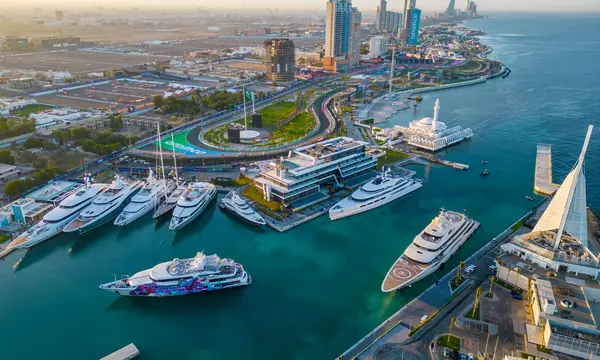
Jeddah Yacht Club Marina Highlights 120m Superyacht Capacity
Jeddah Yacht Club & Marina offers a significant operating base on the Saudi Red Sea, with an official berth limit extending well into the …
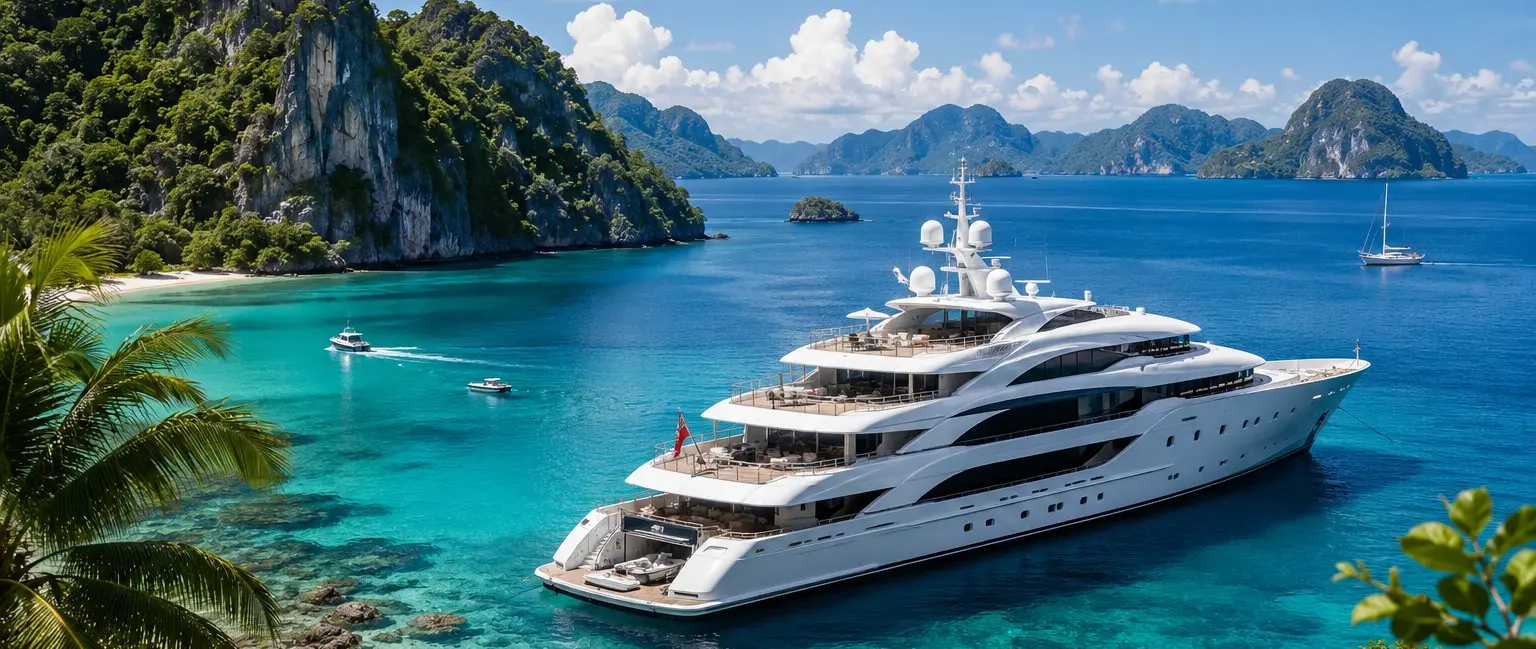
Asia-Pacific offers some of the world's most ambitious superyacht cruising, from Southeast Asia to Australia, New Zealand and Fiji. Its opportunity is enormous, but distance, uneven infrastructure and logistics still determine which itineraries work in practice.
There is a compelling version of the future of superyacht cruising in which owners begin looking beyond the familiar Mediterranean-Caribbean cycle and spend far more time in Asia-Pacific. The raw material is certainly there, from Thailand's limestone islands and Indonesia's enormous archipelagos to Australia's Great Barrier Reef and Kimberley coast, New Zealand's dramatic southern landscapes and the island groups of Fiji and the wider South Pacific.
The attraction is not simply that the region offers somewhere new. Asia-Pacific can provide something increasingly difficult to find in mature yacht destinations: genuine scale, relatively remote anchorages and itineraries in which the yacht once again becomes a means of exploration rather than simply a floating base beside a resort. Indonesia alone contains thousands of islands spread across a vast equatorial archipelago, while the South Pacific provides cruising grounds where major population centres can be separated by substantial stretches of ocean.
Yet the same geography that makes Asia-Pacific attractive also explains why it has never developed as a simple alternative to the Mediterranean. Distances are enormous, seasons differ across the region, superyacht-capable infrastructure remains uneven, specialist technical support is concentrated in particular hubs and entry requirements vary considerably between jurisdictions. Moving east therefore requires a different operating mentality from spending a summer between Spain, France, Italy and Greece.
That distinction matters because the phrase Asia-Pacific can create the illusion of a single cruising market. Singapore, Phuket, Raja Ampat, Sydney, Auckland and Fiji are not neighbouring stops in the way Palma, Antibes, Genoa and Monaco form part of one dense Mediterranean network. They are individual hubs or cruising regions separated by significant passages, different regulatory systems and very different levels of shore support.
Industry organisations are nevertheless investing more effort in presenting those destinations as one broader cruising proposition. In 2026, Superyacht Australia and the Asia-Pacific Superyacht Association expanded their collaborative campaign to promote Southeast Asia, Australia and the South Pacific as part of a wider Asia-Pacific alternative to the traditional Mediterranean and Caribbean cycle. The opportunity is real, but it works best when yachts are prepared to think in terms of long-range positioning, regional seasons and carefully selected operational bases.
The Mediterranean rewards density because major destinations sit comparatively close to one another and are surrounded by an established marine-services ecosystem. A yacht can move between countries while remaining relatively close to fuel, airports, engineering companies, provisioning networks, marinas, shipyards and alternative ports. Even an ambitious itinerary normally takes place within reach of another established service centre.
Asia-Pacific works differently because the most attractive cruising grounds are spread across an enormous geographic area. Indonesia's official tourism material promotes yachting across an archipelago stretching between mainland Southeast Asia and Australia, yet recognised marina facilities are concentrated in a comparatively small number of gateways. Areas farther east can be exceptional cruising territory without offering anything resembling a dense Mediterranean marina network.
This changes how a captain thinks about redundancy. In the Mediterranean, a technical problem can often be answered by diverting to another port with established yacht services, whereas a failure during a remote island programme may involve flying technicians and components into the country, moving the yacht towards a larger commercial port or changing the itinerary altogether. The consequences of a small fault can therefore depend heavily on where the yacht happens to be when it occurs.
The same issue affects owners' expectations because extraordinary isolation and comprehensive infrastructure rarely occupy the same piece of coastline. A remote anchorage may offer exceptional scenery, diving and privacy precisely because the surrounding area has not developed into an international yachting centre. Fuel planning, stores, freshwater production, waste capacity, medical preparation, communications and spare parts consequently become more important as distance from major service centres increases.
A useful way to understand the region is therefore as a network of operational islands as much as geographical ones. Phuket, Singapore, Bali, the Gold Coast, Sydney, Auckland and selected South Pacific marinas provide places where a yacht can restore technical and logistical capacity before moving back into less supported waters. Between those centres are large areas where the vessel's own endurance and onboard capability matter far more.
That does not diminish Asia-Pacific's appeal; in many respects it explains it. Owners seeking a coastline where every anchorage has a beach club and every port contains a superyacht marina already have mature choices elsewhere. Many yachts moving east are attracted precisely by the possibility of operating beyond those environments while still having carefully selected hubs available when serious support is required.
Thailand demonstrates what happens when cruising appeal and support infrastructure begin reinforcing each other. Phuket combines established yacht facilities and international air connections with immediate access to the Andaman Sea, allowing yachts to use the island as a practical operating base before cruising Phang Nga Bay, the Phi Phi islands and the wider western Thai coast. The combination of destination appeal and shore-side support has helped Phuket develop into one of Southeast Asia's most recognised large-yacht centres.
The operating advantage is straightforward because guest logistics and yacht logistics can be handled in the same place. Crew can provision, organise parts, arrange contractors and move people through an international airport while the owner remains within comparatively easy reach of attractive cruising grounds. This is a much stronger proposition than a spectacular destination that requires the yacht to solve every operational problem independently.
Singapore occupies almost the opposite position because its strategic value lies primarily in capability rather than extended leisure cruising. Its international transport links, commercial infrastructure, marine services and marina facilities make it an obvious place to reset an operation before continuing towards Indonesia, Malaysia or Thailand. A city does not need to be the region's most beautiful cruising destination to become one of its most useful superyacht hubs.
This illustrates an important feature of Asia-Pacific infrastructure. The most valuable nodes are not necessarily the places where an owner spends the most nights, because some exist primarily to provide engineering, provisioning, crew movements, administration and access to specialist services. Their importance is measured by how effectively they allow a yacht to continue towards the more remote parts of its itinerary.
Indonesia presents the most dramatic contrast between opportunity and logistics. The country's Ministry of Tourism actively promotes yachting and lists marina facilities in areas including Batam and Lombok, while the archipelago itself offers an extraordinary spectrum of cruising from Bali and Komodo to the Banda Sea and Raja Ampat. The scale that makes Indonesia so compelling also makes it impossible to support every attractive cruising area with a major marina.
Headline berth counts can therefore be misleading when applied to large yachts. A marina may accommodate many recreational vessels while having only a small number of positions, sufficient draft and manoeuvring space for genuinely large superyachts. As yacht length increases, the difference between a marina that welcomes yachts in principle and one that can support them comfortably in practice becomes increasingly important.
New infrastructure can nevertheless change the usefulness of an entire cruising region when it is located in the right place. Development of stronger yacht facilities around major Indonesian gateways can provide the fuel, provisioning, technical support and crew logistics required before yachts move farther into areas where permanent marina construction would be neither practical nor desirable. A relatively small number of capable hubs can therefore support a much larger cruising geography.
Indonesia demonstrates why regional development does not need to mean placing marinas everywhere. In some of Asia-Pacific's most attractive locations, the stronger model is likely to be a limited number of high-capability gateways feeding yachts into large areas that remain predominantly anchoring and cruising territory. That preserves the attraction of remoteness while making the wider programme more operationally realistic.
Australia changes the balance because its challenge is not an absence of sophisticated marine capability. The country has developed substantial yacht infrastructure and technical expertise along key parts of its coastline, including Queensland and New South Wales, while large-yacht facilities and marine businesses support visiting vessels in a way that many more remote destinations cannot. This allows owners to combine serious cruising with meaningful maintenance and service activity inside the same country.
The operational complication is once again distance. Cruising the Whitsundays, Sydney Harbour and Tasmania within one programme means moving along a coastline measured on a continental scale, while the Kimberley and Western Australia introduce an entirely different geographic axis. Australia provides infrastructure depth, but that infrastructure does not make the country geographically compact.
The country's environmental diversity also changes the itinerary by season. Tropical Queensland, temperate southern Australia and the remote northwest do not share identical weather patterns or cruising windows, so an Australian programme has to be designed around more than a list of attractive destinations. Positioning time can become a significant part of the season rather than an incidental overnight passage.
Entry procedures require proper preparation as well. Australian Border Force states that superyachts over 24 metres are subject to customs, immigration and biosecurity controls when entering or departing Australia, and privately operated yachts proposing to enter through non-appointed ports must seek the required permission. That administrative layer is manageable, but it reinforces the need for advance planning when remote landfalls are part of the itinerary.
New Zealand plays a different role within the regional system because the country combines a strong marine industry with a cruising programme sufficiently distinctive to justify a major positioning passage. Auckland and other established marine centres give visiting yachts access to maintenance, refit and specialist services, while the country's marine industry actively promotes New Zealand as both a destination and a technical stop. The result is a market in which cruising and yard work can be deliberately combined.
That combination can make New Zealand particularly attractive during a longer Pacific programme. Instead of positioning thousands of miles solely for leisure cruising and then returning elsewhere for substantial maintenance, an owner can plan technical work around the same regional deployment. The economics of the positioning voyage can look different when the yacht is achieving both cruising and refit objectives.
The disadvantage is geographical and unavoidable because New Zealand is not casually attached to a short Southeast Asian itinerary. Reaching it involves a genuine ocean passage and careful seasonal planning, so its strength appeals most to programmes that think in months and regions rather than attempting to add destinations rapidly. Asia-Pacific increasingly rewards owners who stay longer after undertaking the cost and time of moving the yacht east.
Fiji demonstrates how strategically placed infrastructure can transform the practicality of cruising a widely dispersed island region. Tourism Fiji identifies established marinas capable of supporting larger yachts while also promoting hundreds of islands beyond those facilities. The marina is therefore not the destination in itself; it is the support platform from which the yacht can reach places where permanent large-yacht infrastructure would make little sense.
Facilities around Denarau and Savusavu give visiting yachts places to restock, refuel and organise shore-side services before continuing into more remote island groups. That matters because the surrounding cruising programme is fundamentally different from a marina-led Mediterranean itinerary. Owners generally travel there for dispersed island cruising, diving, beaches and access to places whose attraction depends partly on their relative isolation.
Weather introduces a constraint that infrastructure cannot remove. Fiji's official tourism guidance identifies the November-to-April period as cyclone season and provides specific information about protected locations and arrangements for yachts. A vessel planning to remain in the region for an extended period therefore has to treat seasonal weather exposure as a core strategic issue rather than another item in a short-term forecast.
Formal entry requirements remain important as well. Visiting yachts have immigration, customs and biosecurity obligations, including declarations and inspection requirements affecting stores and provisions. Remote cruising therefore does not imply an absence of regulation, and a programme that appears adventurous on the chart can still require careful administrative preparation before arrival.
The broader lesson from Fiji is that a region does not need hundreds of superyacht marinas in order to become viable. It needs strategically located facilities capable of supporting the dimensions and complexity of the yachts being encouraged to visit, together with reliable fuel, waste handling, repair support, communications and access to onward transport. Once those functions exist, the yacht can spend most of its time away from the marina.
That pattern is likely to matter increasingly across the wider Pacific. Building sophisticated facilities at selected gateways can expand the useful cruising radius of visiting yachts without attempting to urbanise every island group or anchorage. For owners seeking exploration rather than waterfront development, that balance may actually make the destination more attractive.
The defining challenge of Asia-Pacific cruising is ultimately not whether individual destinations are attractive enough. Many are exceptional, but the more difficult question is whether the yacht, owner and operating team are prepared for the distances between them. The region rewards vessels whose programmes are built around endurance and preparation rather than frequent access to replacement infrastructure.
A Mediterranean itinerary can often be changed late because another capable marina, airport or engineering centre is comparatively close. Asia-Pacific itineraries are less forgiving because changing the programme may mean changing an ocean passage, a fuel plan, an entry clearance, a cyclone strategy, a technician's flight schedule or the location at which specialist parts will meet the yacht. Decisions therefore carry consequences across a much larger geographic area.
Spare-parts logistics become particularly important once the yacht moves beyond the stronger service hubs. A component that can be couriered rapidly to Palma, Genoa or Antibes may take significantly longer to reach a remote island location, while customs clearance and domestic onward transport can become as important as the international flight. Sensible yachts consequently identify critical spares and major technical interventions before moving far from strong support centres.
Provisioning follows the same principle. Modern superyachts can produce freshwater and carry considerable stores, but guest expectations, dietary requirements and specialist products can make extended remote cruising surprisingly demanding. Chefs, pursers and captains therefore have to approach parts of Asia-Pacific as a supply-chain exercise rather than assuming every destination can reproduce the provisioning network available in mature European yachting centres.
Fuel also has to be considered in operational rather than theoretical terms. The relevant question is not merely whether diesel exists somewhere on a chart but whether appropriate quantities, quality control, delivery arrangements, berth or anchorage access and payment can all be organised without destabilising the itinerary. Long passages create fewer opportunities to treat fuel planning casually.
Environmental and border controls create another layer of planning as yachts move between jurisdictions. Australia applies customs, immigration and biosecurity controls to visiting superyachts, Fiji maintains arrival and biosecurity procedures and other states have their own requirements for foreign yachts, crew and temporary importation. The captain therefore crosses a succession of regulatory boundaries as well as geographic ones.
This is why the strongest Asia-Pacific programme may not be the one that tries to visit the greatest number of countries. A more effective strategy can be to select a small number of regional hubs, remain within each broader cruising area long enough to justify the positioning voyage and deliberately use major technical centres between remote phases. The yacht then moves according to operational logic rather than simply attempting to accumulate destinations.
Thailand and Singapore can support parts of Southeast Asian cruising, Indonesia is developing stronger gateway infrastructure, Australia provides substantial marine-industry depth, New Zealand offers meaningful technical capability and Fiji has established important large-yacht support inside the South Pacific. None of those locations individually makes Asia-Pacific one continuous superyacht cruising ground, but together they form a growing network from which increasingly ambitious programmes can be constructed.
The region's greatest weakness and greatest attraction are therefore closely connected. Asia-Pacific remains less convenient than the Mediterranean because it is bigger, more fragmented and in many places less developed, yet those same characteristics preserve the scale, remoteness and sense of discovery that increasingly experienced owners may be seeking. Greater convenience is valuable, but complete uniformity would remove part of what makes the region different.
The infrastructure gap is narrowing, but it does not need to disappear everywhere. A more convincing future consists of stronger gateway marinas, deeper technical hubs and more predictable regulation surrounding large areas that remain fundamentally cruising territory rather than becoming another continuous chain of waterfront development. That model allows the regional industry to grow without requiring every attractive coastline to resemble an established Mediterranean port.
For owners prepared to reposition farther, stay longer and plan more carefully, this may be the most persuasive reason to go east. Asia-Pacific does not yet offer Mediterranean convenience, but it offers something the mature cruising grounds cannot easily recreate: enormous geographic range, genuine distance between destinations and the opportunity for the yacht itself to become essential to the journey. The promise is considerable precisely because the yacht has to work harder to reach it.
Continue reading
Jeddah Yacht Club & Marina offers a significant operating base on the Saudi Red Sea, with an official berth limit extending well into the …
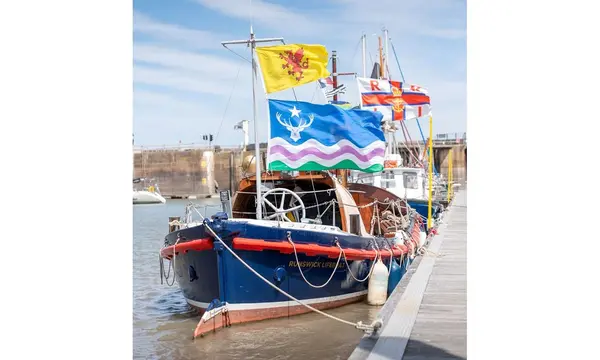
Watchet Marina’s 25th anniversary follows investment in pontoons, utilities and access at the Somerset harbour.
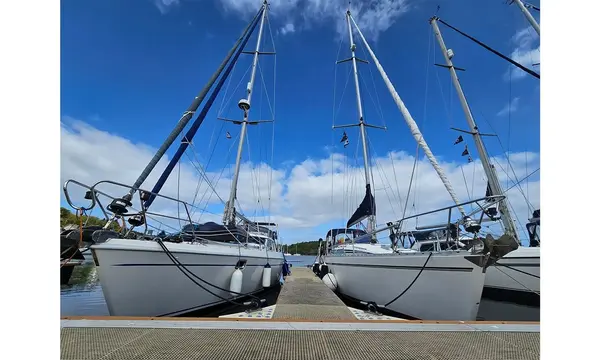
Tarbert Harbour is offering winter berthing and maintenance support on Loch Fyne, adding a seasonal option for Scottish yacht owners.
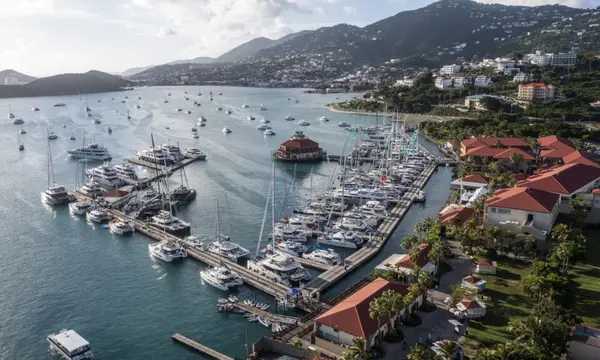
IGY is promoting a wider mix of dining, provisioning, wellness and marine services around Yacht Haven Grande, American Yacht Harbor and Rodney Bay Marina.
Superyacht Guide
Continue into the wider Superyacht Guide.
Business opportunities · Superyacht Guide
Companies serving the superyacht market can discuss clearly identified advertising, sponsorship and business-profile opportunities. Commercial activity remains separate from independent editorial coverage.