Somec Launches Fabbrica Europe as Marine Engineering Group Expands
Somec Group, whose engineered-systems division has major marine glazing operations, establishes Fabbrica Europe for advanced European architectural facades.
An MCA representative met senior yacht crew at a Bluewater-sponsored Palma round table to discuss digital certificates, training, AI, autonomous vessels and career pathways.
A Bluewater-sponsored meeting with a senior Maritime and Coastguard Agency representative in Palma de Mallorca has raised questions about the future of yacht qualifications, digital certificates, artificial intelligence and autonomous systems. Captain Ajit Jacob attended the 5 October round table at Club de Mar with senior crew and yachting businesses, according to a company release issued on 3 November 2026. The gathering was a discussion, not a regulatory announcement. Its value lies in showing which concerns are being aired directly between an authority and the industry, and where owners, captains and training providers should look for verified developments.
A breakfast meeting in Palma de Mallorca has put yacht qualifications, digital administration and emerging technology in the same conversation. According to an industry release issued by Bluewater on 3 November, Captain Ajit Jacob travelled from the United Kingdom's Maritime and Coastguard Agency headquarters to meet senior yacht crew and businesses at Club de Mar on 5 October. Bluewater sponsored the gathering and characterised it as an open round-table discussion rather than a slide presentation. The distinction is useful: the company reported that the MCA representative attended to hear operational perspectives as well as to discuss ideas. The event should therefore be understood as an exchange between a regulator and stakeholders, not as the announcement of a completed legal reform or a newly approved certification regime.
Aviation and maritime systems rely on formal rules, yet those rules are encountered daily by working professionals who must fit procedures around real operations. Captains coordinate passage plans, watchkeeping, technical maintenance, charter requirements and staffing while also maintaining a significant body of documentation. Senior crew can identify where a requirement is clear on paper but difficult to administer across different flag-state, port and training systems. Bluewater's description suggests that listening was an explicit purpose of the Palma meeting. It does not supply a transcript, participant list or adopted set of recommendations, so specific opinions should not be assigned to Captain Jacob or individual attendees without further evidence. The defensible conclusion is narrower: the maritime authority was represented and several future-facing topics were discussed.
One of the themes identified in the company release was digital certification. Yacht crew already work in an environment where qualifications may need checking by employers, managers, training providers and official bodies, sometimes under time pressure before a vessel departs. A well-designed digital certificate could make a credential easier to retrieve and potentially easier to verify, but those advantages depend on the authoritative record, accepted format and protection against fraudulent changes. The meeting itself did not confirm a launch date, new validation platform or statutory requirement for digital-only documents. Owners and captains should continue to follow current applicable certification instructions while any proposed changes are developed. A conversation about digitalization is an indication of attention to a problem, not a substitute for formal regulatory publication.
Bluewater also named modernised training among the subjects raised. In the superyacht sector, crew progression depends on a mixture of approved courses, sea service, examinations, recorded experience and the rules applying to specific posts. As vessels and their systems become more complex, training providers must consider whether curricula and assessment methods still reflect the situations crew encounter. Digital teaching resources may support learning, but they do not automatically replace the practical competencies that maritime safety depends upon. No approved course revision or new qualifying route can be attributed to this event alone. The value of including training in the discussion lies in recognising that crew competence is an operational issue as well as a matter for the classroom.
Artificial intelligence was another topic on the agenda, according to Bluewater's release. On yachts, AI may be discussed in connection with document handling, planned maintenance, equipment diagnostics, route information or crew support, but each proposed use needs careful distinction between assistance and authority. An automated output can be wrong, incomplete or based on outdated records, and a captain cannot assume that a suggested action complies with the vessel's particular obligations. The Palma event did not announce MCA approval of an AI navigation system or a blanket permission to automate safety-critical decisions. The sensible industry question is how new tools might support an accountable human team while remaining auditable, explainable and subject to the existing rules. That is a topic for sustained technical and regulatory discussion rather than a single breakfast announcement.
The company also said autonomous vessels were part of the discussion. This is a particularly broad term, covering everything from limited automatic functions to the prospect of much more independent operation, so it would be misleading to interpret the meeting as endorsing one particular level of autonomy. Superyachts present their own operating considerations, including guest movements, variable cruising itineraries, tender operations and high expectations of personalised service. Any practical technology would still need to be assessed against collision avoidance, watchkeeping, maintenance, cyber security and the vessel's registered operating arrangements. Bluewater has not released a detailed technical proposal or a timeline for the MCA to approve autonomous superyacht operations. Reporting the subject accurately means keeping the conversation separate from a change in law.
New career pathways appeared alongside technology in the list of topics Bluewater highlighted. For a crew member, a pathway is more than a course catalogue: it involves the progression from entry-level experience through recognized qualifications and the accumulation of responsibilities onboard. Changes in vessel systems may create demand for different skills, while established bridge, engineering and hospitality competencies remain necessary. The sector also needs ways to explain those opportunities clearly to people considering a long-term maritime career. The Palma session does not establish that a new MCA certificate, grade or endorsement has been created. It shows that participants were able to consider training and career development as connected issues, something especially relevant when discussing the effect of technology on future roles.
Palma de Mallorca is an established Mediterranean centre for yacht activity, making it a practical place to convene working crew, training professionals and businesses. A meeting in the port environment can reach people who will be responsible for implementing any future guidance in real vessel operations. Bluewater identified Club de Mar as the venue and dated the session to Monday 5 October 2026, while publishing its report nearly a month later. That sequence should be made clear because the news is about a newly released account of an earlier discussion, not an event that took place in November. The location is also relevant to the international character of yachting: vessels and staff often move between jurisdictions even when they carry credentials issued under a particular national system.
A successful electronic record should not simply reproduce a paper document in a different file format. It should also allow the appropriate person to verify its provenance, currency and applicability without exposing unrelated private information. For a yacht manager, records need to remain accessible when a crew member changes employer or when a vessel's operational arrangements are reviewed. For an inspector, the important question is whether the evidence presented corresponds to the relevant approved qualification. These are general design considerations, not commitments announced by the MCA at the Palma meeting. They explain why an apparently simple transition to digital certificates can require cooperation among regulators, training providers, seafarers and the businesses that employ them.
The maritime industry benefits when authorities hear from the people who will apply regulations, yet a round table and a formal consultation serve different functions. An informal exchange may surface practical examples, while regulatory change generally requires a defined process, legal authority and published instructions. Bluewater's account describes an encouraging conversation and a listening approach, but it does not identify an official consultation number or an approved amendment arising from the gathering. Superyacht operators should therefore distinguish ideas discussed in Palma from material published through the MCA's official channels. The first can inform expectations and help the sector prepare; the second determines which rules or procedures currently apply. Clear reporting should preserve that distinction.
Crew-management firms, insurers, training providers and yacht operators are all affected when certification processes change. Employers need to check credentials reliably, crew members need to understand which training counts toward career advancement, and vessels must keep records that can withstand inspection. A digital system that is difficult to use could transfer administrative work rather than reduce it. Likewise, a modernised course is only useful if participants understand its status and the qualifications it supports. Bluewater's involvement is consistent with its work in yacht crew training and management services, but sponsorship is not evidence that the company has received any special regulatory authority. The reported event should be evaluated on its subject matter and stated participants, not treated as an endorsement of a commercial training offer.
For owners and managers, the most immediate lesson is to keep an accurate picture of present obligations while maintaining the capacity to adapt. That might mean knowing where original training records are held, who verifies crew credentials and how new guidance reaches the vessel's safety-management processes. It also means reviewing digital tools with attention to access control, data integrity and continuity if an external service becomes unavailable. These are prudent operational questions, not newly mandated steps created by the Palma discussion. If the MCA later issues formal proposals, managers will be better placed to assess them if their existing records and responsibilities are already clear. A technology-led conversation should not obscure the importance of ordinary administrative discipline.
There are several important limits to the evidence. Bluewater identifies the location, date, sponsor, visiting MCA representative and broad topics, but the accessible release does not include a full set of remarks, a formal decision paper or a list of agreed policy changes. It does not justify a claim that digital certificates have become mandatory, that AI can replace a qualified watchkeeper, or that autonomous yachts have been newly approved for commercial service. It also supplies no reliable figure for projected training cost savings or the number of vessels affected. These omissions are not flaws in a brief event report; they simply define what the report can support. Additional claims would require statements or documents issued through the relevant authority.
Even with those limits, the Palma round table is a meaningful industry signal because it brought a maritime regulatory representative together with the professionals who see administrative and technical systems in action. The topics named by Bluewater—digital certificates, training, artificial intelligence, autonomous vessels and career pathways—are interdependent rather than isolated questions. A change to one system can alter how another is taught, documented or supervised. Yachting's international workforce and varied vessel types make that coordination especially important. The news is not that a finished solution was announced but that several subjects likely to shape future practice were discussed directly with stakeholders. The substance of any future changes will have to be judged when authoritative proposals are published.
The next useful development would be an official MCA document clarifying which digital credentials are recognised, which training provisions are changing or how emerging technology is to be assessed. Until that happens, Bluewater's 3 November account is a record of an October industry discussion and should be read as such. It gives captains, crew and yacht managers a set of questions worth following without requiring them to act on unconfirmed rules. Superyacht Guide will distinguish any later formal notice from the original meeting when reporting on the subject. For now, the message from Palma is one of dialogue: an established maritime authority and a working industry considering how to keep competence, documentation and safe operation aligned as tools evolve.
Primary source for the meeting details: Bluewater's company-attributed press release dated 3 November 2026, archived by TheSeaWire. Any future MCA rule change would need independent confirmation from the official authority.
Continue reading
Somec Group, whose engineered-systems division has major marine glazing operations, establishes Fabbrica Europe for advanced European architectural facades.
Honda Marine opens a Florida Marine Office at its Grant-Valkaria R&D facility to link global engineering, rigging validation and US boatbuilder support.
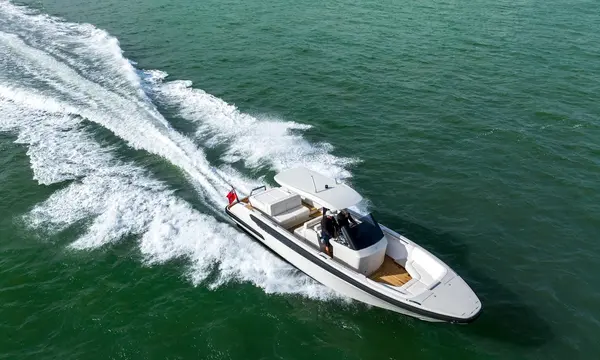
UK-based Super Yacht Tenders has set out a structured crew-familiarisation service covering launch and recovery, close-quarters handling, guest boarding and equipment maintenance aboard the …
Advanced Mechanical Solutions (AMS) has outlined the development of its engineering and manufacturing operations in Ancona, where bespoke mechanisms for superyacht doors, balconies and …
Superyacht Guide
Continue into the wider Superyacht Guide.
Business opportunities · Superyacht Guide
Companies serving the superyacht market can discuss clearly identified advertising, sponsorship and business-profile opportunities. Commercial activity remains separate from independent editorial coverage.