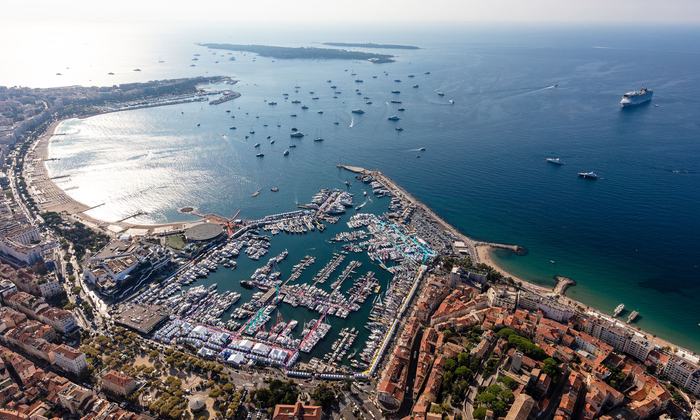
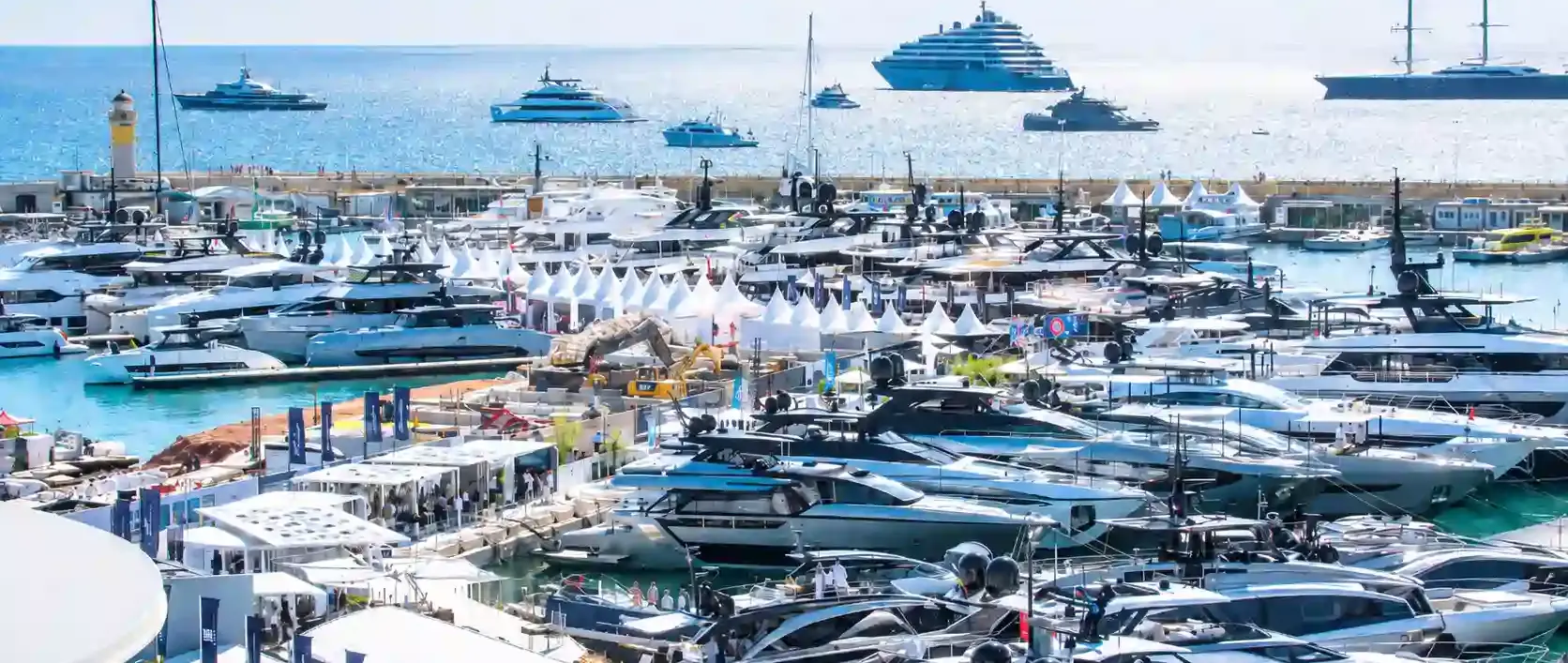
Cannes Yachting Festival will return to the French Riviera from 8 to 13 September 2026 with more than 700 boats and around 150 world premieres. A revised large-yacht layout, extensive brokerage fleet and hundreds of exhibitors will again make Cannes one of the opening signals for the European autumn yachting season.
The Cannes Yachting Festival will return from 8 to 13 September 2026 with more than 700 boats, over 680 exhibitors and approximately 150 world premieres expected across the Vieux Port and Port Canto. The 49th edition will again provide one of the industry's first major opportunities after the Mediterranean summer season to see new yachts, production models, technology and brokerage inventory gathered in one place.
For the superyacht sector, Cannes occupies a distinctive position between the production-yacht market and the larger custom-yacht world that dominates Monaco later in September. Its docks bring together builders, buyers, brokers, equipment manufacturers and service businesses across a fleet extending from relatively small craft to substantial motor yachts and sailing yachts.
The 2026 edition also arrives with changes to the way larger yachts are positioned around the show. The organiser is reshaping areas of the Vieux Port while continuing to expand the brokerage and sailing displays at Port Canto, creating a clearer separation between different parts of an increasingly large exhibition.
The scale of Cannes is one reason the event matters beyond France. The organiser expects more than 700 boats and yachts for the 2026 edition, supported by over 680 exhibitors and an international audience of approximately 56,000 visitors during the six-day show.
Around 150 world premieres are expected, giving Cannes an important role in revealing what builders intend to sell during the following season. These premieres range across different yacht categories rather than focusing exclusively on superyachts, but they provide an early indication of changing design preferences, propulsion strategies, onboard technology and buyer expectations.
The festival's current figures show how broad that market has become. Motor yachts, sailing yachts, multihulls, tenders, dayboats and brokerage vessels will be joined by equipment suppliers, technical companies, luxury businesses and marine-service providers across the two Cannes harbours.
For builders, a world premiere at Cannes offers immediate exposure to prospective owners, brokers and international media while allowing visitors to step aboard rather than evaluate a yacht only through renderings or specifications. The concentration of competing models in the same harbour also gives buyers an unusually direct opportunity to compare construction quality, layouts and equipment.
The Vieux Port remains the principal motor-yacht area, with the organiser describing a display of more than 350 boats between approximately 12 and 45 metres. Major international builders will occupy the harbour alongside equipment manufacturers and specialist marine-service businesses.
Changes to the Jetée form part of the 2026 layout, with the redesigned area intended to provide a prominent setting for yachts afloat and marine companies ashore. Larger yachts are being repositioned around Quai Max Laubeuf as the organiser adjusts circulation and exhibition space within the harbour.
That matters for the upper end of the Cannes fleet because displaying larger yachts presents very different logistical demands from accommodating smaller production boats. Berth dimensions, visitor access, security, technical services and the movement of invited clients all have to function inside a working Mediterranean harbour that is temporarily transformed into an international exhibition.
Cannes does not attempt to replicate the Monaco Yacht Show's concentration on very large custom superyachts. Instead, its strength lies in the overlap between sophisticated production yachts, semi-custom builders and the lower end of the superyacht market, where owners may be considering their first move into substantially larger vessels.
That progression makes the festival particularly relevant to builders producing yachts between roughly 25 and 50 metres. Buyers can move through several yacht categories during one visit, comparing a large production model with increasingly customised alternatives before deciding whether a fully custom project is justified.
Across the bay, Port Canto continues to develop as the festival's sailing, brokerage and smaller powerboat centre. The organiser says the 2026 brokerage section is expected to include more than 45 yachts above 25 metres, giving visitors a sizeable selection of pre-owned vessels alongside the new-yacht displays elsewhere at the show.
The brokerage fleet adds a different commercial dimension because buyers attending Cannes do not have to restrict their search to newly launched models. A prospective owner can examine established yachts already on the market and compare their pricing, condition and immediate availability against the longer delivery times associated with new construction.
This comparison is particularly relevant in a market where specification and delivery timing can matter as much as initial purchase price. A well-maintained existing yacht may offer significantly faster access to ownership, while a new build allows greater control over layout, technology and personalisation but requires the buyer to accept a lengthy construction programme.
Port Canto will also retain its large sailing-yacht display, which the festival promotes as the world's largest in-water sailing exhibition. The combination of new sailing yachts, brokerage vessels and marine equipment makes the harbour increasingly important in its own right rather than simply functioning as an overflow area for the Vieux Port.
A continuous circulation route of approximately 2.5 kilometres connects the different Port Canto sectors, while maritime shuttles operate between the two main festival sites approximately every 15 minutes. For visitors attempting to cover hundreds of boats within a limited period, the practical organisation of those areas has a direct effect on how much of the show can realistically be seen.
Boat shows are not perfect measures of the financial health of the yacht industry, but Cannes provides useful evidence about where builders are committing resources. The number and type of new models brought to the event can reveal which size categories, propulsion systems and yacht styles manufacturers believe will attract buyers during the coming season.
Recent years have brought greater emphasis on efficient hull forms, hybrid propulsion, lower-emission systems and onboard energy management. At the same time, buyers continue to demand larger exterior living areas, improved connections with the sea and interiors that make increasingly efficient use of available volume.
Those priorities can sometimes work against each other. Larger glazing, beach clubs, pools, hotel loads and extensive guest amenities can add weight and energy demand, leaving designers and engineers to find efficiencies elsewhere in the vessel if builders are to make meaningful improvements in consumption.
Cannes is therefore valuable not simply because it launches individual boats, but because displaying hundreds of new vessels together makes broader patterns easier to identify. Ideas that were experimental several years earlier can become mainstream when similar solutions begin appearing simultaneously across multiple unrelated builders.
Equipment suppliers are an equally important part of that process. Advances in batteries, navigation, stabilisation, water treatment, onboard connectivity and energy management may eventually affect superyachts even when the technology first appears on smaller vessels where production volumes allow it to develop more quickly.
The pre-owned yacht display will provide another useful indicator of conditions approaching the final quarter of 2026. Buyers remain sensitive to asking prices, refit liabilities, operating costs and the time required to bring an older yacht up to current expectations, making physical inspection particularly important for brokerage vessels.
Cannes allows brokers to place yachts in front of clients who may originally have travelled to see new models. That crossover can produce opportunities when a buyer discovers that an existing yacht offers more volume or capability for a similar capital commitment, particularly if immediate availability is important.
The reverse can also happen when inspection exposes the compromises associated with an older vessel. Machinery age, paint condition, outdated electronics, interior refurbishment and regulatory upgrades can rapidly change the apparent value of a brokerage opportunity once realistic refit costs are included.
For Superyacht Guide readers, this makes the Port Canto brokerage fleet worth following independently from the headline premieres. Asking prices attract attention, but the more significant market question is whether properly priced yachts are finding buyers and how owners are responding when older inventory remains available for extended periods.
The timing of Cannes also gives the show a strategic position in the European calendar because the Monaco Yacht Show follows later in September. Companies active across different yacht sizes can use Cannes to introduce products and meet clients before moving into the more concentrated large-superyacht environment of Port Hercule.
The two exhibitions serve different markets, but there is considerable overlap among builders, designers, brokers, suppliers and owners. Decisions and announcements made at Cannes can consequently provide an early indication of themes likely to continue through Monaco and into the autumn sales period.
For prospective owners, the sequence creates an unusually intensive opportunity to understand the market. Cannes offers breadth across hundreds of yachts and production categories, while Monaco subsequently concentrates attention on large custom yachts, major brokerage listings and the specialist companies serving them.
The 2026 Cannes Yachting Festival will therefore be more than a collection of new boats lining two attractive harbours on the French Riviera. With more than 700 yachts and boats expected, around 150 world premieres and a substantial brokerage fleet, the show will provide one of the first detailed readings of where the international yacht market is heading after the summer season.
For the superyacht industry, the most revealing information may emerge beyond the headline launches. What builders choose to premiere, what buyers spend time inspecting and which brokerage yachts generate serious interest will help show whether the market entering the final months of 2026 is becoming more selective, more technologically ambitious or simply more competitive.
Explore
Go deeper into the yachts, companies, events and destinations directly connected to this article.
Continue reading
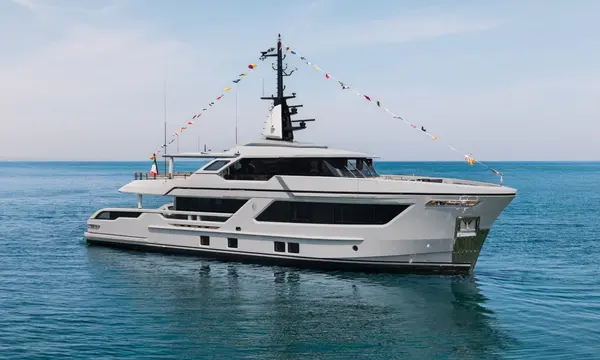
Cantiere delle Marche’s 31-metre RJ102 MON COEUR is part of the Cannes 2026 new-model lineup, bringing the yard’s RJ explorer DNA into its most …
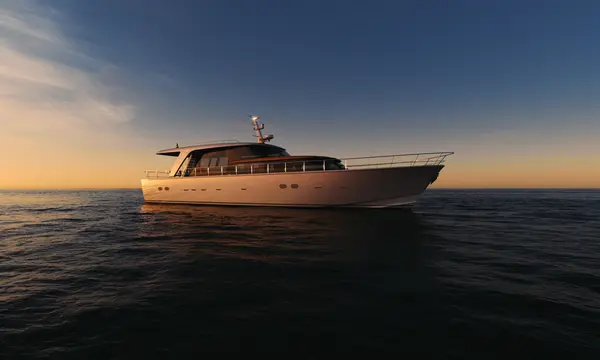
Sanlorenzo’s 25.5-metre SHE has made her world premiere at the Cannes Yachting Festival 2026. The Heritage model combines 1960s-inspired Italian styling with Volvo Penta …
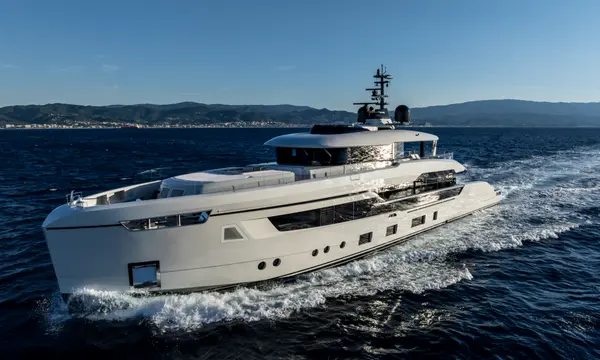
Columbus Yachts has brought the 38-metre Atlantique PRINCIPESSA CAPRICCIOSA to the Cannes Yachting Festival 2026 for her official show debut. The all-aluminium 299 GT …
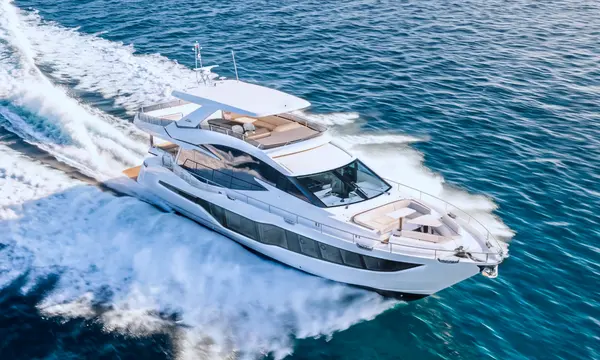
Galeon Yachts has presented the 25.71m 800 FLY at Cannes Yachting Festival 2026 for its European debut. The flagship combines four en-suite guest cabins, …
Superyacht Guide
Continue into the wider Superyacht Guide.
Business opportunities · Superyacht Guide
Companies serving the superyacht market can discuss clearly identified advertising, sponsorship and business-profile opportunities. Commercial activity remains separate from independent editorial coverage.