
What Happens After You Buy a Superyacht? The First 100 Days of Ownership
Buying the yacht is only the beginning. The first 100 days turn a multimillion-euro acquisition into a functioning yacht operation, covering handover, crew, management, …

Buying an older superyacht can unlock exceptional volume and pedigree for the purchase price, but deferred maintenance, obsolete systems, regulatory work and ambitious upgrades can quickly turn an apparent bargain into a much larger capital commitment.
An older superyacht can look almost irresistible on paper. A yacht that may once have represented tens of millions of euros in construction cost can appear on the brokerage market decades later for a fraction of that figure, often offering substantially more volume, guest accommodation and pedigree than a much younger yacht at the same asking price. For an owner willing to accept an older platform, the economics can appear compelling: buy the hull, machinery, engineering and interior at a deep discount, modernise what matters and emerge with considerably more yacht than the same budget could buy new.
The danger is that the asking price is only the first number in the calculation. Once surveyors, engineers, designers and the shipyard begin opening up an older yacht, the buyer may discover that the real acquisition cost is the purchase price plus everything required to make the yacht safe, reliable, compliant and suitable for the way the new owner actually wants to use it. At that point, a €10 million yacht can become an €18 million or €20 million decision remarkably quickly, while the market may still value the finished vessel primarily as an older yacht.
The appeal of an older yacht is usually built around replacement cost. A 45- or 50-metre yacht acquired for a fraction of what a comparable new build would cost can still contain an enormous amount of steel or aluminium, machinery, joinery and specialist labour that would be extremely expensive to reproduce today. That comparison is useful, but it can also be misleading because the buyer is not acquiring the yacht as it existed when new; they are acquiring it at a particular point in its maintenance and technical life.
A yacht approaching twenty or thirty years of age may still have an excellent hull and sound fundamental engineering while carrying a substantial amount of accumulated technical debt. Generators may be approaching overhaul, HVAC machinery may be inefficient or difficult to support, bridge electronics may span several generations, cable runs may have been repeatedly modified, coatings may be nearing renewal and sections of teak may have little remaining thickness. MB92 has highlighted the challenge of modernising an ageing superyacht fleet, particularly where contemporary machinery and systems must be integrated into spaces never designed to accommodate them. The issue is therefore rarely the price of one replacement component; it is the cost of making that component work properly with everything around it.
One of the most useful disciplines when assessing an older yacht is to divide the proposed refit into three separate budgets: maintenance debt, modernisation and personalisation. Maintenance debt covers work that has effectively already become due, such as machinery overhaul, corrosion treatment, coatings, pipework, failed equipment, tanks, valves and statutory items. Modernisation covers upgrades intended to improve reliability, efficiency, connectivity or operational capability, while personalisation covers changes being made primarily because the new owner wants a different interior, layout or style.
Those categories behave very differently financially. Replacing deteriorated pipework, repairing corrosion or rebuilding a generator may be absolutely necessary, but it does not create equivalent new market value because a future buyer already expects those systems to function correctly. The same applies to paint: Pinmar describes a superyacht coating system as protection for the fairing and underlying substrate as well as a cosmetic finish, which means postponing paint renewal may simply transfer a significant obligation from one owner to the next rather than eliminate it. Some yachts therefore appear inexpensive because the previous owner has enjoyed the final years of several expensive systems while leaving the incoming owner to fund the next major maintenance cycle.
Older yachts must also be assessed against the regulatory environment in which the new owner intends to operate them. Commercial yachts are subject to continuing flag, class, survey and certification requirements rather than remaining permanently compliant simply because they met the standards in force when delivered. The UK Maritime and Coastguard Agency maintains construction, maintenance, survey and certification requirements for large commercial yachts, while international rules governing environmental performance and ship systems have continued to develop.
The practical issue is not that every older yacht automatically requires every modern environmental system. Applicability depends on factors including gross tonnage, flag, private or commercial operation, trading pattern, machinery and certification, but regulations such as the IMO Ballast Water Management Convention and existing-ship efficiency measures including EEXI demonstrate why regulatory due diligence belongs in the acquisition calculation. A yacht that can technically be bought for €12 million but requires several million euros of mandatory or near-mandatory work to operate in the intended manner is not economically a €12 million yacht.
Major refits rarely expand because of one catastrophic decision. They expand through a series of individually logical decisions made once the yacht has already been dismantled: if ceilings are down for new cabling, the lighting might as well be modernised; if the bridge electronics are being changed, the network and sensors should be reviewed; if exterior decks are stripped, worn teak becomes difficult to ignore; and if guest spaces are emptied, a partial soft-furnishing refresh can quickly evolve into new joinery and a complete interior redesign.
MB92's description of major refit illustrates the breadth that can be involved, including structural work, mechanical overhaul, propulsion, stabilisers, electrical and plumbing systems, interiors, paint, teak, navigation, communications and energy management. Discovery risk compounds the problem because tanks may reveal corrosion only when opened, insulation may conceal deteriorated structure, equipment that appeared serviceable may prove uneconomic to reinstall and undocumented modifications accumulated under previous ownership may become visible only after surrounding spaces have been dismantled. A realistic refit budget therefore needs contingency because the full condition of a complex yacht cannot always be known until access has been created.
Consider a simplified 50-metre yacht acquired for €10 million. The pre-purchase survey identifies a fundamentally sound vessel but also reveals that machinery overhauls, coatings, class items, electrical work, HVAC improvements and sections of deck should be addressed during the next major yard period. The new owner then adds upgraded communications, contemporary entertainment systems, improved lighting, a refreshed interior and alterations to exterior guest spaces because the intention is to keep the yacht for several years.
If the combined shipyard and upgrade programme reaches €7 million or €8 million, the buyer must still allow for naval architecture, design fees, project management, surveys, owner-supplied equipment, crew during the yard period and a meaningful contingency for discoveries. The economic commitment can therefore approach €18 million or €20 million before normal annual ownership costs are considered. That may still represent excellent value if the yacht offers volume, pedigree and engineering that could not be recreated new for anything close to the resulting investment, but the correct comparison is now with other €20 million ownership opportunities rather than with yachts carrying €10 million asking prices.
The opposite mistake is to assume that a comprehensive refit should replace everything simply because newer technology exists. A rational older-yacht programme should aim for a vessel that is safe, reliable, compliant and appropriate for the owner's use rather than attempting to recreate a new-build specification inside an ageing platform at any cost. Modern HVAC, LED lighting, variable-speed pumps, improved controls, energy-management systems, communications and selected hotel-load improvements can make compelling sense because they improve comfort, reliability or energy consumption without fundamentally reconstructing the yacht.
MB92 advocates phased modernisation for precisely this reason, separating interventions that can be integrated into normal refit periods from more complex projects that may be spread over several yard visits. Its work on climate-control modernisation also demonstrates how apparently isolated systems can influence wider onboard energy demand. By contrast, replacing functioning propulsion machinery, carrying out extensive structural changes or redesigning an entire technical architecture may be perfectly achievable from an engineering standpoint while remaining difficult to justify economically. Technically possible does not automatically mean financially rational.
Owners sometimes describe a refit budget as though money spent on the yacht automatically becomes money added to its value. In practice, much of a major technical refit simply restores the condition the market expects. A substantial machinery programme may dramatically improve reliability, but a future buyer will still regard functioning machinery as part of the basic proposition rather than automatically paying the seller back euro for euro. Highly personal interiors can be even harder to recover because an expensive redesign may be worth every euro to the owner who commissioned it while adding relatively little to a buyer with different tastes.
The financially useful question is therefore not simply what the refit costs, but what the yacht is realistically likely to be worth when the programme is complete and how much use is lost while completing it. A six-month refit that becomes nine months can remove an entire Mediterranean or Caribbean season while crew salaries, insurance, management costs and other standing expenses continue. A commercially operated yacht can additionally lose charter income, making downtime part of the project's real economic cost even though it may never appear as a line on the yard invoice.
Chronological age is a surprisingly poor measure of acquisition risk. A 25-year-old yacht that has been continuously maintained, periodically painted, mechanically rebuilt, technically updated and carefully documented can be a far safer acquisition than a 12-year-old yacht whose owner has progressively deferred expenditure. A superyacht does not age as a single object: engines may have been rebuilt five years ago, generators replaced three years ago, AVIT renewed eighteen months ago and paint completed recently while portions of original pipework or electrical distribution remain decades old.
The meaningful question is therefore not simply how old the yacht is, but how much of the yacht is still effectively as old as the launch date suggests. Maintenance records, invoices, class history, oil analysis, machinery hours, tank inspections, coating condition, thickness measurements and evidence of previous refit work can reveal far more about future capital exposure than the year printed on the specification sheet. MB92 includes pre-purchase surveys and technical assessment among the tools used to establish condition before owners commit to major work.
None of this makes older yachts inherently poor purchases. The right vessel can provide extraordinary value because major depreciation has already occurred while hull volume, pedigree, engineering quality and construction standards remain difficult to replicate. A thoughtfully planned refit can produce a yacht that is materially more comfortable, efficient and reliable without destroying the character that made it attractive in the first place, particularly when work is phased around genuine maintenance requirements rather than driven by an assumption that everything old must automatically be replaced.
The successful buyer understands the distinction between buying cheaply and owning economically. They establish the technical baseline before purchase, separate unavoidable maintenance from discretionary improvement, build contingency into the refit budget and resist upgrades whose cost has little relationship to future use or residual value. The older-yacht value trap appears when an owner buys yesterday's hull, then pays for today's systems and tomorrow's redesign without recognising that the brokerage market will still regard the finished vessel as an older yacht. The disciplined question is therefore not, “How cheaply can I buy this yacht?” but, “What will this yacht have cost me when it is finally the yacht I actually want?” For an older superyacht, the difference between those two numbers can determine whether the acquisition becomes one of the smartest purchases an owner ever makes or one of the most expensive bargains.
Continue reading
Buying the yacht is only the beginning. The first 100 days turn a multimillion-euro acquisition into a functioning yacht operation, covering handover, crew, management, …

Burgess has identified near-completion new-build opportunities that can shorten the route to ownership, including a 47m Benetti and 65m Royal Hakvoort.
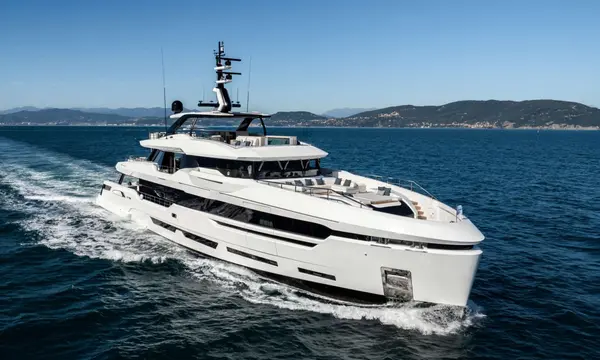
Autograph Yacht Group has announced the sale of the 40.9m Baglietto DOM133 ANDALA, representing the buyer in the transaction.
Is a Superyacht an Investment? Depreciation, Income and Resale A superyacht should usually be treated as a lifestyle asset rather than a conventional investment: …
Superyacht Guide
Continue into the wider Superyacht Guide.
Business opportunities · Superyacht Guide
Companies serving the superyacht market can discuss clearly identified advertising, sponsorship and business-profile opportunities. Commercial activity remains separate from independent editorial coverage.