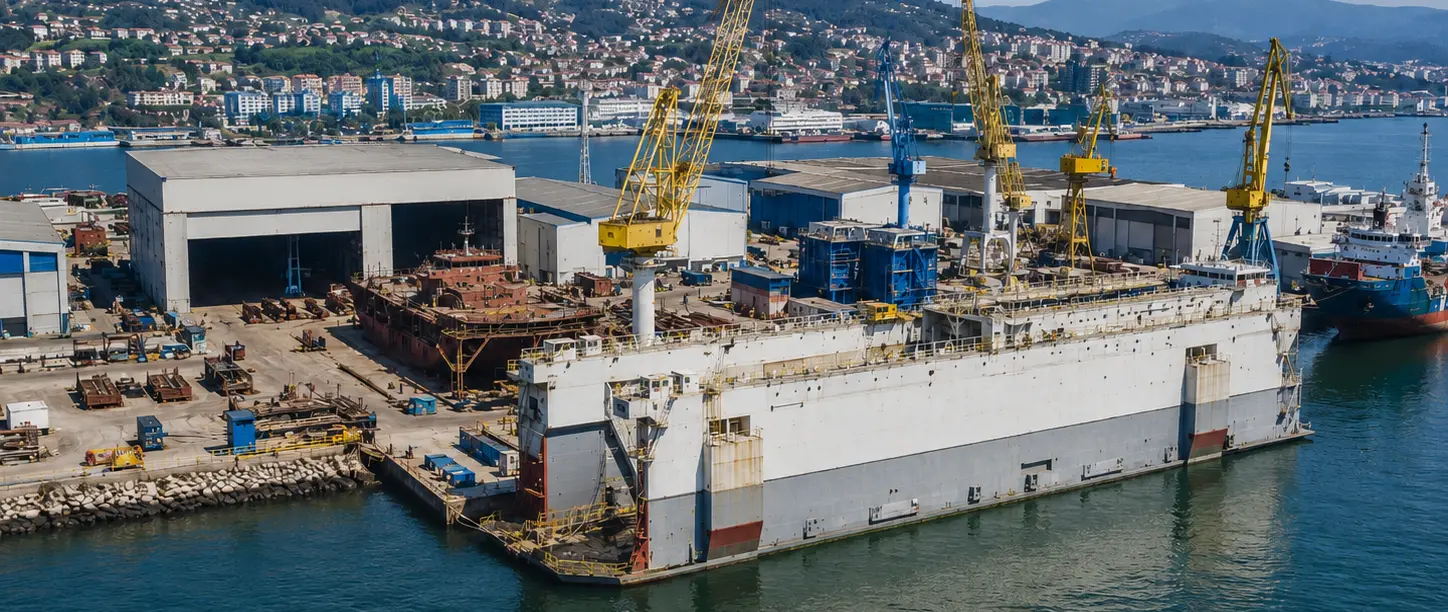
Former Google chief executive Eric Schmidt is reportedly linked to an advanced but incomplete proposal to acquire Spanish construction and repair yard Metalships & Docks.
Former Google chief executive Eric Schmidt has reportedly emerged as the figure behind a proposed acquisition of Metalships & Docks, the Spanish construction and repair yard operated by Grupo Rodman in Vigo.
The proposed buyer is Oyster Ocean LLC, a company registered in Delaware in January 2026. Spanish and international marine-industry reports have connected Oyster Ocean with Schmidt, although neither a completed acquisition nor a formal announcement directly from Schmidt has been published.
Oyster Ocean has also established a Spanish vehicle, Océano de Ostras SL, through which the acquisition would reportedly be completed. Grupo Rodman has requested approval for the transfer of the shipyard's shares and port concessions, an important procedural requirement because Metalships operates on land controlled by the Port Authority of Vigo.
The port authority has approved the requested transfer of the concessions, removing one administrative obstacle. That approval does not, however, mean that ownership has already changed. The proposed transaction remains subject to final agreements and completion by the parties.
The distinction between a proposed acquisition and a completed sale is particularly important in this case.
According to Spanish reporting, the current proposal is supported by a non-binding letter of intent. Grupo Rodman has acknowledged negotiations with Oyster Ocean but has also urged caution because previous attempts to sell Metalships did not reach completion.
The Vigo yard has reportedly attracted several possible purchasers during the past five years, including Spanish shipbuilder Gondán, Blue Parrot and London-based investment firm Cap Capital. None of those earlier discussions produced a lasting ownership change.
The latest proposal has progressed further in at least one respect. Grupo Rodman sought advance approval to transfer both the shares and the concession rights associated with the yard to the proposed Spanish acquisition company.
Port approval matters because a purchaser cannot treat the facility like an ordinary freehold industrial site. The operation depends upon access to waterfront land, docks, quays and other infrastructure held through concessions from the port authority.
The administrative transfer therefore clears a necessary route for the transaction but does not replace the commercial process. Purchase terms, financing, liabilities, workforce arrangements and the final operating strategy would still need to be resolved before control could pass.
Metalships & Docks occupies a substantial waterfront site at Ríos, Teis, on the Vigo estuary in north-western Spain. The yard undertakes new construction, repairs, conversions, lengthening and refit work across commercial shipping, offshore vessels, sailing ships and yachts.
Reports concerning the proposed sale describe five port concessions covering more than 33,000 square metres, together with a floating-dock concession occupying a further 5,730 square metres. This gives the business a physical industrial base that would be difficult and time-consuming to reproduce elsewhere.
Metalships lists a floating dock measuring 162 metres overall, with an internal free span of 28.5 metres and a lifting capacity of 10,000 tonnes. Its facilities also include covered slipways, workshops, cranes and extensive waterfront access suitable for construction and repair projects.
The location is also commercially useful. Vigo sits on Atlantic routes connecting northern Europe, the Mediterranean, Africa and the Americas. Ships can reach the yard without the substantial diversions that might be necessary when using facilities farther inside the Mediterranean or northern European ports.
For a private industrial investor, the value of Metalships would therefore extend beyond the company's recent revenue. The acquisition would provide control of an established workforce, port access, heavy industrial infrastructure and a yard already capable of handling technically complex ships.
Metalships is not exclusively a superyacht builder. Its portfolio covers offshore vessels, commercial ships, conversions, repairs and specialised maritime projects. That broader engineering experience may be one of the yard's most valuable characteristics.
The company identifies the offshore construction vessel North Sea Giant, several North Ocean vessels and the pipe-laying ship Deep Orient among its past projects. Such vessels require complex engineering, heavy equipment integration, specialist deck machinery and advanced onboard systems.
Its yacht-related work includes the construction of the 59-metre motor yacht Maybe, completed in 2017, and work associated with the sailing vessel Sea Cloud Spirit. The yard has also undertaken yacht refit work, including the historic schooner Xarifa.
This mixed portfolio could be attractive to a purchaser interested in scientific, expeditionary or research vessels rather than conventional series-produced yachts. Ocean-research platforms frequently combine commercial-ship engineering with the accommodation quality, specialist equipment and operational flexibility more commonly associated with explorer yachts.
A yard capable of conversions and complex refits could also support existing vessels without requiring every future project to begin as a new construction. Research organisations often acquire suitable commercial ships and transform them into scientific platforms, a process involving laboratories, sonar systems, remotely operated vehicles, cranes, communications equipment and specialist accommodation.
The possible link with Schmidt has encouraged speculation that the acquisition may be connected with marine research rather than simply financial investment in shipbuilding.
Eric and Wendy Schmidt established Schmidt Ocean Institute in 2009 to support oceanographic research and technology development. The institute operates the 110-metre research vessel Falkor (too) as a scientific platform made available to researchers and technology teams.
The organisation supports expeditions involving deep-sea exploration, ocean mapping, robotic systems, biodiversity research and the development of new marine technologies. Its operating model combines a large research vessel with remotely operated vehicles, scientific laboratories, advanced sensors and public access to expedition findings.
That background makes the acquisition of a capable shipyard appear strategically plausible. Control of repair and conversion infrastructure could provide greater flexibility when maintaining research vessels, installing new equipment or developing future scientific platforms.
It would nevertheless be premature to conclude that Metalships is being acquired specifically for Schmidt Ocean Institute. No published statement from the institute has confirmed that the yard would become part of its operations, and no detailed investment or production plan has been announced.
The connection between Schmidt, Oyster Ocean and the acquisition proposal is itself based on reporting from Spanish media and the specialist yachting press. The appropriate description remains that Schmidt is reportedly linked to the bid rather than confirmed as the completed purchaser.
Metalships forms part of a larger maritime and industrial cluster surrounding the Vigo estuary. The region supports commercial shipbuilding, fishing vessels, offshore engineering, equipment manufacturers, marine services and an experienced subcontracting network.
A new owner with access to substantial capital could potentially expand activity at the yard, modernise facilities or direct the business towards new categories of technically advanced vessels. Scientific ships, expedition vessels, offshore support craft and large-yacht conversion work could all make use of Metalships' existing capabilities.
Continuity would also matter to employees and suppliers. Shipyards depend upon accumulated practical knowledge that cannot be restored simply by purchasing buildings and machinery after a prolonged closure. Welders, electricians, naval architects, engineers, project managers and specialist subcontractors form part of the productive value of the business.
Recent financial reporting suggests that Metalships returned to profitability in 2025 and generated revenue approaching €10 million. That scale is modest in comparison with major international superyacht groups, but turnover alone does not capture the strategic value of its waterfront concessions and heavy infrastructure.
A purchaser may therefore be more interested in the yard's physical capability and future potential than in its present earnings.
The reported bid also fits a wider pattern of wealthy technology entrepreneurs and private investors moving closer to the industrial infrastructure behind their vessels.
Owning a yacht provides access to the finished product. Controlling or supporting a shipyard offers influence over construction capacity, repair schedules, technology development and the skills required to maintain specialised fleets.
For research and exploration programmes, those advantages can be particularly valuable. Scientific vessels are frequently modified as new instruments become available, while expedition schedules can be disrupted when suitable repair capacity is unavailable.
Metalships would not provide unlimited independence. The yard would still rely upon classification societies, equipment manufacturers, port authorities, subcontractors and a wider international supply chain. It would, however, offer a permanent base from which complex maritime projects could be managed.
The key question is whether the reported interest develops into a completed acquisition and, if it does, whether Oyster Ocean preserves Metalships as a diversified commercial yard or redirects part of its capacity towards research, expedition and large-yacht work.
For now, the most significant confirmed development is the approval of the requested concession transfer by the Port Authority of Vigo.
That decision makes an acquisition administratively possible, but it does not establish that Oyster Ocean has completed the purchase or that Schmidt has personally assumed ownership of Metalships.
Until the parties announce completion, the transaction should be treated as an advanced proposal rather than a concluded sale. The future strategy for the yard, the level of investment and any connection with Schmidt's ocean-research activities remain unconfirmed.
Metalships nevertheless represents the kind of industrial asset that rarely becomes available: an operating shipyard with substantial waterfront access, heavy repair capability and experience spanning commercial ships, offshore vessels, yachts and specialist projects.
That combination explains why the reported bid deserves attention beyond the identity of its prospective buyer. The outcome could influence not only ownership of the Vigo facility but also the future role of private capital in scientific shipping, expedition vessels and technically advanced yacht construction.
This article is based on reporting by La Voz de Galicia. Shipyard facilities and project details were checked against the official Metalships & Docks website and its shipyard facilities page. Background on Schmidt Ocean Institute was checked against the institute's official information. The acquisition has not been presented here as completed.
Explore
Go deeper into the yachts, companies, events and destinations directly connected to this article.
Continue reading
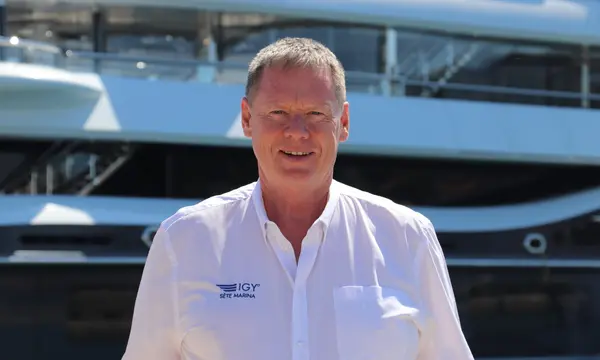
IGY Marinas has appointed Wayne Whitby as Shipyard Services Director, based at IGY Sète Marina, to expand refit, maintenance and technical support across its …

Leading yacht managers differ in scale, heritage and specialist depth. This guide compares Burgess, Hill Robinson, Y.CO, Fraser, Camper & Nicholsons and Döhle Yachts …
The superyacht industry is represented by a network of specialist associations rather than one global body. MYBA, SYBAss, PYA, IYBA, ICOMIA and ISS serve …
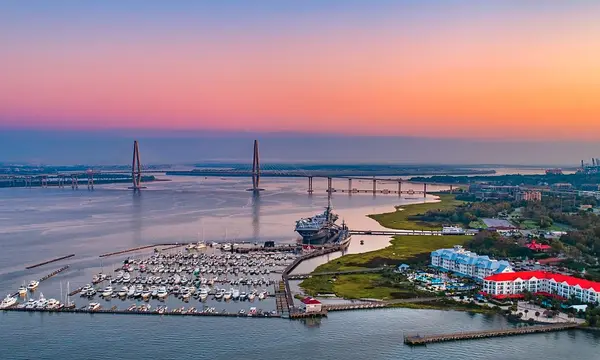
Suntex Marinas has acquired Charleston Harbor Marina, adding more than 450 slips and superyacht capacity to its growing US marina portfolio.
Superyacht Guide
Continue into the wider Superyacht Guide.