


Esprit Yachting Offers 25m Azimut S8 GAIA&NINA for €2.75m
By Superyacht Guide Newsroom · Edited by Superyacht Guide Newsroom
Esprit Yachting Offers 25m Azimut S8 GAIA&NINA for €2.75m | Original cleared SYG 20261125 gaia
Esprit Yachting offers the 25m Azimut S8 GAIA&NINA for €2.75m; this 2021 sports yacht has triple Volvo Penta IPS drives and four guest cabins for eight.
The 25-metre Azimut S8 motor yacht GAIA&NINA is offered for sale through Esprit Yachting at an advertised asking price of €2,750,000. The listing was covered by Amelie Newby in an original YachtBuyer report dated 20 November 2026. The yacht was delivered in 2021 and belongs to Azimut's S8 sports-yacht series. Its sale listing is separate from other Grande models offered by the same Italian builder and should be judged on the configuration of this individual hull. The announcement is not a report that the yacht has been sold or a certification of its current technical condition. Prospective buyers need to confirm the price, included equipment and status with the selling broker before forming a view of the vessel's value.
Alberto Mancini Yacht Design is credited with the exterior, while Francesco Guida designed the interior and the builder developed the naval architecture in-house. These design roles help explain the S8's profile and the relationship between open guest areas and a comparatively fast hull. A model can share principal architecture across several sisterships while receiving different fit-out options, so designers' credits do not reveal every detail of GAIA&NINA. Buyers should request actual general arrangement plans and a recent inventory. The practical aim is to understand how the yacht works for the intended owner, not simply whether the model's brochure presents appealing views.
The yacht uses three Volvo Penta IPS1350 propulsion units, each associated with a nominal 1,000-horsepower engine, according to the listing report. YachtBuyer quotes a top speed of 34 knots and a cruising speed around 27 knots. Such performance can be useful for coastal itineraries where owners want to visit different destinations within a limited time. It also has implications for fuel consumption and maintenance. A 34-knot maximum is a reported specification rather than an independent current trial result. Actual speed depends on loading, hull cleanliness, machinery condition and sea state. Buyers should examine service records and consider an appropriate sea trial before relying on these figures.
A triple IPS arrangement is more complex in some respects than a conventional twin-shaft installation, though it can offer handling and performance advantages. Maintenance requirements may include drive units, cooling, control systems and integration with vessel electronics. A buyer should verify that all three units have been serviced according to manufacturer guidance and understand the cost and availability of specialist support in the cruising area. Replacing a component on one drive may not resolve issues with another, and the quality of the diagnostic documentation matters. Any sea trial should assess manoeuvring, vibration and the behaviour of the propulsion system under normal operating conditions.
YachtBuyer describes the yacht as having a planing carbon-fibre hull and GRP superstructure, with a volume of approximately 100 GT. The published materials description should be checked against official builder drawings because specific composite laminates and structural zones can vary. Gross tonnage, meanwhile, is a measure based on enclosed volume, not a weight figure or indication of carrying capacity. Composite hulls can provide a combination of strength and relatively low weight, but their long-term condition still requires professional inspection. Any history of grounding, impact or major repairs should be documented. Owners should not infer that a relatively recent yacht is free of structural concerns solely because its construction materials are modern.
The yacht's reported beam is 5.55 metres, with a draught of approximately 1.75 metres. These dimensions influence interior layouts and practical marina use. Compared with wider displacement yachts, the S8 must allocate its volume carefully between guest accommodation, machinery and service functions. A shallower published draught may help with some ports, though actual berth suitability still depends on local depths and operating conditions. Owners should confirm whether the quoted draught is measured under a particular loading condition. Shore-power capacity, mooring requirements and safe manoeuvring space also matter when selecting a home berth.
The saloon has a large electrically operated sunroof intended to increase natural light and ventilation. Such a feature can improve the connection between interior and exterior spaces, especially during pleasant weather. But an opening roof is also a mechanism exposed to salt, movement and seasonal use. Buyers should examine tracks, seals, drains and motors, as well as how the roof behaves during operation. It is essential to understand when it must remain closed and whether replacement components are readily available. An attractive open saloon in a marketing photograph cannot reveal whether a sunroof has been properly maintained or whether the HVAC installation works efficiently with the roof closed.
The reported interior uses pale upholstery, dark contrasting surfaces and broad windows. A main-deck sitting area flows towards the dining space and aft cockpit, creating an informal arrangement suited to relatively short stays and active cruising. The approach can make a 25-metre yacht feel more open, but it must also provide secure furniture, practical storage and comfortable movement underway. A buyer should assess the room's use in realistic conditions, including noise, climate control and the needs of a working crew. Soft finishes may show wear differently from darker materials, so the current condition should be evaluated independently of the design intention.
At the stern, GAIA&NINA has a sheltered seating and dining arrangement, with sunpads above the bathing platform. The cockpit can become a central point for social life at anchor, while providing a route to water activities. The arrangement's usability depends on shade, drainage, steps and the relationship with the saloon. Exterior cushions, timber and metal fittings will need regular maintenance after exposure to salt and sun. A prospective owner should examine whether the seating configuration accommodates the number of guests normally aboard and whether crew can reach service areas without disrupting occupants. The proportions of an exterior deck matter as much as its appearance.
The yacht's garage is described as capable of accommodating a tender and a jet ski, freeing the main deck from some stowage requirements. This is useful for owners who value swimming, coastal exploration and water sports. The exact tender dimensions and launch system are essential, because not every craft will fit or be handled safely. Buyers should identify which toys are included in the asking price and which belong to the seller separately. Watercraft may require their own servicing, equipment and insurance. A garage also occupies internal volume, so owners should understand the trade-off between recreational storage and other possible uses of space.
YachtBuyer describes accommodation for up to eight guests across four cabins: an owner's suite, a VIP cabin and two twin cabins. Each has an ensuite bathroom. This arrangement may suit families or small groups who travel together frequently, and it separates overnight accommodation from the shared main-deck spaces. However, the count alone does not establish cabin sizes or the relative comfort of different berths. Buyers should inspect storage, access and noise levels while the yacht's systems are operating. Children, older guests and people with reduced mobility may have different requirements. An owner's ideal arrangement depends on actual guests and cruising habits rather than an abstract cabin total.
Separate accommodation is available for up to four crew members in two cabins. As with any crewed yacht, the practical staffing plan depends on regulations and the owner's preferred service level. Navigational duties, engineering, housekeeping, tender operation and guest service can require different skills. A yacht used only for short private passages may have a different programme from one travelling extensively between islands. Crew accommodation should be assessed for privacy, ventilation and access to working areas. Owners should also account for wages, travel, training and leave in their financial plans. A yacht's published guest capacity should not be interpreted as defining its professional crew requirements.
The listing mentions Seakeeper stabilisation. Gyroscopic systems can help reduce certain rolling motions, depending on installation and conditions, but are not a guarantee of a motion-free yacht. The gyro, bearings, cooling and control components require appropriate maintenance. An independent surveyor can review service records and advise on any performance demonstration. Stabilisation equipment is particularly relevant to an owner who plans to spend time at anchor, rather than simply travel rapidly between ports. It is one of several technical systems that may enhance comfort while adding to the vessel's operating costs. Buyers should confirm precisely which stabilisation installation is aboard this individual hull.
GAIA&NINA's S8 design focuses on an open-plan sports-yacht experience, distinct from the greater internal volume of some Azimut Grande models. Those differences have financial implications. A prospective owner should compare the costs and benefits of high-speed performance, machinery layout, available cabin space and the type of exterior living offered. A larger yacht may provide more interior room but can require higher berthing and staffing expenditure; a smaller, faster one may consume more fuel during rapid passages. Neither format is universally preferable. A buyer should start with the intended programme and use that to evaluate which compromise is most useful.
An advertised price of €2,750,000 is an important reference, but a buyer may still incur survey, legal, registration, insurance, tax and delivery costs. Annual expenditure will include crew if employed, berthing, routine servicing, fuel, cleaning and periodic equipment replacement. The triple propulsion system and opening sunroof make it important to understand upcoming maintenance. There is no reliable universal percentage of acquisition cost that accurately predicts the budget for every yacht of this size. Owners should request actual service records and prepare a vessel-specific forecast. A low purchase price relative to a newer yacht does not automatically imply inexpensive ownership.
A physical inspection should examine hull structure, deck fittings, opening mechanisms, engines, IPS drives, stabilisation, HVAC, electronics and safety equipment. Surveyors can also assess the tender garage and the interface between its door and the bathing platform. The buyer should review builder documentation and any record of repairs or upgrades since 2021. Title, registration and contract terms require independent professional attention. A broker provides access to the yacht and its presentation materials, but technical acceptance should be based on documented findings. It is especially important to confirm any equipment that is advertised as included, since the inventory may change between listing and completion.
GAIA&NINA is a named, delivered 25-metre Azimut S8 presented at a €2.75 million asking price through Esprit Yachting. Its most relevant features include three IPS propulsion units, an electrically operated saloon sunroof, a garage for recreational craft and accommodation for eight guests. The design is best assessed against the needs of an owner seeking comparatively fast coastal cruising rather than maximum displacement-yacht volume. The public announcement establishes a current brokerage opportunity, not a completed transaction or independent condition assessment. Any new price or sale should be reported only when a reliable source confirms the change.
Primary source: YachtBuyer original 20 November 2026 brokerage report by Amelie Newby, citing Esprit Yachting.
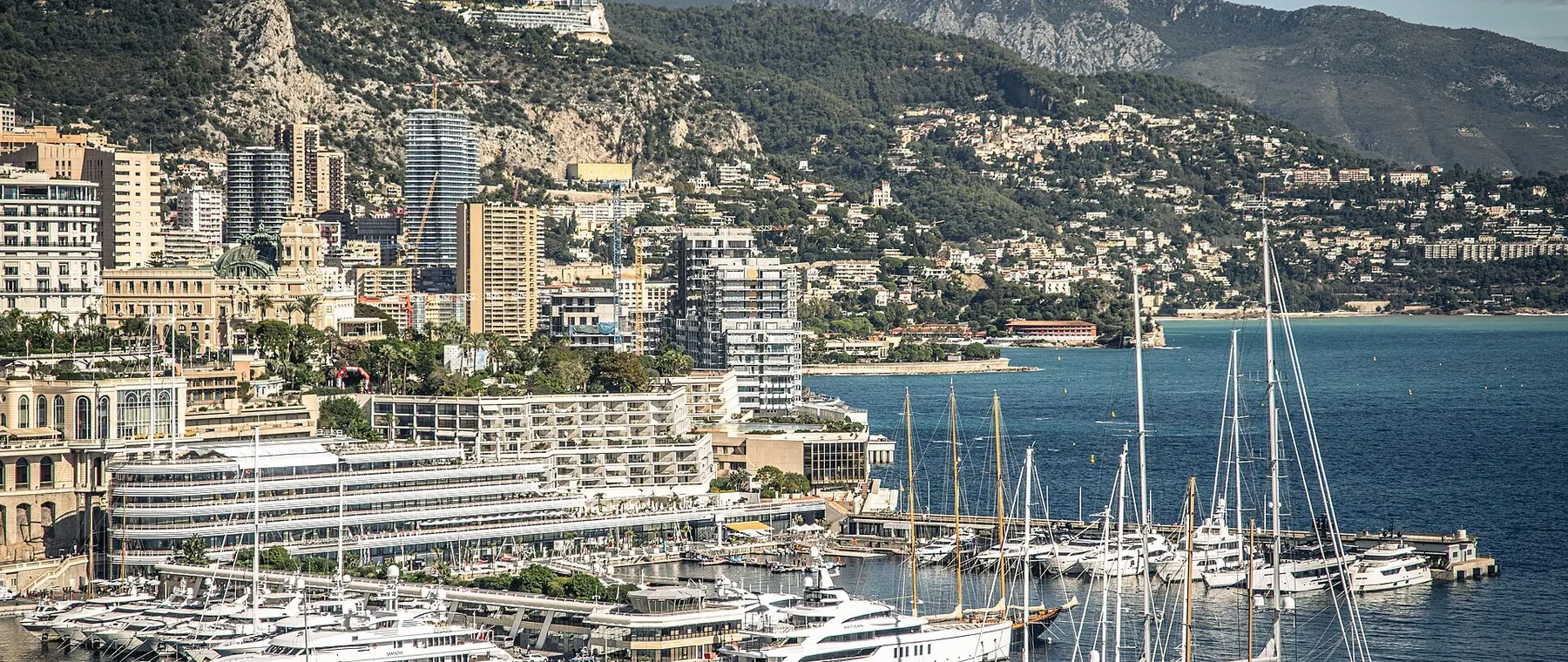
Licensed archival image of yachts in Monaco, not an image of the Azimut GAIA&NINA or its new brokerage listing. Photographer: Erik Cooper from Chicago, United Stats; CC BY 2.0 via Wikimedia Commons. Official source.
Explore
Go deeper into the yachts, companies, events and destinations directly connected to this article.
Continue reading

Azimut offers the 2024-built 29.7m Magellano 30M ALMA III for €9.4m at Varazze, Italy, with five guest cabins, twin MAN V12s and Dual Mode …
Rick Obey Yacht Sales lists 27m Azimut Grande ENCHANTE for $4.995m. The 2020 motor yacht has five guest cabins, a full-beam owner suite and …
Fraser confirms the sale of the 2022-built Azimut 78 motor yacht MA BELLE, with four guest cabins, a full-beam master suite and seller representation …
The 29.63-metre Azimut Magellano 30M Aria has received a €500,000 price reduction and is now asking €7.95 million with IYC.
Superyacht Guide
Continue into the wider Superyacht Guide.
Business opportunities · Superyacht Guide
Companies serving the superyacht market can discuss clearly identified advertising, sponsorship and business-profile opportunities. Commercial activity remains separate from independent editorial coverage.