Ferretti Group Splits Technical Operations Into Three Roles
By Stephen Yardley · Edited by Stephen Yardley
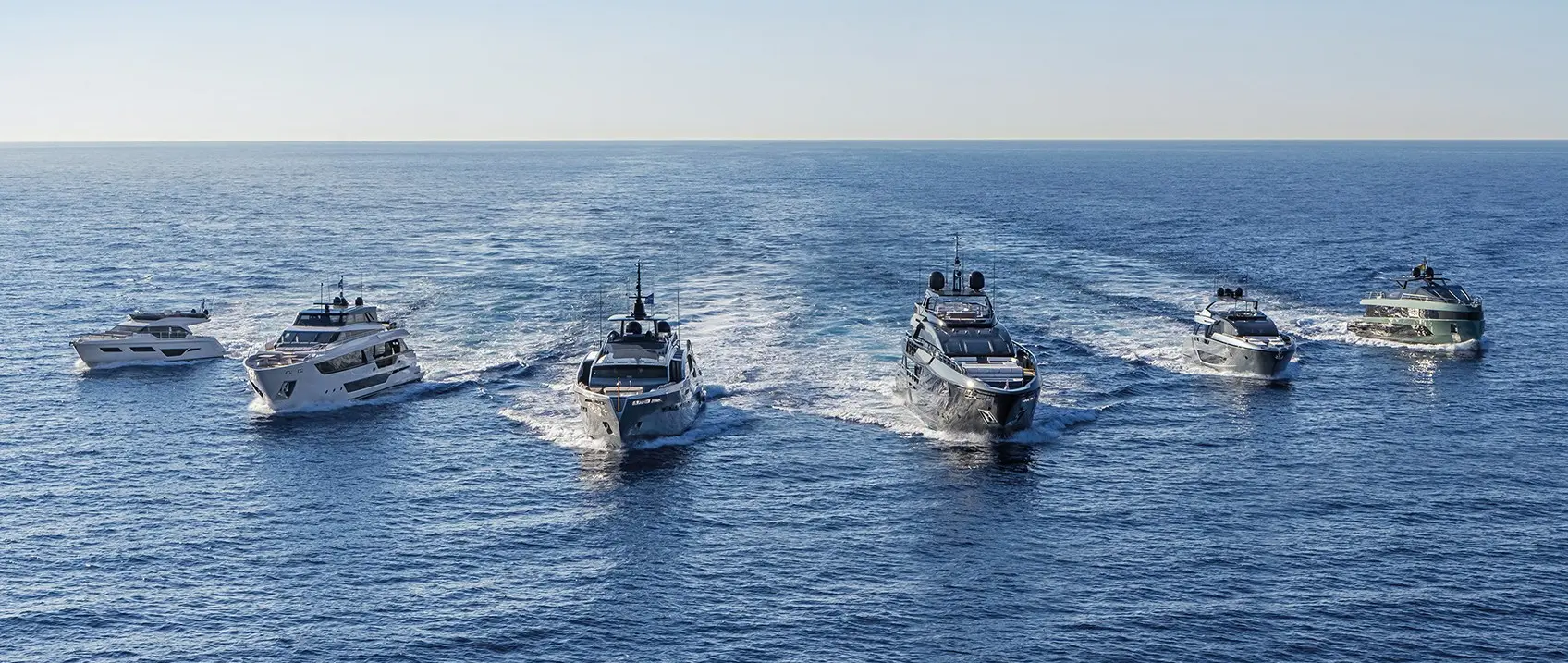
Ferretti Group — official corporate shipyard photograph
Ferretti Group is reorganising technical and operational leadership into separate manufacturing, research and development, and customer-quality functions as Matteo Cecada departs.
Ferretti Group has announced a reorganisation of its technical and operations functions, replacing a combined leadership arrangement with three specialist roles reporting to chief executive Stassi Anastassov. The company says the change is intended to sharpen responsibility for production, product development and quality. The announcement was released through its investor-relations channel on 3 November 2026, making it a formal corporate development rather than an informal comment about how its shipyards might operate.
The transition follows the departure of Chief Technical & Operations Officer Matteo Cecada, whose final day with the group is scheduled for 1 December 2026. Ferretti has thanked him for his contribution and disclosed that a non-compete agreement is in place. The announcement does not itself imply a change in ownership of the group's brands, an interruption to current yacht contracts or a revision to any published delivery programme. Those would require separate evidence.
Marco Ricci has been appointed Chief Manufacturing Officer, with responsibility for shipyard production, industrial efficiency, infrastructure and procurement. This role brings a set of closely connected industrial choices under one leader. Scheduling, yard capacity, supplier coordination and the physical flow of work all influence whether a yacht proceeds smoothly from structural construction through outfitting, testing and handover. For a group operating several shipyards and brands, these decisions affect both delivery reliability and cost discipline.
The appointment does not mean every yacht is built using an identical process. Ferretti's portfolio encompasses composite production craft and much larger steel or aluminium projects, each with different construction and customisation requirements. A central manufacturing function can provide common standards while preserving the specialised competence of individual yards. The results will be measurable through execution and quality over time, rather than through the management title alone.
Danilo Giunchi becomes Chief Research and Development Officer, responsible for engineering, product development and work on proprietary technologies. The formal separation of research from day-to-day manufacturing may allow technical teams to examine longer-range design questions without making immediate production deadlines the only measure of success. The company's announcement frames faster innovation and stronger technological capability as priorities, alongside its established emphasis on Italian design and craftsmanship.
The challenge for any yacht builder is to turn a promising engineering idea into a reliable system that can be maintained by crew and supported throughout a vessel's working life. New propulsion arrangements, onboard electrical architecture, automation and materials must be evaluated against safety and certification demands. Ferretti has not attached a specific newly approved yacht or technology product to this organisational change; the significance is how responsibility for future development has been assigned.
Massimiliano Amato has been appointed Chief Customer & Improvement Officer. His remit includes product quality, testing, delivery-stage standards and continuous improvement, with explicit attention to owners' satisfaction. Establishing a dedicated senior function for these matters signals that quality is expected to be assessed throughout the project, not simply at the point of final inspection. The role touches factory processes, sea trials, documentation and the transfer of a finished yacht into active service.
An owner may judge a new yacht through comfort, reliability, finish and the speed with which defects are resolved. Those outcomes require input from engineering and production teams as well as personnel responsible for delivery and customer relationships. The new reporting structure creates clear named responsibilities, but its effectiveness will depend on how quickly issues can move between the three departments and whether lessons from completed yachts improve later builds.
Ferretti Group owns brands including Riva, Pershing, Ferretti Yachts, Custom Line, CRN, Wally and Itama. Their products differ in dimensions, materials and the level of owner customisation. The revised structure needs to operate across that variety while respecting the technical practices of individual sites. Central functions can strengthen procurement, product engineering and quality systems, but a one-size-fits-all procedure would be inappropriate for very different yachtbuilding programmes.
The broader industry has faced greater expectations for complex onboard systems, customised interiors and reliable support after delivery. A management model that separates manufacturing from research and final-quality oversight can make priorities clearer. It can also introduce additional coordination demands. For yacht owners and brokers, practical evidence of success would be consistent delivery information, responsive technical support and well-controlled handovers rather than the announcement of three titles in isolation.
The company's investor announcement identifies the three incoming executives and their responsibilities and gives 1 December as Cecada's planned departure date. It also places them on reporting lines directly to chief executive Stassi Anastassov. No independent operational outcome can yet be measured from the restructuring, and no claim should be made that existing projects have become faster or more efficient as a result. Such assertions would require later production evidence.
For the superyacht sector, the announcement is notable because decisions about industrial organisation ultimately influence owners' experience of custom yachtbuilding. Ferretti is choosing clearer specialist accountability as its stated route to innovation, quality and industrial excellence. The next meaningful milestones will be the implementation of the structure, subsequent product and technology announcements and the way the group's shipyards demonstrate performance under the new responsibilities.
Explore
Go deeper into the yachts, companies, events and destinations directly connected to this article.
Continue reading
Ferretti Group says a Bologna court has rejected KKCG Maritime’s request to suspend contested board resolutions, while the underlying shareholder case remains pending.
Ferretti Group CEO Stassi Anastassov says the company is evaluating The Italian Sea Group situation while keeping owner focus and brand quality central.
Bloomberg reports that Italy’s market regulator requested information from Ferretti on asset values and order trends following weaker first-half figures.
Andrea Frabetti has returned to Ferretti Group as personal advisor to CEO Stassi Anastassov, focusing on strategy, technology and new business opportunities.
Superyacht Guide
Continue into the wider Superyacht Guide.
Business opportunities · Superyacht Guide
Companies serving the superyacht market can discuss clearly identified advertising, sponsorship and business-profile opportunities. Commercial activity remains separate from independent editorial coverage.