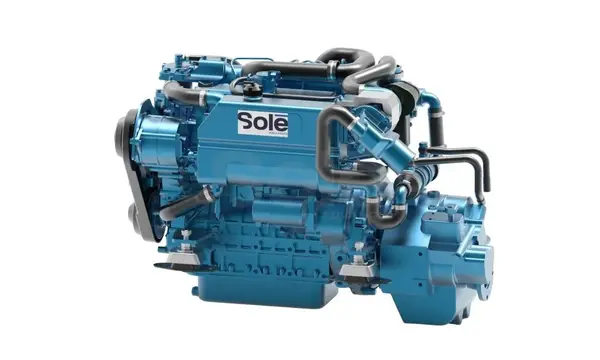
Solé SK-80 Marine Diesel Makes World Debut at Southampton
The Solé Advance SK-80 made its show debut at Southampton, adding another compact marine diesel option for builders and refit projects.
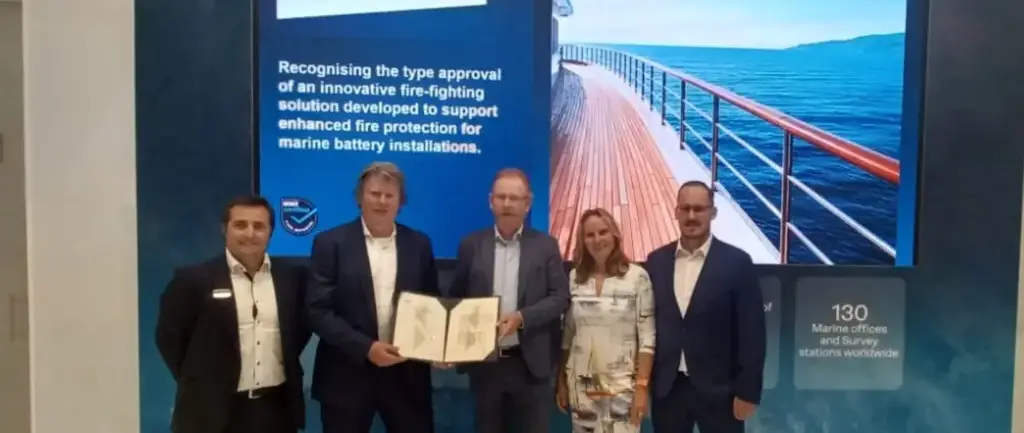
Image: FIFI4MARINE
FIFI4MARINE says its lithium-ion battery fire-suppression product is the first of its kind to receive RINA Type Approval, following presentation at SMM Hamburg.
Dutch specialist FIFI4MARINE has announced RINA Type Approval for its battery fire-suppression system, with the certificate presented during SMM Hamburg in September. The company calls it the first system in this category to receive the classification society's type approval and positions the result as a step towards repeatable marine installation.
The company's announcement describes a product designed for lithium-ion battery spaces and identifies early detection of thermal runaway as its central task. Battery-system protection is increasingly relevant as more vessel functions rely on stored electrical energy rather than continuous generation.
RINA's type-approval process examines a product design for repeated use under stated conditions. It does not mean a yacht can add the system in any location without reviewing its complete battery arrangement, fire boundary, ventilation, control integration and statutory obligations.
The manufacturer says the approval is intended to reduce the need to restart the same product-level design assessment for every project. Vessel-specific class and flag requirements remain in place, and engineers must establish which certified configuration matches the proposed installation.
FIFI4MARINE describes its approach as detecting a developing event close to its source and attempting to limit propagation. That goal is important because a battery event can involve heat, gas release and multiple adjacent modules rather than a conventional single-point fire.
Performance claims should be read alongside the system's test conditions, detector arrangement and approved installation manual. A supplier's statement about limiting propagation must not be converted into a guarantee that every battery failure can be prevented under every operating condition.
For superyachts, batteries can support quiet overnight operation, peak shaving, hybrid propulsion and extensive hotel services. Their integration changes the engineering discussion from where to put battery modules to how the entire space behaves during normal service and an abnormal event.
Owners who add capacity during a refit need to review the existing fire and safety architecture as well as new hardware. A larger energy store can require changes to electrical protection, access, cooling, monitoring and emergency procedures even where the installation uses a previously approved component.
The developer says the product can be configured for different battery chemistries and has related experience outside marine applications. Such crossover experience may inform design, but approval scope for a vessel must be taken from the marine documentation itself.
The certificate presentation at SMM is evidence of a product milestone, not a named yacht installation announcement. Neither the builder nor classification society should be assumed to have approved an unspecified superyacht design on the strength of a press statement.
Technical managers should request the actual RINA certificate, installation limitations, system drawings and maintenance schedule. They should also agree which alarms reach the bridge and shore team, and how crew training and manual emergency actions interact with automatic suppression.
As electrification expands, verified product documentation is useful for yards seeking consistent components across different builds. The critical final step is still to demonstrate that the installed solution is suitable for the particular vessel and its approved operating conditions.
Primary source: FIFI4MARINE. Superyacht Guide prepared this article from the source announcement and its own editorial analysis.
Continue reading
The Solé Advance SK-80 made its show debut at Southampton, adding another compact marine diesel option for builders and refit projects.
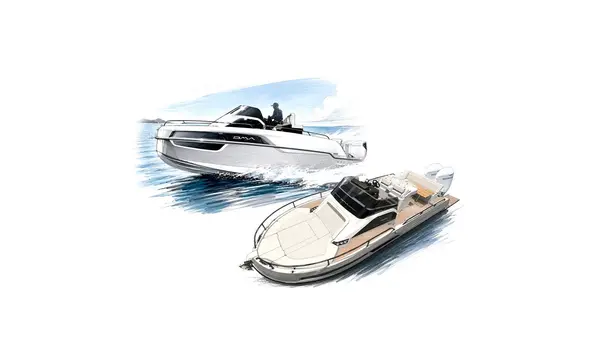
Honda Marine Europe and BMA have expanded 4XC with seven FRP models from 5.5m to 9.5m, including packages up to twin BF350 V8 outboards.
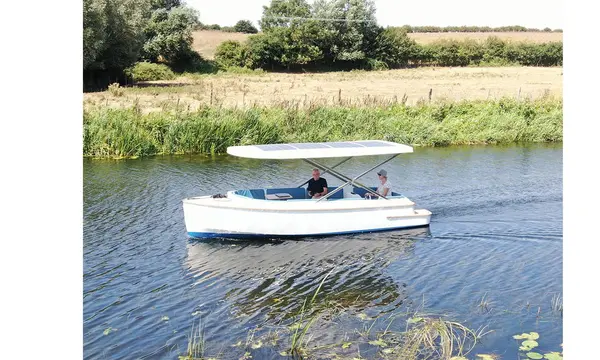
Torkmar's DB1 completed a five-day 124-mile Thames passage using a 5kWh battery and 756W solar array without shore-power top-ups.
Scanstrut and Perko will debut a removable all-round LED navigation light powered without exposed metal contacts at IBEX 2026.
Superyacht Guide
Continue into the wider Superyacht Guide.
Business opportunities · Superyacht Guide
Companies serving the superyacht market can discuss clearly identified advertising, sponsorship and business-profile opportunities. Commercial activity remains separate from independent editorial coverage.