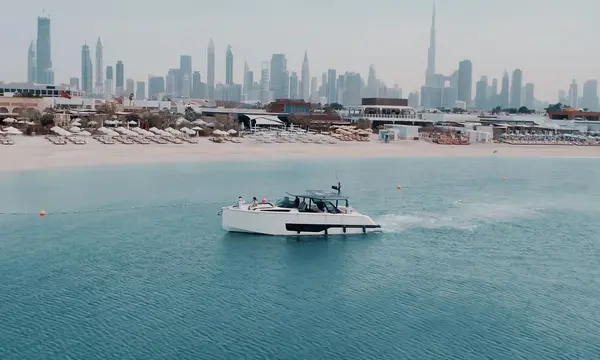
D-Marin Details Dubai J1 Beach Anchorage and Tender Service
D-Marin's October guidance explains how visiting yachts use a permitted offshore anchorage and dedicated tender service to reach Dubai's J1 Beach restaurants.
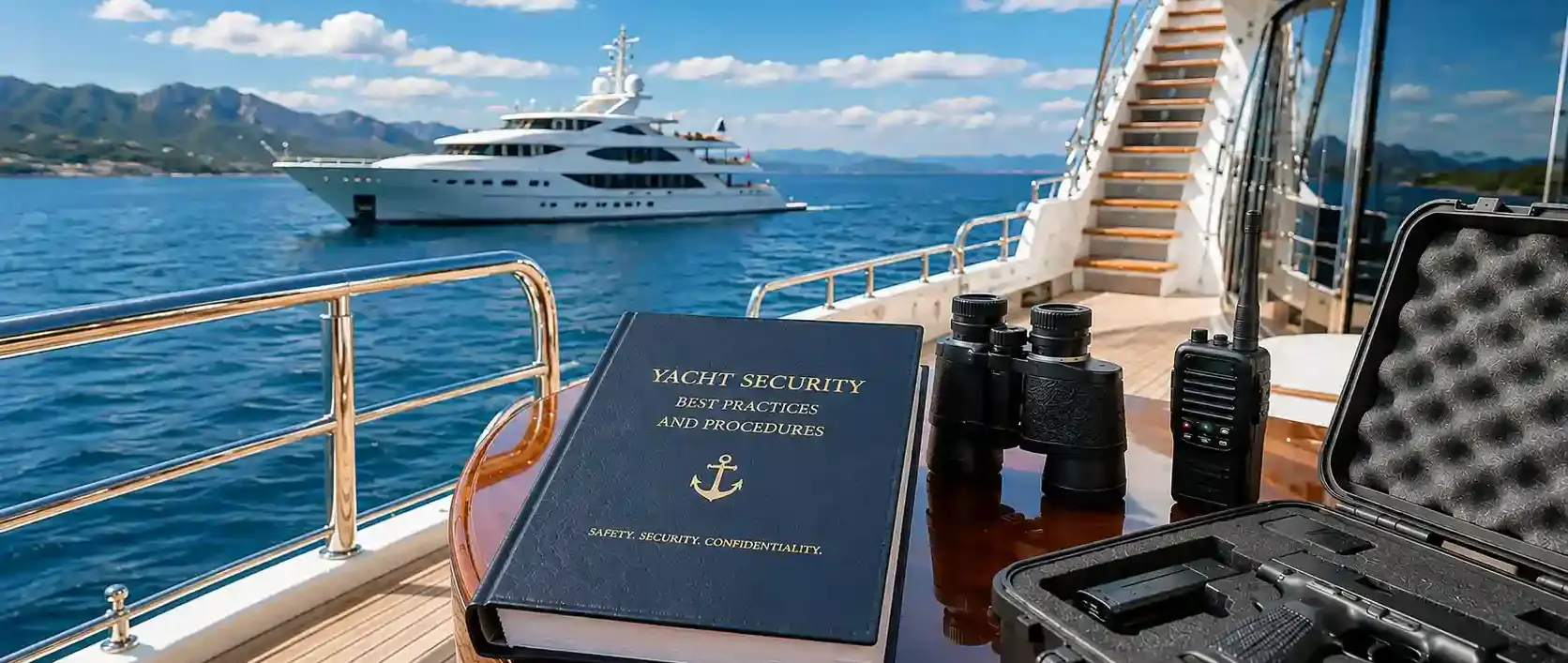
Carrying firearms aboard a superyacht can turn a security decision into a complex legal problem as the yacht crosses flag, coastal and port-state jurisdictions.
For an owner accustomed to moving a superyacht freely between countries, keeping a firearm onboard may appear relatively straightforward. The yacht is private property, the weapon may be legally owned, and secure storage can be engineered into the vessel. Once the yacht begins crossing international borders, however, the position becomes considerably more complicated.
There is no universal international licence that allows a firearm to travel indefinitely with a yacht. Instead, the vessel can encounter overlapping rules imposed by its flag state, coastal states, countries whose territorial waters it enters, and the authorities controlling individual ports. The International Maritime Organization describes the carriage of firearms aboard ships as a complex legal issue precisely because states take different positions.
The popular idea that a yacht somehow becomes legally detached from the countries around it once it leaves the dock is misleading. Flag-state jurisdiction matters, but it does not eliminate the authority of coastal and port states when the yacht enters their jurisdiction. IMO guidance concerning armed maritime security makes this particularly clear: flag-state requirements can apply while port and coastal states maintain their own national requirements concerning firearms and armed security personnel.
That creates an obvious complication for an itinerant superyacht. A firearm that can legally be aboard the yacht at one location may require advance permission, declaration, temporary surrender or other formalities at the next. The problem is magnified by the nature of superyacht cruising, where itineraries frequently change because of weather, guest requests, technical requirements or berth availability.
One of the greatest risks is assuming that keeping a weapon locked away means authorities do not need to know about it. National rules can impose declaration, licensing, import, export, transit or custody requirements independently of whether the weapon remains secured aboard. For a captain, the legal review therefore cannot consist only of asking whether a gun can be brought into the final destination.
The review should consider departure, transit, territorial waters, arrival, possession while alongside and subsequent export or departure. A firearm legally owned by an owner in one country does not automatically carry that authority into another jurisdiction, and secure storage aboard the yacht does not substitute for whatever customs or firearms formalities the relevant state requires.
A distinction should also be drawn between an owner's privately held firearm and weapons carried by professional maritime security personnel. The use of privately contracted armed security personnel developed primarily in response to piracy risks, and IMO has produced specific guidance for flag states, port and coastal states, shipowners, masters and private maritime security companies.
That framework should not be interpreted as a convenient legal route for putting ordinary crew members in possession of firearms. IMO states that the decision to employ armed personnel is subject to applicable law and stresses the need for caution concerning liability, jurisdiction, sovereignty, transit and innocent passage. For a superyacht facing a genuine security threat, the relevant question is whether properly authorised maritime security personnel can lawfully deploy for the intended voyage.
Physical security remains important, but it should not be confused with legal compliance. Professional maritime-security regimes commonly require controlled access, detailed records and secure custody of firearms and ammunition, but a purpose-built safe cannot replace an import licence, possession authority, customs declaration or other permission required by national law.
The distinction also matters during refits and yard periods. Moving a firearm from the yacht ashore may create an entirely different legal event from keeping an authorised weapon secured aboard. Similar questions arise when crew change, when the person authorised to possess the firearm leaves the vessel, or when a yacht changes ownership or flag.
The safest operational approach is to make firearms part of voyage clearance rather than dealing with them after arrival. Before departure, management should establish exactly what is aboard, who owns it, who is legally entitled to possess it and what documentation applies. The yacht's flag-state position should then be checked against every coastal and port jurisdiction on the intended itinerary.
Records matter as well. IMO's work with port, coastal and customs authorities reflects the importance of knowing what firearms and ammunition are being carried and under what authority. Nobody responsible for the yacht should be uncertain about what weapon is aboard, who controls access to it, or the legal basis on which it is being transported.
This is where firearms can become particularly inconvenient aboard a superyacht. An owner may decide during dinner to leave for another island the following morning. Without controlled goods aboard, changing destination may principally be an immigration, customs, berth and cruising-permit exercise; with firearms aboard, the new destination can introduce an entirely different set of legal requirements.
The same problem arises with unscheduled technical calls, medical diversions and weather avoidance. IMO's guidance recognises the fragmentation of national requirements concerning the carriage, embarkation and disembarkation of firearms and security-related equipment. A captain therefore needs the relevant answer before entering the next jurisdiction rather than assuming documentation accepted by the previous country will be recognised.
The attraction of keeping a firearm aboard is usually security. For an internationally cruising superyacht, however, its presence can create another category of risk: customs problems, licensing issues, detention of the weapon, itinerary restrictions and potentially serious legal consequences. The international framework does not provide owners with a simple worldwide permission.
Advance planning is therefore essential. Owners considering firearms for personal protection should obtain jurisdiction-specific legal and customs advice for the yacht's flag and itinerary, while genuine piracy or maritime-security threats should be assessed separately through appropriately authorised professional security arrangements. For the captain, the essential principle is simple: a firearm should never arrive in the next jurisdiction before the yacht has established the legal basis for taking it there.
Continue reading
D-Marin's October guidance explains how visiting yachts use a permitted offshore anchorage and dedicated tender service to reach Dubai's J1 Beach restaurants.

Marina Bahía Golfito highlights prospective customs, port services, road access and research facilities in Costa Rica before FLIBS 2026.
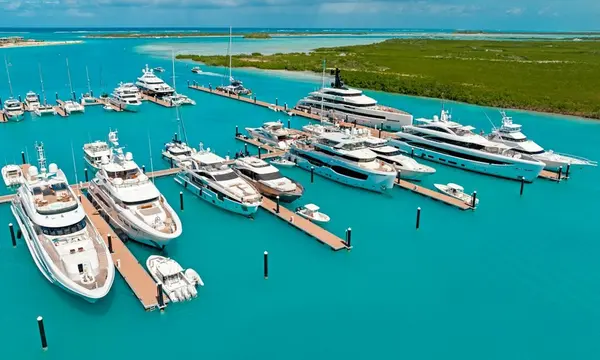
IGY explains how its Trident programme supports eligible superyacht captains seeking short-notice berths during busy events and sudden itinerary changes.
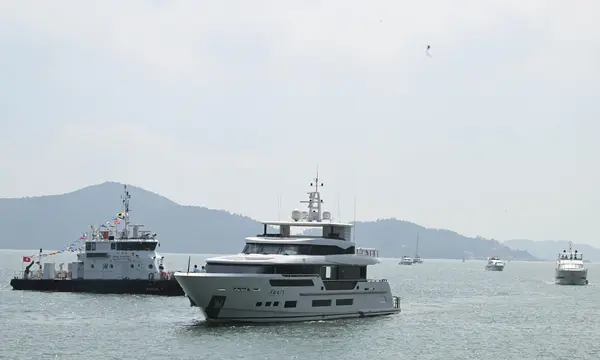
Five Guangdong yachts made the inaugural southbound visit to Hong Kong on 16 October, launching two-way cross-border arrangements and new marina ambitions.
Superyacht Guide
Continue into the wider Superyacht Guide.
Business opportunities · Superyacht Guide
Companies serving the superyacht market can discuss clearly identified advertising, sponsorship and business-profile opportunities. Commercial activity remains separate from independent editorial coverage.