
Harken presents CLR retractable superyacht bollards and fairleads, alongside new winches, high-load blocks and flush titanium padeyes at Genoa.
Harken's latest deck-hardware programme includes retractable mooring equipment designed for superyachts, alongside new high-load sailing blocks, titanium fittings and motorised winches. The equipment was shown at the Genoa International Boat Show in early October 2026, giving builders and refit specialists a chance to examine how familiar deck operations can be integrated into cleaner, less obstructed working surfaces. The news is not about a completed yacht: it concerns the technical suppliers whose products shape day-to-day safety and deck usability.
Of particular relevance to large motor and sailing yachts are the CLR Bollard retractable mooring units, offered in 10-, 20- and 30-tonne versions, and the companion CLR Fairlead. Harken presented these systems internationally at METSTRADE in November 2025 before bringing them to Genoa in 2026. Their purpose is to withdraw into the deck once mooring operations are finished, leaving a smoother surface where fixed hardware might otherwise interrupt circulation.
A fixed bollard remains a robust and familiar point for shore lines, yet on a carefully finished superyacht deck it can occupy valuable space when no lines are attached. Retractable designs address that inconvenience by allowing the hardware to be concealed when not required. Their adoption nevertheless creates new engineering tasks: the deck structure must transfer mooring loads securely, drainage and sealing must be considered, and crews need dependable access for inspection and maintenance.
The published 10-, 20- and 30-tonne variants describe the range in which Harken offers the new CLR Bollard system; they should not be interpreted as a universal permissible mooring load for any yacht. Final specification must match expected line forces, structural reinforcement and the builder's approved installation arrangement. Deck hardware is part of a complete load path that includes fairleads, fittings, supports and hull structure.
Retractable mooring gear also raises practical questions for refit yards. Space below the deck may already be occupied by pipework, electrical cabling or accommodation, making a seemingly simple change more complex than replacing a visible fitting. Successful installation requires drawings, access clearances and attention to how the component will be serviced after years of saltwater exposure.
Harken's Captive Multilayer winch family covers 1.0-, 1.5- and 2.0-tonne versions and is designed to accommodate longer lengths of line in a compact space. Conventional captive winches commonly wrap rope in a single controlled layer, whereas the new arrangement uses a free-running sheave to enable multiple layers without uncontrolled line overlap during release. This distinction is important where designers are balancing line capacity against valuable volume.
The company has also introduced Unipower 500/900 AD winches using brushless motors. By integrating the drive assembly inside the winch body, the design aims to reduce the space usually reserved beneath the deck for a separate electric motor. These smaller units are especially relevant to more compact yachts, but the underlying drive-integration approach is of broader interest to engineers responsible for deck-space planning.
Installation details differ according to the vessel's electrical architecture. According to the supplier's Genoa presentation, the new winches can operate with a dedicated DC/DC converter on 12- and 24-volt installations or connect directly to compatible 48-volt systems. Any change to existing cabling must be evaluated against actual power demand, protection systems and manufacturer instructions rather than assumed feasible solely because a converter is offered.
The Ether series introduces soft-attach sailing blocks with open side plates and composite ball bearings intended to accommodate off-axis and lateral loading. Such a configuration reflects the challenge of transmitting high sail loads without adding unnecessary mass to the rig or running rigging. Large sailing yachts depend on careful fitting selection because a failure can damage equipment and endanger crew working near tensioned lines.
New titanium Flush Deck Padeyes are offered in five sizes with stated loads from 3 to 16 tonnes. The fittings aim to achieve a low-profile installation while allowing the base to align with the direction of pull, potentially reducing undesirable angles in load transmission. Builders still have to verify the strength and supporting structure behind the fitting, as nominal component capacity alone does not determine safety of the complete installation.
Harken has also introduced Aperture Rings with larger internal openings for their stated load ratings, including versions with protective bumpers. These components are intended for sail-control configurations where line clearance and chafe management matter during tacks and sail changes. Their value is best assessed in the context of an entire rigging design rather than as an isolated accessory.
Large-yacht owners often encounter the effects of hardware design without seeing the engineering process behind it. Quiet, reliable mooring operations and clean deck surfaces depend on many decisions made by shipyard engineers, naval architects, deck-equipment manufacturers and installation specialists. The consequences emerge during demanding moments such as berthing in crosswinds or changing sail under load.
Design integration is particularly important when large tenders, guest routes and service access compete for limited deck space. Recessed fittings and compact drives may improve the guest experience, but access for lubrication, corrosion inspections and emergency intervention cannot be sacrificed for appearance. The supplier's stated innovation should therefore lead to detailed technical review, not automatic adoption.
Harken supplies winches, blocks and deck gear to sailing, racing and cruising markets and also develops equipment for high-end yacht projects. Its participation at the Genoa show illustrated a portfolio spanning small electrically driven winches through to specialist superyacht mooring equipment. Harken also presented selected products from Spinlock, which it distributes in Italy, including safety equipment and rigging measurement tools.
For builders and refit managers, the immediate news is the availability of equipment designs offering new options for integrating high-load handling into the deck. Suitability and pricing will depend on yacht-specific engineering and installation work. The broader lesson is that the quality of a superyacht is shaped as much by these less visible technical details as by its exterior styling or interiors.
Explore
Go deeper into the yachts, companies, events and destinations directly connected to this article.
Continue reading

Cantiere Rossini renewed gender-equality certification in April 2026 and reported women in a quarter of its workforce and 40% of operational leadership.
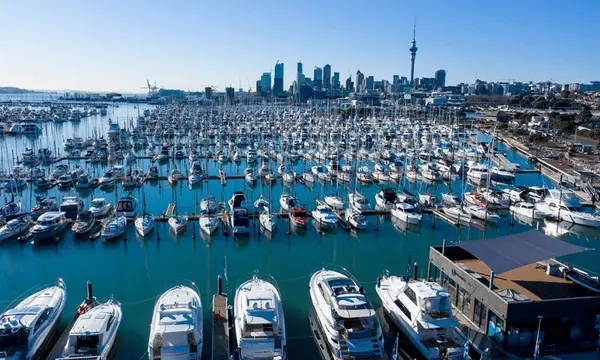
SeaKeepers South Pacific announced a July 2026 partnership with three Auckland Council marinas to widen access to citizen science and conservation programmes.
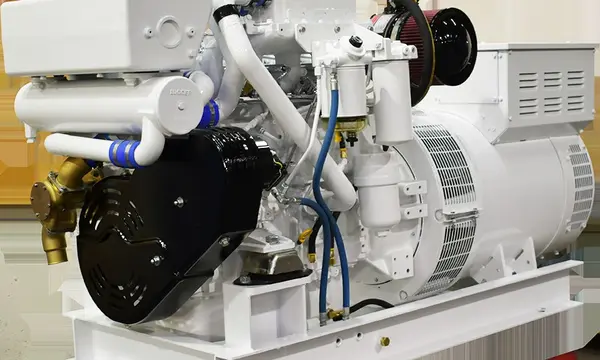
Northern Lights has expanded Diesel Marine NZ’s distributor role to cover marine generators, Lugger engines and Technicold equipment across the South Pacific.

AkzoNobel and Axalta have announced Axanzo as the name for their proposed future combined coatings company, while marine products remain with existing suppliers.
Superyacht Guide
Continue into the wider Superyacht Guide.
Business opportunities · Superyacht Guide
Companies serving the superyacht market can discuss clearly identified advertising, sponsorship and business-profile opportunities. Commercial activity remains separate from independent editorial coverage.