Company
International Council of Marine Industry Associations (ICOMIA)
Explore the company profile and related Superyacht Guide coverage.
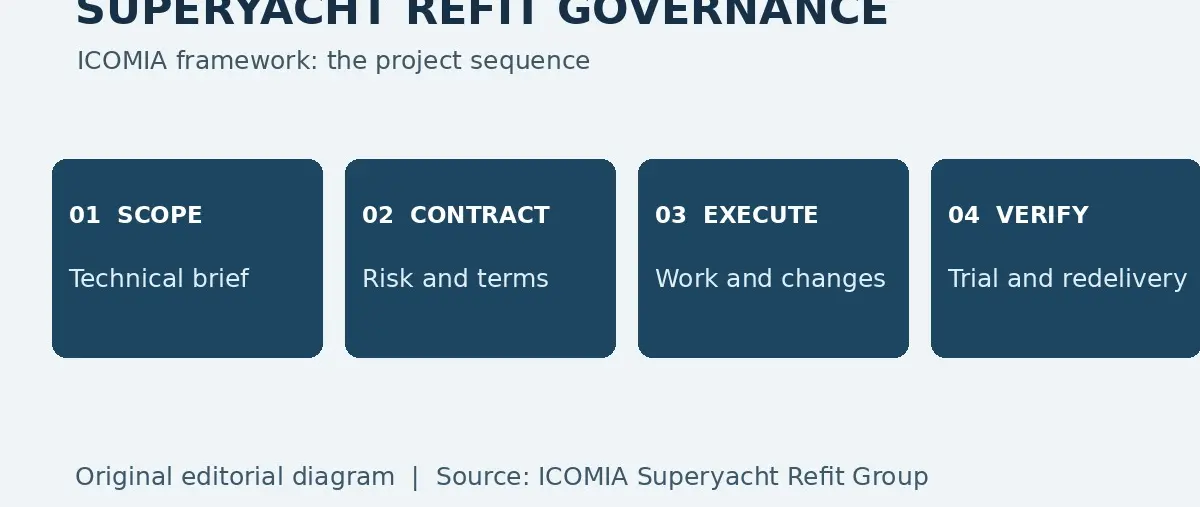
ICOMIA's Refit Group makes its established standard framework and governance guidance available for owners, managers and eleven member yards.
ICOMIA's Superyacht Refit Group is keeping its standard contract and related practical guidance accessible through a dedicated industry resource, giving owners, managers and yards a shared framework for complex repair and maintenance work. The group currently presents a network of eleven specialist refit shipyards and sets out how consistent contractual expectations can help protect all parties through a project. This is a review of the resource's continuing 2026 availability, not a claim that the contract was newly published this October.
The seventh edition of the ICOMIA Superyacht Refit Standard Framework Contract dates from February 2021. It was developed with input from marine lawyers, insurers, yacht managers and refit yards to address the issues that commonly complicate large-yacht work. Its stated coverage includes performance, subcontracting, redelivery, liability, warranty and insurance, while the associated documentation explains how an owner team can prepare and oversee a project.
Superyacht refits rarely involve only one contractor or a fixed list of tasks known in advance. When equipment is removed or joinery opened, teams may discover corrosion, undocumented changes or components that cannot be serviced as originally intended. A contract needs a credible way to record additional work, allocate responsibility and establish the consequences for price and programme.
Standard terms can reduce repetitive negotiations over baseline matters, leaving the commercial parties to concentrate on the technical scope and the specific risks of the vessel. They do not replace careful review by appropriate advisers. The suitability of a contractual clause depends on the actual project, the applicable law and the parties accepting the work.
A detailed work specification should identify the required outcome, access assumptions, inspection standards and any equipment that the yard must return to service. Without that detail, disagreements can arise over whether a task was included in the quoted price or became a legitimate change order. A shared framework can make the process for approving changes more predictable.
Owners should designate the person authorised to issue instructions and approve costs on their behalf. If a captain, management company, surveyor and designer can all request changes independently, the yard may face inconsistent direction. Clear sign-off processes protect the schedule and make it easier to maintain a reliable project cost forecast.
A yacht entering a refit yard may be exposed to hazards from lifting, hot work, electrical modifications and the movement of heavy machinery. The owner needs to understand the relationship between the vessel's insurance, the yard's policies and the cover held by specialist subcontractors. Merely knowing that each business carries insurance is not enough to establish which loss would be covered.
Subcontracting can be essential when a job requires proprietary propulsion technicians, rigging experts or specialist composite repairs. Contract terms should establish responsibility for oversight and the standard of work expected. Owners' representatives should also know which activities the primary yard performs directly and which rely on external companies.
Technical completion is not always the same as a yacht being ready to depart. Systems may require commissioning, sea trials, class survey sign-off or a programme for closing remaining minor defects. A contract that addresses acceptance and redelivery helps define the evidence needed before the yacht is returned to service.
Warranty provisions are also important when a fault emerges after the vessel leaves the shipyard. The agreement should make clear how defects are reported, what remedy is available and who is responsible for travel or access costs where relevant. A carefully documented handover reduces disagreement over the condition of the finished work.
ICOMIA's present Superyacht Refit Group page identifies eleven member yards covering several major yacht-servicing regions. Among them are Amico & Co in Genoa, IMS Shipyard on the French Riviera and KRM Yacht in Turkey. The grouping gives the sector a venue for exchanging practical experience and promoting common standards without asserting that the yards have identical facilities or capacity.
An owner's yard selection still requires independent examination of available dock space, project references, technical resources and schedule. Membership of an industry group does not guarantee that any particular yard has room for the vessel or will be able to undertake every requested task. The value of a network lies partly in shared expectations and opportunities for professional dialogue.
The separate client guidance addresses how refit projects are governed, while another resource focuses on maintenance carried out in marinas. The latter is important because smaller repairs at a berth can involve permits, noise limits, pollution controls and worksite safety obligations different from those in a dedicated shipyard. Captains and managers should establish local rules before arranging contractors.
Owners also benefit from having clear project reporting intervals, a schedule of inspections and a reliable record of decisions. These measures help distinguish a genuinely delayed activity from a change of scope and preserve evidence for future maintenance. No standard form can compensate for inaccurate technical records or absent supervision.
The active superyacht fleet requires repeated maintenance and periodic substantial refits throughout its life. With high-quality yard space and experienced technical labour in demand, predictable commercial arrangements can help both owners and businesses plan projects more effectively. This is especially relevant when a vessel moves between national jurisdictions for different phases of its service history.
ICOMIA's dedicated resource keeps the established seventh-edition contract and supporting guidance in one place. It is a useful reminder that the industrial side of superyachting depends not only on design and craftsmanship, but also on clear allocation of technical, financial and contractual responsibilities.
Explore
Go deeper into the yachts, companies, events and destinations directly connected to this article.
Company
Explore the company profile and related Superyacht Guide coverage.
Continue reading
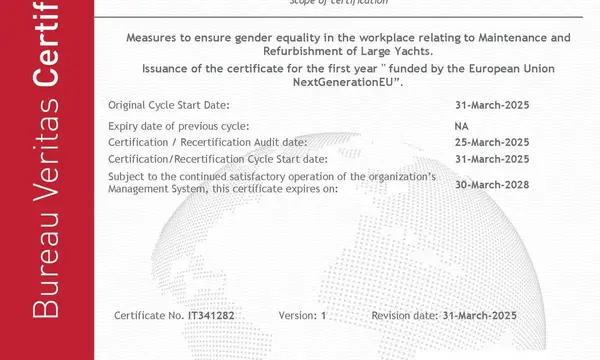
Cantiere Rossini renewed gender-equality certification in April 2026 and reported women in a quarter of its workforce and 40% of operational leadership.
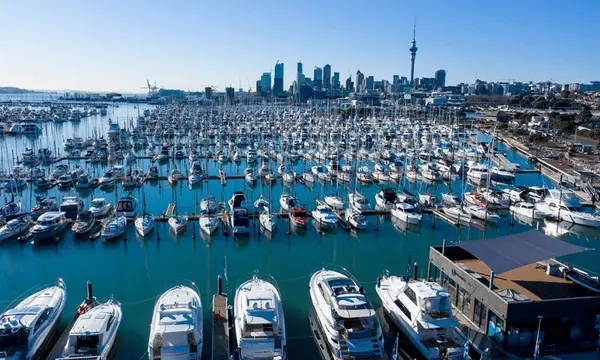
SeaKeepers South Pacific announced a July 2026 partnership with three Auckland Council marinas to widen access to citizen science and conservation programmes.
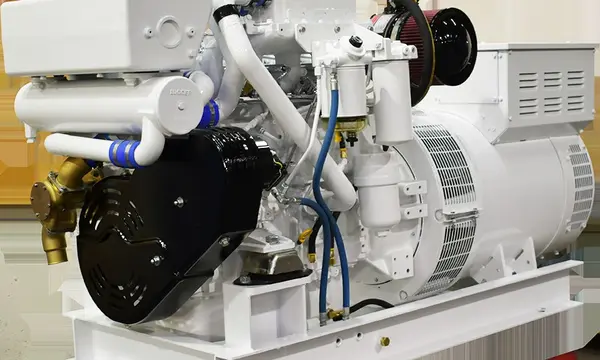
Northern Lights has expanded Diesel Marine NZ’s distributor role to cover marine generators, Lugger engines and Technicold equipment across the South Pacific.

AkzoNobel and Axalta have announced Axanzo as the name for their proposed future combined coatings company, while marine products remain with existing suppliers.
Superyacht Guide
Continue into the wider Superyacht Guide.
Business opportunities · Superyacht Guide
Companies serving the superyacht market can discuss clearly identified advertising, sponsorship and business-profile opportunities. Commercial activity remains separate from independent editorial coverage.