55m Amels NOMAD Offers Costa Rica and Panama Winter Charter
The 55m Amels NOMAD is advertised for winter charter in Costa Rica, Panama, the Bahamas and Caribbean, featuring a 14.3m fishing chase boat and …
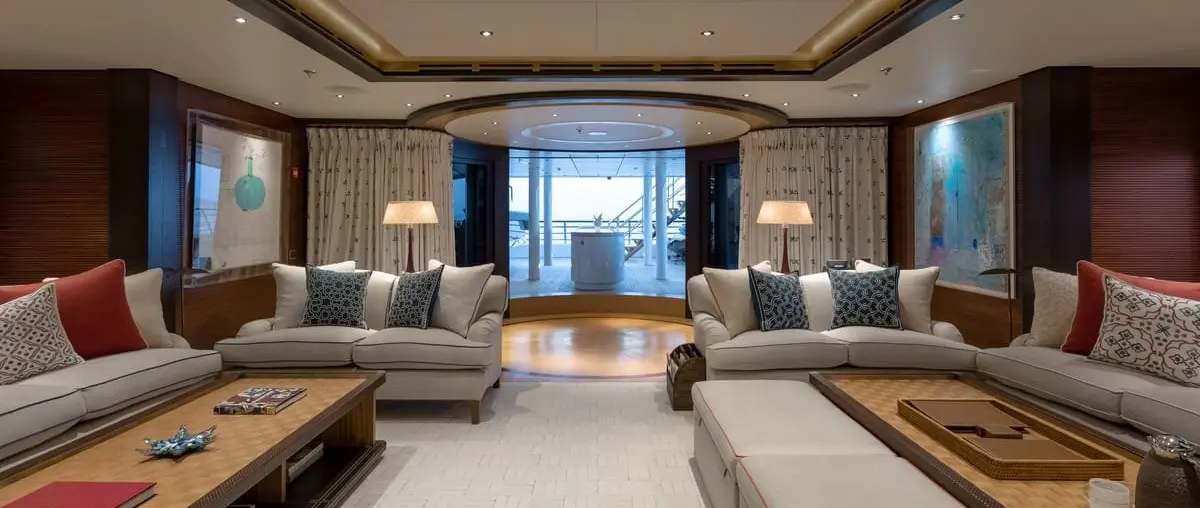
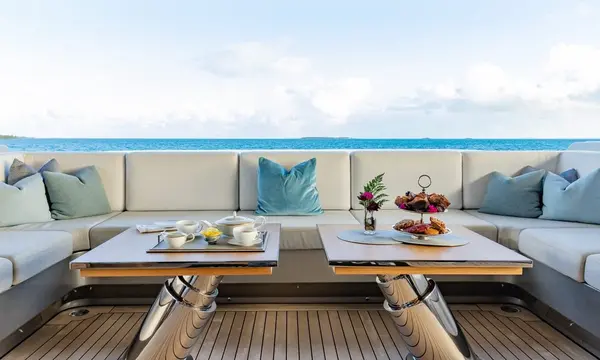
Burgess original actual BATON ROUGE main lounge photograph from its official charter gallery.
Refitted in 2026, 62.5m Icon motor yacht BATON ROUGE appears in Burgess's current Caribbean and Bahamas winter programme with rates from $475,000 per week.
The 62.5-metre Icon Yachts motor yacht BATON ROUGE is being promoted by Burgess for 2026–27 winter charters in the Bahamas and Caribbean, following a substantial refit during 2026. The brokerage says the work included a complete exterior repaint and advertises a winter weekly rate starting at $475,000, rising to $500,000 in its published seasonal range. This is a current charter offering built around a recent maintenance milestone rather than an announcement that the yacht has just been constructed.
BATON ROUGE was originally delivered in 2010 from the Dutch shipyard, with exterior lines by Tim Heywood and interiors by RWD. The current information is distinct from an earlier lifestyle account of the vessel's beach club and guest facilities. What matters for charterers today is the stated recent refit, the live winter programme and the limitations of the published commercial terms.
Burgess reports a gross tonnage of 1,431 for BATON ROUGE, a substantial enclosed volume for a vessel measuring 62.5 metres. With a beam of 12.1 metres and a 3.7-metre draft, the yacht has room for extensive accommodation and multiple shared guest areas. Gross tonnage is not the same as the vessel's weight; it describes a measure of internal volume.
A large-volume layout can provide a guest experience associated with longer yachts, although comparisons should remain grounded in the specific facilities offered. Owners and charterers must still consider the operating implications of the beam and draft. Not every marina or anchorage can accommodate a yacht of these dimensions, and the captain's assessment of the chosen route remains paramount.
The current broker profile lists accommodation for twelve guests in seven cabins, including a large main-deck master suite and two VIP suites on the upper deck. Four further cabins are arranged below, with two offering convertible twin configurations. This can give groups greater flexibility than a simpler five-cabin arrangement, especially when several families travel together.
Burgess describes a master suite of approximately one hundred square metres, with two private offices, a dressing room and a bathroom using substantial stone and glass finishes. Such amenities make the suite a self-contained part of the yacht. Guests should confirm cabin allocation and the permitted complement with the broker before a booking, because the number of beds does not override operational passenger limits.
Positioning the VIP rooms on the upper deck separates them from some of the lower-deck accommodation. This may be valuable when a charter party includes adults who want privacy or independent access to outdoor areas. Different cabin locations also affect how easily guests reach the principal dining and entertaining rooms.
The physical separation should not be mistaken for an assurance that every level is equally accessible for a guest with limited mobility. Prospective charterers should examine the current general arrangement and ask about stairs, lift access if any, and the availability of crew assistance. A sensible cabin plan is part of the voyage design, particularly for a multigenerational group.
Burgess specifically identifies a major 2026 refit including a complete exterior repaint. Paint condition can influence the appearance of a yacht and the protection of surfaces exposed to a marine environment, but a repaint does not establish that every machinery item or guest room was replaced. A charter page provides a current cosmetic and general refurbishment reference, not a full shipyard repair log.
The 2026 date matters because images and specifications may pre-date the latest work. A client should request up-to-date photographs and information about any unavailable facilities. A buyer considering the same yacht through the sales market would need professional technical documentation rather than relying on a refit headline alone.
One of BATON ROUGE's guest spaces is a panoramic observation lounge, intended for views and quieter activities away from the more active decks. The brokerage describes a library-like atmosphere and space for games or massage arrangements. An upper-level observation room can be particularly attractive during longer passages or at anchor when the guest group wants an alternative to the sun deck.
Use of the room depends on how it is furnished for a particular charter. A photograph showing a massage table does not guarantee that all treatments are included without advance arrangements. The value of the space is its adaptability, and guests should communicate how they expect to use it so the crew can make suitable preparations.
The yacht's lower-level beach club brings guests close to the water, with a fitness area also listed at sea level. This can be a useful base for watersports, swimming and relaxation. The arrangement is different from a small swim platform because it provides a dedicated zone for guests and the crew operating tenders or toys.
Access is governed by safe operating conditions. A beach club may be closed when the yacht is moving or the sea is unsettled, and guests should follow the crew's instructions about swimming and equipment. The gym's equipment may also vary as items are maintained. A charterer with specific fitness expectations should confirm the current inventory rather than assuming that every depicted device is available.
The bridge deck includes a large pool with a swim-jet feature, while outdoor lounging and dining spaces are distributed across the upper areas. Burgess also describes a sundeck that can be arranged as an evening disco area with a light show. These facilities can support varied group activity without requiring guests to disembark for every form of entertainment.
A pool or temporary party arrangement has operational limits. The captain may restrict use in strong winds or during passages, and any entertainment plans must respect local rules and other vessels nearby. Charterers organising a special event should discuss the details with the yacht manager early, rather than assuming the charter rate covers all extra equipment or visitors.
Burgess reports a crew complement of eighteen aboard BATON ROUGE. The operating team supports navigation, technical maintenance, hospitality and the handling of recreational equipment. A yacht with seven guest cabins and numerous entertainment areas relies on coordinated service to make those facilities practical for a party of twelve.
The number of crew is a current specification rather than a guarantee that individual staff members will be unchanged on every future voyage. Clients may need to discuss particular dietary requirements, language preferences or specialist activity requests. These discussions are part of charter planning and help establish what can be offered safely and professionally.
The yacht's current equipment list includes three tenders, two sailing dinghies, three WaveRunners, three SeaBobs, an eFoil, a wingfoil, kayaks, paddleboards and other watersports items. A range of craft can help accommodate guests whose interests differ, from sailing to powered activities and supervised swimming.
Equipment availability may change with servicing and the charter itinerary. Local laws may require particular qualifications or restrict powered watercraft, while the captain can limit operations when conditions are unsafe. An RYA jetski and WaveRunner training-centre arrangement is also advertised. Charterers should check what instruction is available, whether it is included and which activities are permitted at the chosen destination.
The brokerage lists winter cruising in the Bahamas and Caribbean at $475,000 to $500,000 per week. Its summer programme centres on destinations including France, Sardinia and Italy, with a separate euro-denominated rate range. Those published figures help a prospective client compare the vessel with alternatives, but they are not an all-in price for a particular voyage.
A quotation should set out the relevant charter fee and possible operating expenses, including fuel, food, docking and other arrangements. Port availability and the time spent at sea can affect the overall budget. A charterer should also distinguish the broker's stated cruising area from a guaranteed itinerary, because weather and local rules may require adjustments.
Burgess explicitly notes that BATON ROUGE is not available for charter to US residents while in US waters. This qualification is important for anyone planning travel near jurisdictions where different charter rules may apply. An advertised Bahamas or Caribbean programme should not be interpreted as permission for every nationality and embarkation point.
The appropriate response is to discuss the proposed itinerary with the broker and, where needed, qualified advisers. It would be misleading to claim that a route change automatically resolves all regulatory considerations. The actual charter agreement and applicable law determine the permitted arrangement, not a general online article.
Burgess lists a cruising speed of thirteen knots and maximum of 15.5 knots, with twin MTU engines rated at 2,480 horsepower each. The published fuel-consumption figure at cruising speed is approximately 650 litres per hour. These are broker-supplied numbers rather than results of an independent test conducted for this report.
The crew will operate the yacht according to conditions and a sensible passage plan. Fuel use can vary substantially with speed, weather and the demands of onboard equipment. Guests are better served by a route and expense estimate tailored to their preferences than by assuming every passage will be made at the published cruising speed.
The confirmed development is that Burgess is presenting the 62.5-metre Icon yacht for the current winter charter season with a 2026-refit description and a new exterior repaint highlighted in the live profile. It does not report a new owner, a recent launch, or a signed booking on a specific date. The yacht was built in 2010 and has an established operating history.
For the superyacht market, the offering illustrates the way substantial refit expenditure can support a vessel's continued appeal as a charter platform. The extent of the work must be established through its actual records. The listing is useful evidence of how the yacht is being marketed but not proof of commercial results or future occupancy.
A client should confirm the yacht's availability for the desired week, the current equipment and cabin configuration, the permitted route and any special services. Discussion of the price must also include the charter contract's treatment of operating costs. Owners travelling with children or older relatives may wish to examine deck access and the suitability of the activity programme.
These considerations are especially relevant on a large yacht with multiple guest areas. The ambition is not to use every facility every day, but to match the vessel to the people aboard and the conditions expected. This distinguishes a responsible charter enquiry from merely comparing two brochures on the basis of headline rates.
The primary source is Burgess's first-party BATON ROUGE charter profile, verified in November 2026. Its published dimensions, winter cruising region, rate range, crew, amenities and 2026 refit form the factual basis for this article. Operational discussion is separate editorial analysis.
The lead photograph is a genuine interior image from the yacht's original Burgess gallery and is credited to the broker. It illustrates BATON ROUGE's main lounge rather than pretending to show a 2026 shipyard repaint process. No synthetic image, competing yacht publication photo or unverified photographer licence is introduced.
Burgess original actual BATON ROUGE main lounge photograph from its official charter gallery.
Continue reading
The 55m Amels NOMAD is advertised for winter charter in Costa Rica, Panama, the Bahamas and Caribbean, featuring a 14.3m fishing chase boat and …
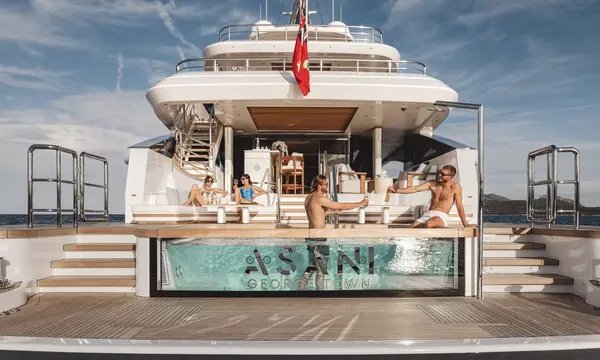
Burgess's Caribbean winter charter listing for 49.9m Benetti ASANI offers a beach-facing Oasis Deck, five guest cabins and a weekly rate starting from $308,000.
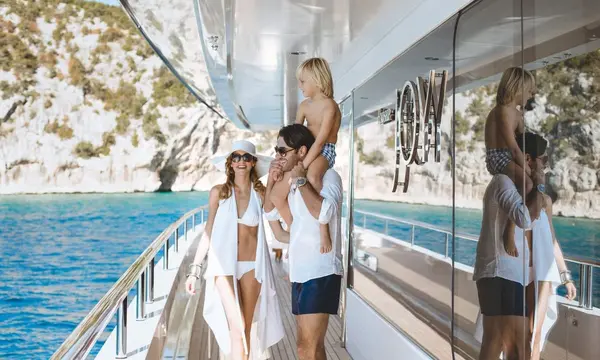
The owner of the 70m Feadship JOY is offering 20% off eligible January 2027 charters, Burgess says, alongside winter rates from €650,000 per week …
The 2022-built 38.1m Baglietto ENTERPRISE appears in Burgess's November winter charter selection for the Bahamas and Caribbean, with a five-cabin layout and 14m chase …
Superyacht Guide
Continue into the wider Superyacht Guide.
Business opportunities · Superyacht Guide
Companies serving the superyacht market can discuss clearly identified advertising, sponsorship and business-profile opportunities. Commercial activity remains separate from independent editorial coverage.