Company
National Oceanic and Atmospheric Administration
Explore the company profile and related Superyacht Guide coverage.
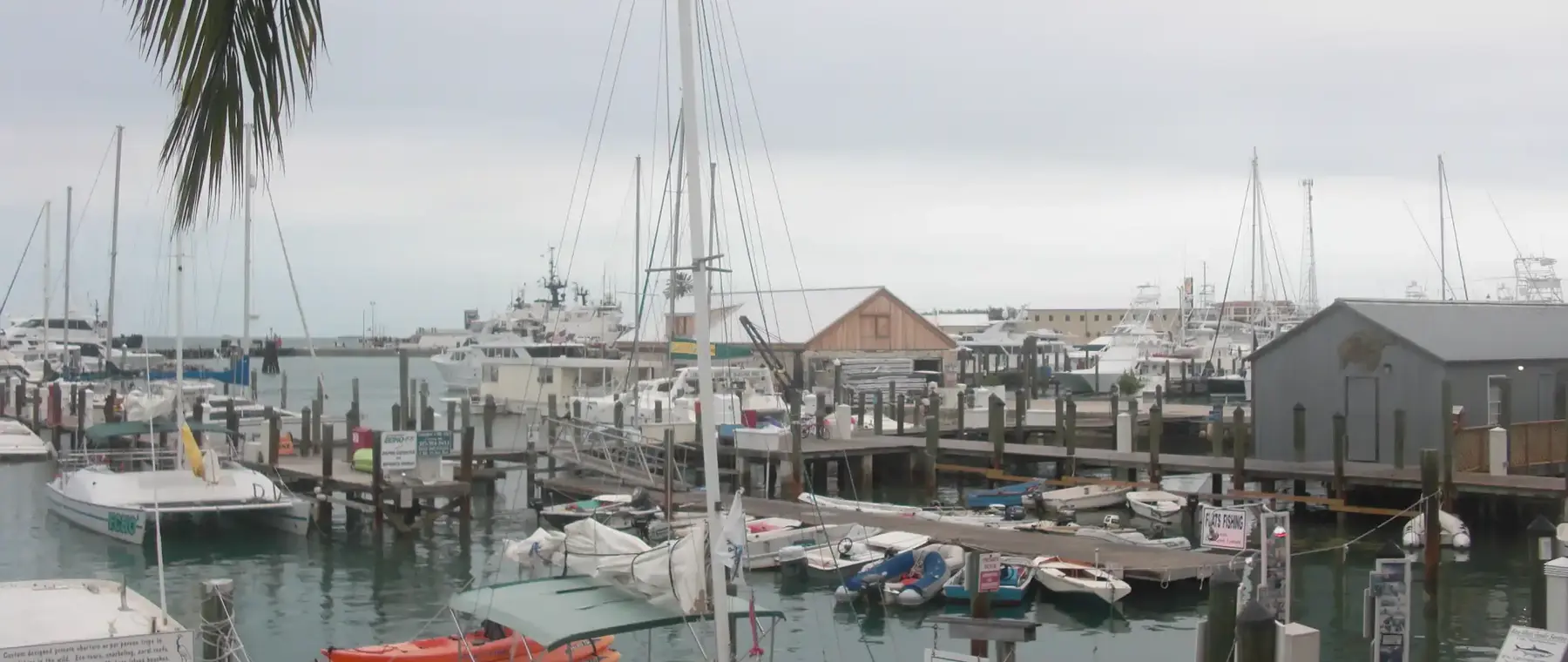
Key West is the best-known destination in the Florida Keys, but the real yachting story extends through an island chain of marinas, reefs, mangroves, wildlife refuges and remote cruising grounds. For larger yachts, the attraction comes with an important qualification: shallow water and protected habitats make careful planning essential.
Key West is often presented as the final destination: the southernmost city, the sunset stop and the place where the Overseas Highway finally runs out. From a yacht, however, it makes more sense as the western anchor of a much larger cruising region stretching through Key Largo, Islamorada, Marathon, the Lower Keys and eventually beyond Key West towards the Marquesas and Dry Tortugas.
The difference matters because the Florida Keys are not simply a chain of resort islands with marinas attached. They sit inside one of the most environmentally sensitive boating regions in the United States, where coral reefs, immense seagrass areas, mangrove islands, shallow flats and wildlife refuges determine where yachts can safely navigate, anchor, launch tenders and operate toys.
NOAA's Florida Keys National Marine Sanctuary covers 4,539 square miles around the island chain and protects the only coral barrier reef in the continental United States together with extensive seagrass beds, mangroves and habitat for more than 6,000 species. That creates a destination with a very different character from South Florida's larger yacht hubs.
Miami and Fort Lauderdale offer dense shore-side infrastructure and large concentrations of yacht services, while the Keys progressively shift the emphasis towards cruising, diving, fishing, wildlife, shallow-water exploration and the ability of the yacht to support itself away from metropolitan facilities. Key West sits at the point where those worlds meet.
It has real marina infrastructure, an international airport, restaurants, hotels and a substantial tourism economy, yet a yacht can leave the harbour and move quickly towards coral reef, mangrove backcountry or genuinely remote water where there is little conventional infrastructure at all. For an owner, that makes the Keys particularly attractive as part of a longer South Florida programme.
The yacht can combine urban access with island cruising without undertaking an ocean crossing, but the apparent simplicity of the chart should not disguise the navigational and environmental discipline required once the vessel moves beyond the principal channels. The Keys reward owners who treat the region as a cruising environment rather than simply a chain of waterfront stops.
Key West's marina landscape is more varied than a simple list of berths suggests. Some facilities place guests directly beside Old Town and the Historic Seaport, while others on Stock Island trade immediate city-centre access for more space, deeper-water capability and a marina environment better suited to larger yachts.
Key West Bight Marina is the obvious choice for owners who want to step from the yacht directly into historic Key West. The city-operated marina has 33 transient deep-water slips and states that it can accommodate vessels up to 140 feet, while its position at the Historic Seaport puts Duval Street, Mallory Square, restaurants and waterfront activity within walking distance.
That 140-foot limit is significant because it shows where Key West's marina geography begins to change for larger superyachts. A yacht in the 30- to low-40-metre range may have options in the historic harbour that are simply unavailable to vessels considerably larger, making berth dimensions, beam, draft and manoeuvring requirements worth checking before the itinerary is sold to guests.
Stock Island Marina Village provides a very different proposition a few miles east of Old Town. The marina describes itself as the largest deep-water marina in the Keys, with 288 slips, and says it can accommodate yachts up to 450 feet; it also provides fuel, pump-out, restaurants, hotel facilities and shuttle access to central Key West.
For a substantial superyacht, that combination can be more operationally useful than having the closest possible berth to Duval Street. Larger berthing capacity means the yacht can retain the benefits of Key West while guests use cars, shuttles or tenders for local movements, rather than forcing the captain to make the historic waterfront fit a yacht that has outgrown it.
City Marina at Garrison Bight fills another part of the market. The municipal facility has 245 slips and a 149-ball mooring field on the north side of Key West, alongside the Historic Charter Boat Row, giving the area a much more working-marina character than the resort atmosphere found at some of the island's other facilities.
Not every Key West marina should therefore be assessed through the same superyacht lens. Some are principally useful for tenders, smaller yachts and local boats, while others can accommodate substantial visiting yachts, and the best berth depends on whether the owner's priority is Old Town access, operational space, shore-side resort amenities or ease of getting back to sea.
That diversity is useful because Key West itself can support several styles of visit. A yacht might spend two nights beside the Historic Seaport for restaurants and nightlife, reposition towards Stock Island for a longer operational stay, or use Key West primarily as the guest-change and provisioning point before moving immediately into quieter waters.
The city consequently works best as a gateway rather than a destination that demands the yacht remain alongside for the entire visit. Key West is enjoyable ashore, but much of the reason to arrive by yacht is what lies beyond the dock.
The Florida Keys extend for roughly 125 miles, and each part of the chain has a different relationship with the water. Key Largo lies closest to mainland South Florida, Islamorada has a strong sportfishing and resort identity, Marathon occupies a strategically useful position around the Middle Keys, and the islands west of Seven Mile Bridge progressively give way to shallower, quieter and less developed cruising territory.
At the northern end, Ocean Reef Club represents one of the Keys' most developed private-yachting environments. Its marina has 175 slips and extensive dockmaster services, but access is associated with the private club and its members and guests, which makes it an important facility without making it a conventional transient public marina for every passing yacht.
Farther south, Islamorada demonstrates one of the recurring physical constraints of the Keys. Plantation Yacht Harbor Marina has between 70 and 83 slips depending on boat lengths and publishes a controlled depth of five feet, illustrating why a marina that looks substantial from shore may remain unsuitable for many larger yachts.
This is one of the most important practical lessons of cruising the island chain. Marina names, berth counts and photographs are not enough; captains need reliable information on approach depth, controlling depth, turning space, bridge clearance where relevant and the actual channel that connects a facility to navigable water.
Marathon has a particularly useful role because it sits close to the centre of the Keys and provides a natural stopping point before or after the Lower Keys. Faro Blanco Marina states that its design accommodates vessels from 35 to 140 feet and sits on the bay side near Seven Mile Bridge, providing access towards both Atlantic and Gulf-side waters.
For a yacht small enough to use it comfortably, Marathon can break the chain into manageable cruising sections rather than treating Miami-to-Key-West as a single passage. It also gives owners access to a different rhythm from Key West, with fishing, diving and local cruising taking precedence over nightlife and city hospitality.
Bahia Honda, just beyond Seven Mile Bridge, shows the other side of the Keys. Its state-park marina has only 19 slips and a published controlling depth of 4.5 feet, making it unsuitable as a superyacht berth, but the park's beaches, clear water, kayaking and nearby reef access make it highly relevant as a tender or shore excursion from a larger yacht operating elsewhere.
This distinction between where the yacht can berth and where the guests can go is fundamental to using the Keys properly. A large yacht does not need to enter every small harbour if it can remain in suitable water while tenders, kayaks or approved local operators provide access to shallower environments.
The result is an itinerary built around layers of draft. The mothership occupies the deeper channels and approved anchorages, tenders reach smaller harbours and beaches, and kayaks or paddleboards become the right tool for mangrove creeks and flats that should never be approached by a large propeller-driven vessel.
The Florida Keys National Marine Sanctuary is not simply a nature reserve that happens to surround a boating destination. Its habitats and regulations directly shape navigation, anchoring and guest activities, which means environmental awareness is an operational requirement rather than an optional part of the itinerary.
Shallow water is one of the most obvious hazards. NOAA warns that even experienced boaters ground vessels on seagrass beds, tidal flats and coral reefs throughout the Keys, and its guidance encourages boaters to use marked channels, know their draft and avoid creating propeller damage in shallow habitats.
For a superyacht captain accustomed to large commercial harbours, the margin can narrow remarkably quickly once the yacht approaches the island chain. The water may be visually spectacular, but coral heads, banks and flats make local pilotage, charts and conservative routing far more important than the apparent openness of the sea.
Anchoring requires equally careful judgement because dropping an anchor is not simply a question of finding enough swing room. Sanctuary regulations prohibit anchoring on living coral, while NOAA maintains an extensive buoy system intended to prevent repeated anchor damage at popular reef sites.
The scale limits of that buoy network matter to the superyacht sector. NOAA says its standard mooring buoys support vessels up to 59 feet and that larger 24-inch buoys at selected sites are intended for boats between 60 and 100 feet, which means many superyachts cannot simply arrive at a reef and pick up the same mooring used by dive boats.
Large-yacht access consequently has to be planned differently. The yacht may need to remain outside a protected or shallow area while guests transfer by tender or local dive vessel, allowing them to experience the reef without forcing a 50-metre yacht into waters designed around much smaller craft.
Marine zoning adds another layer because the sanctuary contains sanctuary preservation areas, wildlife management areas, conservation areas and other zones with different rules. There are 17 sanctuary preservation areas protecting biologically important shallow reefs, where boating and diving may be allowed but fishing, collecting and damaging coral are restricted.
Some restrictions are particularly relevant to superyacht operations. NOAA's regulations identify designated areas to be avoided where vessels greater than 50 metres are prohibited, while wildlife management areas can impose no-motor, no-entry, no-anchor or speed restrictions intended to protect sensitive habitats and wildlife.
These rules should not be viewed as reducing the destination's value. They are part of the reason the Keys still contain the reefs, seagrass, birds, turtles, fish and clear-water environments that yachts travel there to experience.
The right operational model therefore involves keeping the mothership in appropriate water and using lower-impact craft where necessary. Kayaks, canoes and paddleboards are particularly well suited to shallow mangrove environments, while several wildlife management areas deliberately limit motorised access in order to reduce disturbance.
For guests, this can actually improve the experience. A quiet paddle beneath mangrove roots, a dive on a protected reef or a wildlife excursion from a small tender often provides a stronger sense of place than trying to move the yacht itself as close as physically possible to every attraction.
The most interesting part of a Key West itinerary may begin after leaving Key West behind. Immediately west of the city lies the Key West National Wildlife Refuge, an expanse of shallow water, mangrove islands and wilderness that is accessible only by boat and feels remarkably removed from the bars, hotels and cruise traffic only a short distance away.
The refuge was created in 1908 and now includes the Marquesas Keys and 13 other islands spread across approximately 375 square miles of open water. U.S. Fish and Wildlife Service describes it as predominantly shallow saltwater and mangrove-island habitat used by wading birds, shorebirds, sea turtles, manatees, dolphins and other wildlife.
This is one of the clearest examples of why the Keys suit yachts capable of carrying several different types of tender and watercraft. Conventional boating, kayaking, snorkelling and wildlife viewing are possible in much of the refuge, but personal watercraft and some other activities are restricted in designated areas, so crews need to understand the local rules before launching toys.
The Marquesas can therefore feel far more expeditionary than their distance from Key West would suggest. There are no marina promenades or large hospitality developments waiting at the other end of the tender ride, and the appeal comes from the absence of those things.
Continue approximately 70 miles west of Key West and the character changes again at Dry Tortugas National Park. The National Park Service stresses that there is no food, freshwater or fuel available in the park and that reaching it requires an open-water passage, making self-sufficiency part of the visit rather than simply a desirable characteristic.
Garden Key and Fort Jefferson provide the best-known visual landmark, but the surrounding reefs, marine life, islands and clear water make the wider park the real cruising attraction. Boating, snorkelling, diving, fishing and wildlife viewing all form part of the experience, but the isolation means the yacht has to arrive prepared rather than treating the park as another marina stop.
For a superyacht, the Dry Tortugas can transform a Key West visit from a city stop into a genuine cruising programme. The important distinction is that the yacht must carry what it needs because there is no assumption that a marina or service provider will solve a shortage of fuel, provisions or freshwater after arrival.
The isolation also changes the consequences of weather. Conditions on the open passage can deteriorate quickly, while tides and shallow marine areas remain significant once the islands are reached, so a visit should be built around the forecast rather than a fixed dinner reservation back in Key West.
The Lower Keys offer worthwhile nature ashore as well. National Key Deer Refuge protects approximately 9,200 acres of pine rockland, tropical hardwood hammock, freshwater wetlands, salt marsh and mangrove habitat, and the Key deer found there occur nowhere else in the world.
This breadth is what makes the region more interesting than a Key West-only itinerary. Within a relatively compact cruising programme, guests can move between a historic American town, marina resorts, coral reefs, mangrove wilderness, wildlife refuges and an isolated national park without leaving the Florida Keys.
The Florida Keys can look deceptively straightforward because the island chain is well populated, connected by road and close to major South Florida yacht centres. From the bridge of a large yacht, however, the defining characteristics are shallow water, environmental regulation, limited large-yacht berthing outside selected marinas and a cruising geography in which the safest route may bear little resemblance to the shortest line between two islands.
Berth planning should therefore happen early, particularly for yachts above roughly 40 metres. Key West Bight and Faro Blanco publish maximum vessel lengths of 140 feet, while Stock Island Marina Village advertises capacity extending to much larger yachts, demonstrating how quickly the realistic marina list contracts as LOA, beam and draft increase.
The same discipline applies to shore excursions. A captain does not need to put the yacht inside every harbour when a tender can move guests more efficiently, and in environmentally sensitive areas that separation between mothership and excursion craft is often the better answer.
Weather should also influence when and how the region is cruised. National Weather Service climate data describes December through April as the Keys' dry season, while June through October receives about 65 percent of annual rainfall and has a greater concentration of showers and thunderstorms.
Tropical-weather planning becomes especially important during the Atlantic hurricane season, which officially runs from 1 June through 30 November. A yacht operating in the Keys during that period needs a clear understanding of forecast development, marina hurricane policies and when an apparently benign itinerary should be changed before options begin narrowing.
Winter has its own considerations because dry weather does not guarantee flat water. Cold fronts moving through South Florida can change wind and sea conditions quickly, particularly on exposed sections of the island chain and on the open passage towards the Dry Tortugas, so the local marine forecast remains more useful than assumptions about the Keys being permanently calm.
For owners, the reward for that preparation is considerable. A yacht can begin with the polished infrastructure of South Florida, move through a sequence of smaller marina communities, spend days around reefs and mangroves, use Key West for hospitality and guest changes, and then continue west into a national park where conventional shore-side support effectively disappears.
The strongest itinerary will not attempt to force the yacht into every attractive place on the chart. It will recognise that a large yacht, a fast tender, a shallow-draft tender, a kayak and a pair of fins all provide different ways of experiencing the same destination, and the Keys become more rewarding when each is used for the environment it suits.
That approach also places nature at the centre of the programme rather than treating it as something viewed through a saloon window. The reef, seagrass beds, mangrove islands, shallow flats, Key deer habitat and remote Tortugas are not decorative additions to the Key West experience; they are the landscape that explains why this unusual chain of islands exists as a cruising destination at all.
Key West remains the name most owners will recognise, and it deserves its reputation as one of America's most distinctive waterfront towns. For a yacht, though, the better story is the entire Florida Keys: a long, narrow transition from mainland South Florida into progressively more tropical, shallow and protected waters where good marinas provide the operational anchors and the wilderness between them provides the reason to cruise.
Explore
Go deeper into the yachts, companies, events and destinations directly connected to this article.
Company
Explore the company profile and related Superyacht Guide coverage.
Continue reading
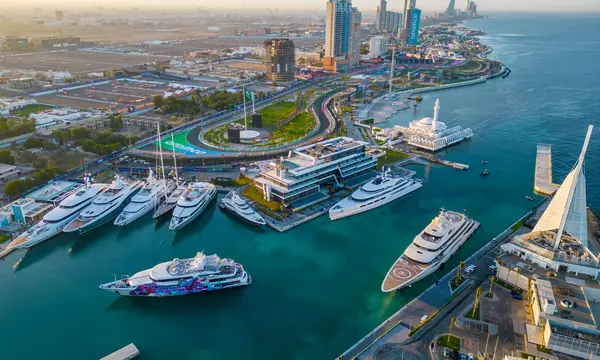
Jeddah Yacht Club & Marina offers a significant operating base on the Saudi Red Sea, with an official berth limit extending well into the …
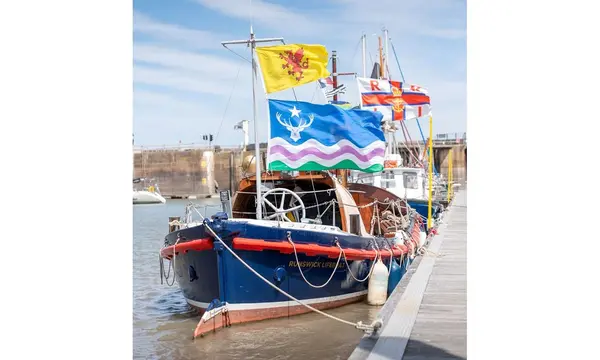
Watchet Marina’s 25th anniversary follows investment in pontoons, utilities and access at the Somerset harbour.
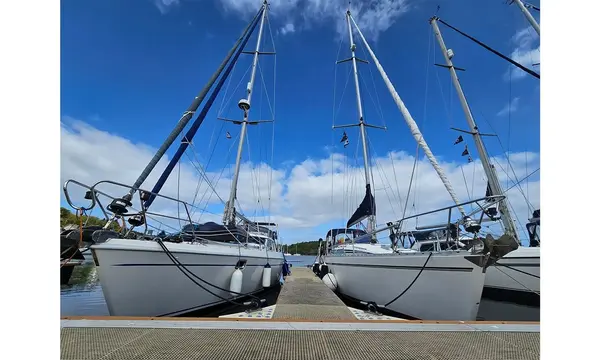
Tarbert Harbour is offering winter berthing and maintenance support on Loch Fyne, adding a seasonal option for Scottish yacht owners.
IGY is promoting a wider mix of dining, provisioning, wellness and marine services around Yacht Haven Grande, American Yacht Harbor and Rodney Bay Marina.
Superyacht Guide
Continue into the wider Superyacht Guide.
Business opportunities · Superyacht Guide
Companies serving the superyacht market can discuss clearly identified advertising, sponsorship and business-profile opportunities. Commercial activity remains separate from independent editorial coverage.