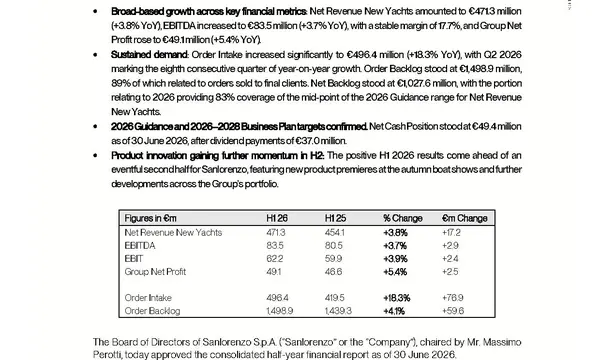
Sanlorenzo H1 2026 Order Intake Rises 18.3% to €496.4m
Sanlorenzo reports H1 2026 order intake of €496.4m, up 18.3%, with superyacht revenue rising 12.4% and order backlog reaching nearly €1.5bn.
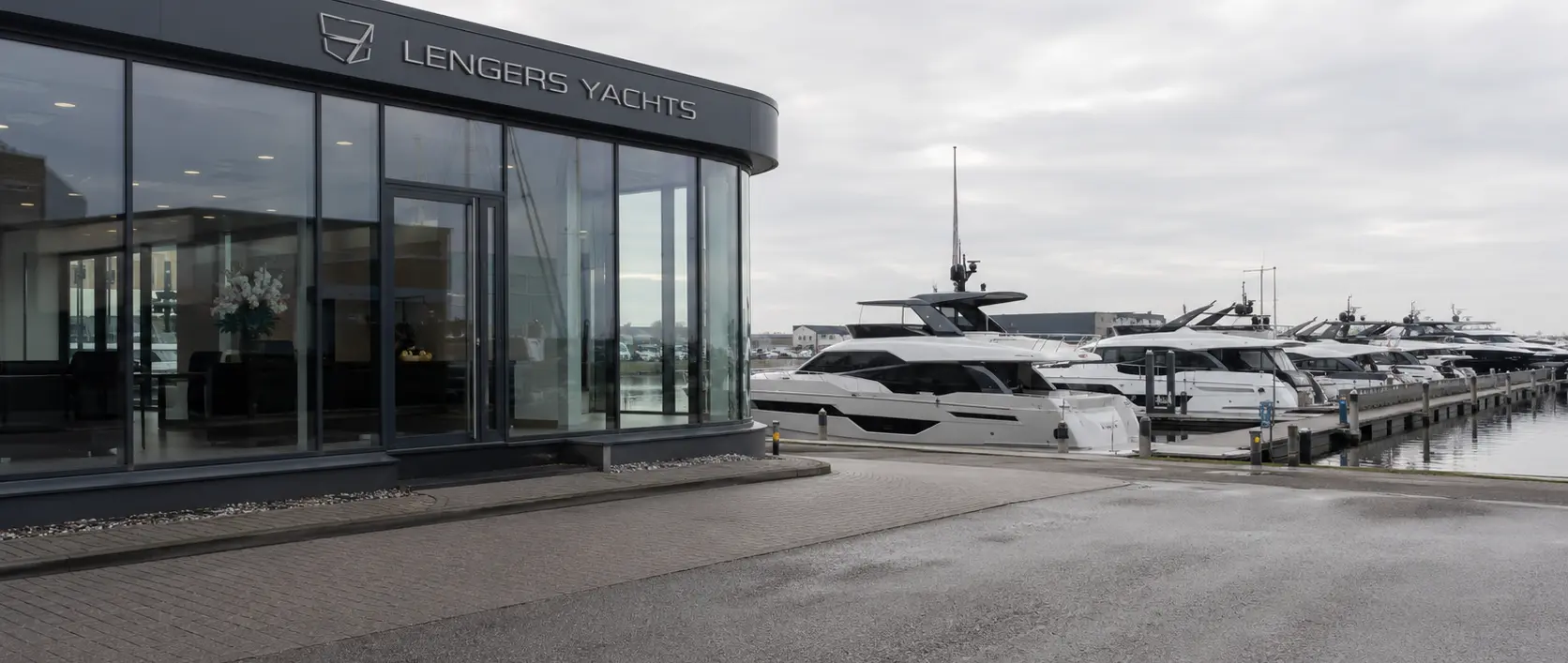
Lengers Yachts B.V. has been declared bankrupt by the District Court of Midden-Nederland, with a court-appointed trustee now responsible for administering the Dutch yacht dealership's estate.
Lengers Yachts B.V. has been declared bankrupt by the District Court of Midden-Nederland, with a court-appointed trustee now responsible for administering the Dutch yacht dealership's estate.
The insolvency judgment was issued on 28 July 2026 and published the following day. Public records identify the proceedings under case number F.16/26/314 and name J.M. van Raaijen as trustee. K.G. van de Streek has been appointed as the supervisory judge.
No trustee reports were publicly available when this article was prepared. The available records consequently confirm the bankruptcy and the officials appointed to the case, but do not yet explain the cause of the insolvency, the value of the company's assets, the extent of its liabilities or the likely outcome for creditors.
The proceedings concern Lengers Yachts B.V., Chamber of Commerce number 30189780, with its registered address at Westzeedijk 2 in Muiden. The public insolvency listing records the company as bankrupt and the case as open.
The judgment date and case information are corroborated by a separate insolvency-claims record, which also identifies the District Court of Midden-Nederland in Utrecht, trustee J.M. van Raaijen and supervisory judge K.G. van de Streek.
The legal status applies specifically to Lengers Yachts B.V. It should not automatically be treated as establishing the position of every other company, brand or activity that may use or be associated with the wider Lengers name.
Official Dutch government guidance states that a court-appointed trustee takes control of the management and financial affairs of a bankrupt business. The trustee is responsible for identifying and protecting assets, establishing the company's possessions and debts, managing its administration and seeking to recover value for creditors.
The trustee may collect outstanding payments, sell company assets, examine contracts and investigate relevant transactions completed before the bankruptcy. The work is carried out under the supervision of the appointed supervisory judge.
These general duties do not establish what will happen in the Lengers case. Decisions concerning individual contracts, assets, customer funds, yacht listings, stock or possible continuation will depend upon the trustee's investigation and the legal documents governing each arrangement.
Lengers Yachts presented itself as a business with 55 years of experience in yacht sales and related services. Its website identified the company as an official dealer for brands including Sanlorenzo, Bluegame, Prestige, SACS, Pirelli and Stratos.
The business also advertised new and brokerage yachts, yacht-selling services, moorings, financial services and technical support. This placed the company between yacht builders, buyers, sellers, owners, suppliers and other specialist businesses operating within the European leisure-yacht market.
The breadth of those activities means the bankruptcy may involve different types of legal relationship. A yacht advertised through a brokerage service, for example, would not ordinarily become company property merely because it appeared on a dealer's website. Dealership stock, customer-owned yachts, deposits, commissions, service work and equipment may each be governed by different contracts and ownership arrangements.
The bankruptcy itself does not establish that a particular customer has lost a deposit, that a brokerage yacht forms part of the estate or that a manufacturer has terminated a dealership agreement. Those questions can only be answered by examining the relevant contract, payment route, title documents and the identity of the legal entity involved.
Owners, buyers, sellers and suppliers with active arrangements involving Lengers Yachts B.V. may need to provide the trustee with contracts, invoices, payment confirmations, ownership records and correspondence. Such documents can help distinguish company assets from property or money claimed by third parties.
The priority and treatment of creditor claims are determined under Dutch insolvency rules. The amount available for distribution, if any, cannot be known until the trustee has assessed the estate, recovered available assets and established the ranking of valid claims.
No trustee report explaining the company's financial position was available in the public record at the time of publication.
There is therefore no verified basis for attributing the bankruptcy to a specific yacht transaction, customer dispute, manufacturer relationship, market condition, financing arrangement or management decision. No reliable public figure has yet been established for the company's debts, assets or number of affected creditors.
Earlier disputes or wider conditions within the yacht market should not be presented as the cause of the bankruptcy unless the trustee, court or other authoritative evidence establishes that connection.
Dutch bankruptcy procedures can allow viable assets or activities to be sold to another business, but a restart is not automatic. Any proposed transaction would need to be assessed by the trustee in the interests of the bankruptcy estate and its creditors.
The continued presence of yacht listings, brand pages or contact information on a company website should not by itself be interpreted as evidence that normal trading continues or that a continuation agreement has been completed.
Further clarity is expected to depend upon the trustee's first public report, subsequent court records or a formal announcement identifying a purchaser or confirmed continuation plan.
Lengers Yachts occupied an established position within the Dutch and wider Northern European yacht market. Its role extended beyond displaying yachts for sale and included brokerage, technical support and relationships with several major production-yacht and superyacht brands.
The immediate commercial consequences for those brands and their customers remain uncertain. Manufacturers may review existing arrangements, communicate directly with affected clients or make new decisions concerning dealer representation, but no outcome should be assumed without a formal announcement.
The case also illustrates the importance of clearly identifying the contracting legal entity, the ownership of money and assets, and the protections attached to customer payments. Those distinctions become particularly significant when an intermediary operating between builders, owners and buyers enters insolvency proceedings.
Continue reading
Sanlorenzo reports H1 2026 order intake of €496.4m, up 18.3%, with superyacht revenue rising 12.4% and order backlog reaching nearly €1.5bn.
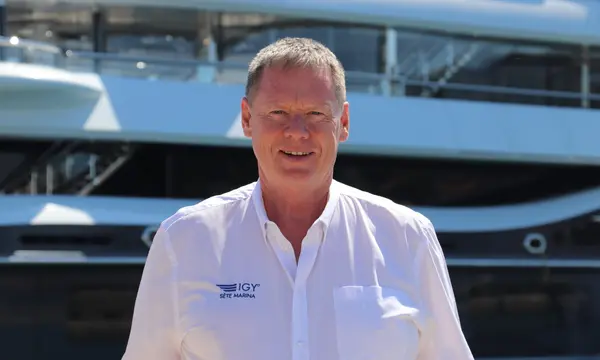
IGY Marinas has appointed Wayne Whitby as Shipyard Services Director, based at IGY Sète Marina, to expand refit, maintenance and technical support across its …

Leading yacht managers differ in scale, heritage and specialist depth. This guide compares Burgess, Hill Robinson, Y.CO, Fraser, Camper & Nicholsons and Döhle Yachts …
The superyacht industry is represented by a network of specialist associations rather than one global body. MYBA, SYBAss, PYA, IYBA, ICOMIA and ISS serve …
Superyacht Guide
Continue into the wider Superyacht Guide.