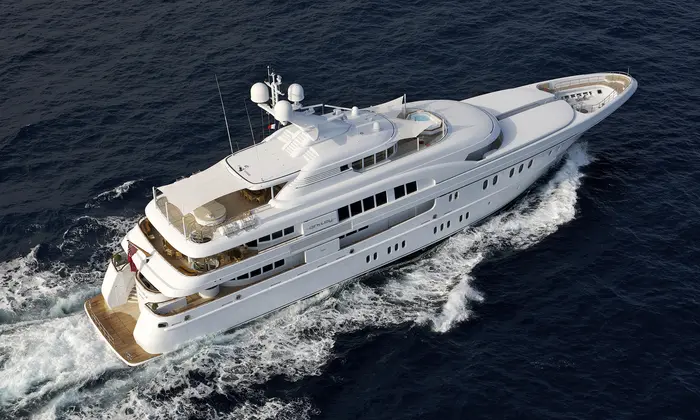
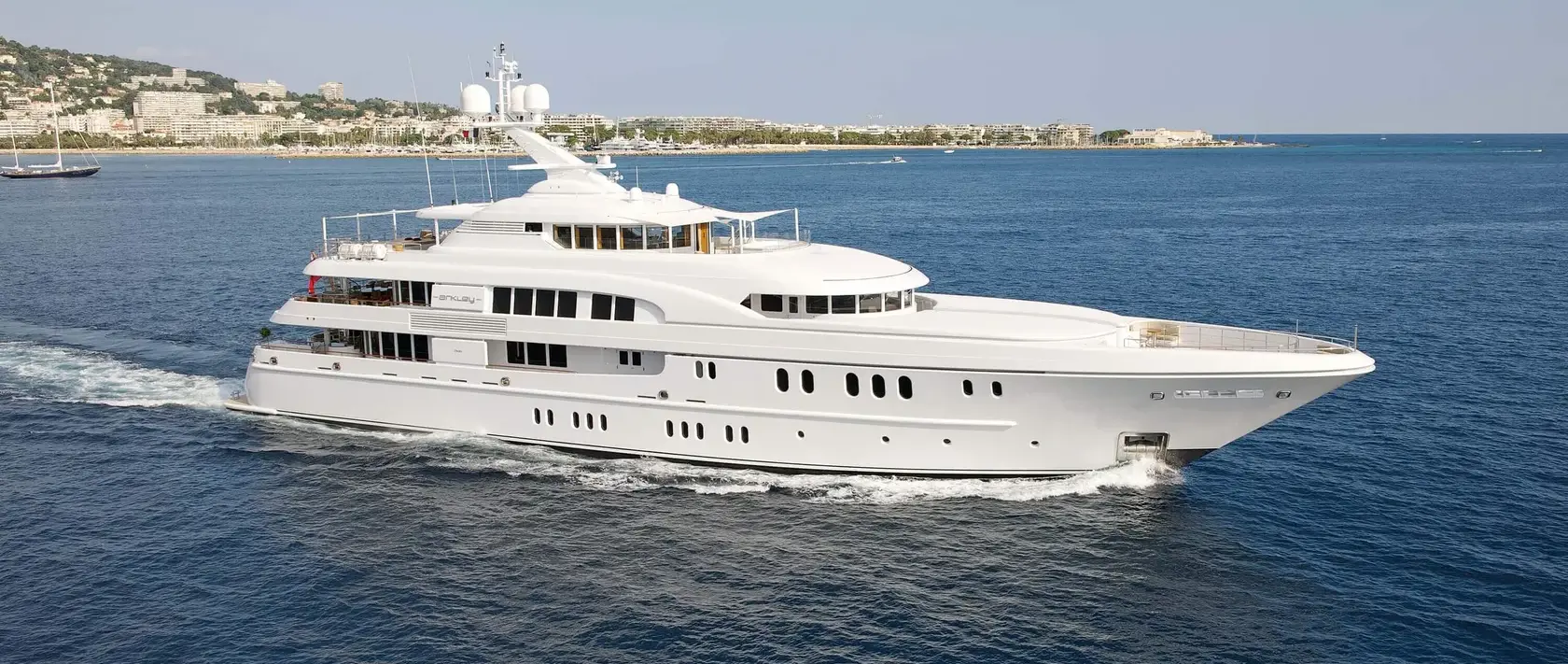
The 60-metre Lürssen Caipirinha has been sold after a major asking-price reduction, providing a revealing example of pricing, refit investment and buyer behaviour in today’s large-yacht market.
The 60-metre Lürssen motor yacht Caipirinha has been sold following a period of substantial investment, changing brokerage strategies and a major reduction in her asking price, providing an interesting example of how even highly regarded pedigree yachts must be positioned realistically in today’s large-superyacht brokerage market.
The sale was concluded with Alex Banning of SuperYachtsMonaco working alongside Alex Busher and Cornelius Gerling of Edmiston on behalf of the seller. The identity of the buyer and the final transaction price have not been publicly disclosed. At the time of the sale, Caipirinha had a last publicly advertised asking price of €39.9 million.
Built by Lürssen in 2009, Caipirinha is a 60-metre full-displacement yacht with a steel hull and aluminium superstructure, exterior design by Espen Øino and interiors by Mark Berryman Design. At approximately 1,182GT, she offers considerably more internal volume than many yachts of similar length and accommodates 12 guests in six cabins, supported by a crew of 14. Twin Caterpillar 3512 B diesel engines give her a cruising speed of around 12 knots and a reported range of approximately 7,000 nautical miles.
Her pedigree was never really in question. Lürssen remains one of the most highly regarded builders in the large-yacht market, while Caipirinha herself won Motor Yacht of the Year at the 2010 World Superyacht Awards. Originally delivered as Arkley, she has spent her life in private use and has undergone continued maintenance and upgrading rather than being heavily worked on the charter market.
What makes the sale particularly interesting is the movement in her advertised price. Earlier in 2026, Caipirinha was asking €50.82 million. In April, a new joint central agency arrangement was announced and the asking price was reduced by €10.92 million to €39.9 million — a reduction of approximately 21.5 per cent in a single adjustment. Within roughly three months of that repositioning, the yacht was reported sold.
That sequence does not reveal the final price paid by the buyer, and asking prices should never be confused with achieved sale prices. It does, however, demonstrate the importance of pricing strategy in a market where buyers considering a 15- to 20-year-old yacht can compare an increasingly wide selection of pedigree vessels, recently refitted yachts and newer semi-custom alternatives.
Caipirinha had also appeared publicly on the brokerage market at earlier stages of her ownership history. Archived sales information records an asking price of approximately $52.88 million during a previous listing, while she was publicly reported for sale again in January 2023. Changes in currency, brokerage representation, refit condition and market timing mean these figures cannot be compared as a simple straight-line depreciation curve, but they show that finding the right buyer for a yacht of this scale can be a lengthy process rather than a single listing event.
Significant investment had also been made in the yacht before the latest sale. Caipirinha completed an extensive maintenance and refit programme during 2024 and 2025, including her 15-year special survey. Her brokers described her as being presented in turnkey condition following the work, with continued technical maintenance and upgrading forming an important part of her sales proposition. No reliable public figure has been disclosed for the total cost of that programme, so any estimate of the owner’s refit expenditure would be speculative.
The refit is important when considering the sale because age alone is a poor measure of a large yacht’s market position. A 2009 Lürssen with current class surveys, recent paint and machinery work, modernised systems and a documented maintenance history can present a very different proposition from another yacht of the same age requiring several years of deferred investment. For a buyer, the purchase price is only part of the calculation; the expected expenditure during the first years of ownership can materially change the real cost of acquiring one yacht over another.
At the same time, money spent on a refit does not automatically return euro-for-euro in a subsequent sale. Much of the expenditure required to maintain a large yacht protects its condition, class status, reliability and marketability rather than directly increasing its resale value. A major survey, machinery overhaul or paint programme may be essential to achieving a sale, but buyers will still judge the yacht against competing vessels and current market conditions.
The Caipirinha transaction therefore illustrates one of the realities of the large-yacht brokerage market: pedigree helps, but pedigree alone does not determine price. Builder reputation, condition, age, technical readiness, interior appeal, operating profile, VAT status, location and the seller’s willingness to meet the market all influence whether a yacht attracts serious buyers.
The April price reduction appears particularly significant in hindsight. Moving from €50.82 million to €39.9 million placed Caipirinha into a different competitive bracket and reduced the advertised price by more than one-fifth. The fact that a sale followed relatively soon afterwards does not prove that the reduction alone secured the buyer, but it strongly suggests that the revised positioning helped bring the yacht into a range where buyer and seller expectations could ultimately meet.
It is also worth putting the €39.9 million figure into context. At that asking price, a buyer was considering a 60-metre, 1,182GT Lürssen with established design pedigree, transoceanic capability and a recently completed major maintenance programme. The alternative might be a newer yacht from a less prestigious builder, a smaller yacht of more recent construction, or a new-build project carrying a significantly higher capital requirement and several years of waiting time.
That is why older Northern European yachts continue to find buyers despite their age. The underlying engineering, volume and construction quality can remain highly attractive when the vessel has been properly maintained and the price reflects both its strengths and its position in the market.
The sale also underlines the limits of publicly available brokerage data. We know the final asking price, the substantial reduction that preceded the transaction and the yacht’s recent refit history, but the actual negotiated sale price remains confidential. The original cost of building Caipirinha in 2009 has likewise not been reliably established in public documentation, and no verified figure has been released for the cost of her 2024–2025 refit.
Those missing numbers matter. Without them, it would be misleading to calculate an exact investment return, depreciation rate or financial loss for the former owner. What can be established is the visible market history: a highly regarded Lürssen, extensively maintained and recently refitted, was ultimately repositioned at €39.9 million after a €10.92 million asking-price reduction and has now found a buyer.
For the wider brokerage market, Caipirinha provides a useful lesson. Large-yacht sales are rarely determined by a single factor, and the headline asking price is only one part of a much larger financial picture. Maintaining a yacht to a high standard protects its desirability, pedigree supports long-term demand, and a substantial recent refit can remove uncertainty for a buyer — but the final element is still price.
In Caipirinha’s case, all of those factors eventually aligned. A 17-year-old Lürssen with more than 1,100GT of volume, a recognised design team and fresh technical investment has changed hands, but only after the market was given a significantly revised price point.
The confidential final sale figure would provide the most valuable piece of market intelligence. Until that becomes known, the €39.9 million last asking price should be treated as exactly that — an asking price, not the confirmed value of the transaction.
Explore
Go deeper into the yachts, companies, events and destinations directly connected to this article.
Continue reading
USS Sequoia served nine U.S. presidents and became a floating setting for diplomacy, political decisions and private presidential life. From Roosevelt and Kennedy to …
Superyachts are unusually visible forms of private wealth, so where they berth can carry reputational as well as legal significance. Soft power begins with …
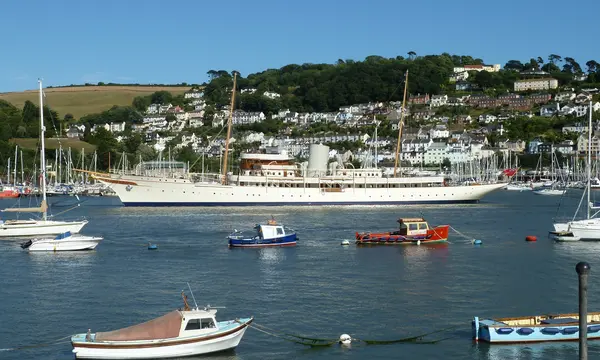
Nahlin is a 91.44-metre classic motor yacht built by John Brown & Sons in 1930 to a G.L. Watson design. Her 1936 Mediterranean charter …
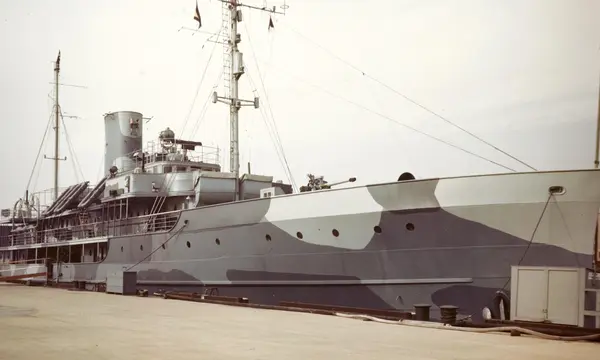
Built for Horace Dodge in 1921, SS Delphine survived sinking, wartime service as USS Dauntless and decades of uncertainty before a landmark restoration returned …
Superyacht Guide
Continue into the wider Superyacht Guide.