
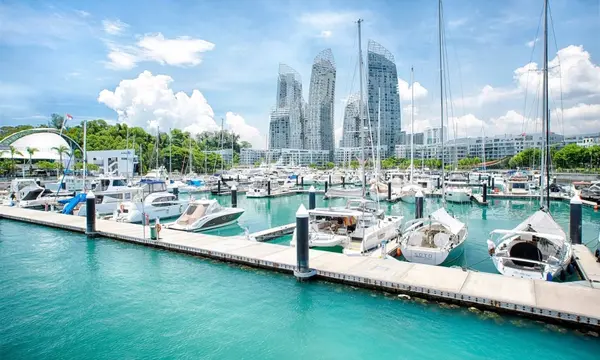
Singapore Seeks Feedback on Proposed Berthing Safeguards in Keppel Bay Deal
Singapore's competition regulator invites feedback until 26 November on proposed berth-rate limits and charter protections in SUTL's planned Keppel Bay deal.
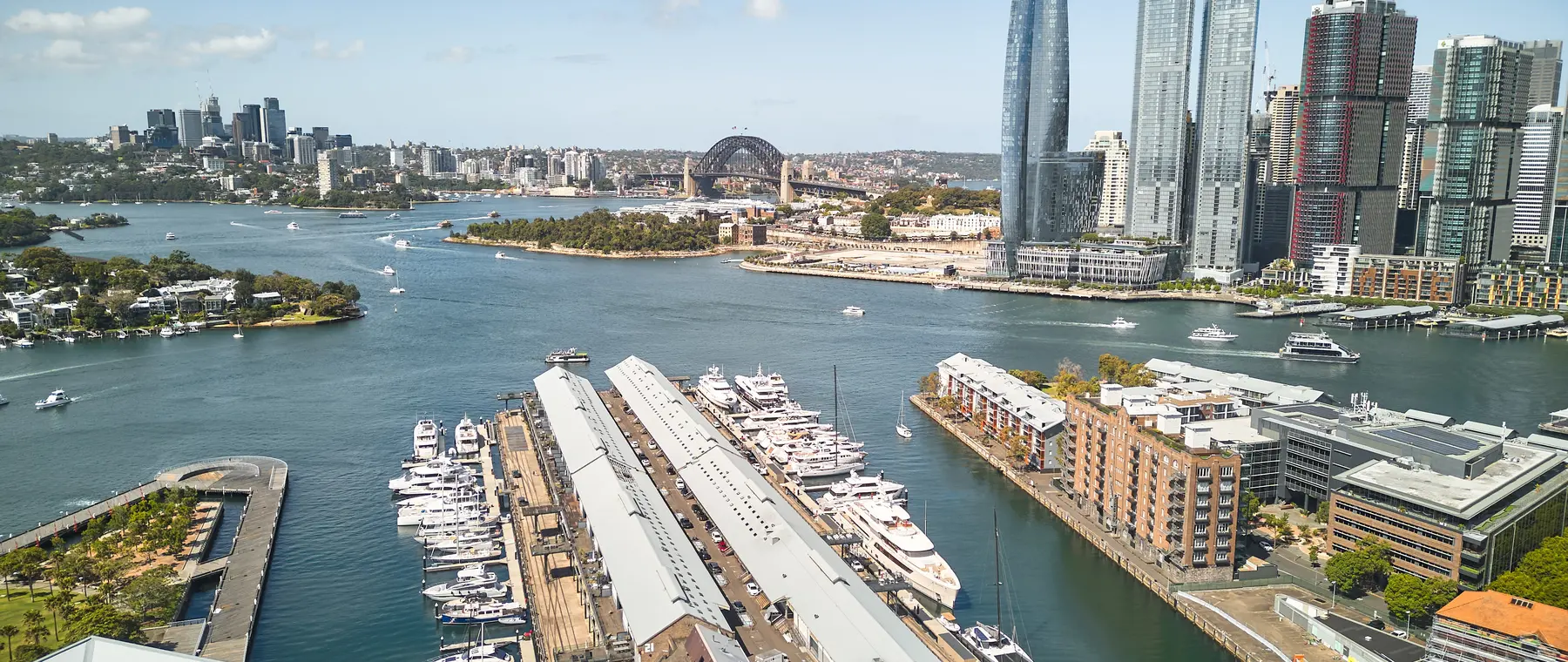
Jones Bay Superyacht Marina — Marina Industries Association 2027 awards announcement
The Marina Industries Association's 2027 awards programme offers superyacht facilities an opportunity to document berth suitability, staff training and service quality.
The Marina Industries Association has opened its case for a broader field of entries to the 2027 Nautilus Marine Insurance Marina of the Year Awards. Its announcement on 19 November 2026 explains how different facility sizes and operating models can be assessed on their own terms. Entries close on 26 February 2027, with the awards dinner scheduled for 4 May at the Royal Sydney Yacht Squadron in Kirribilli. The development is particularly relevant to operators serving large yachts because it encourages facilities to measure performance against the customers they have chosen to serve, rather than against an arbitrary measure of marina scale.
For a superyacht marina, however, participation is potentially more useful than the prospect of receiving a trophy. The work of preparing a submission can expose weaknesses in operational records, customer communication and coordination between the shore team and the yacht. In a sector where a single arrival can require weeks of planning, the ability to demonstrate consistency is an important commercial characteristic in its own right.
According to the association, separate commercial marina categories divide facilities at 140 boats, while boatyards are divided at 20 boats. A distinct category recognises clubs operated on a not-for-profit basis, and dry-stack operations have their own category. The association also introduces an Outstanding Initiative of the Year award, consolidating previous awards for environmental work, innovation and community support. Initiatives must have been introduced after June 2025.
Those distinctions recognise that a large marina and a small specialist operation may have very different resources. They also recognise an issue familiar to the large-yacht sector: counting berths does not necessarily convey the complexity of the services a facility delivers. A floating berth for a small boat and a commercial berth capable of handling a large visiting yacht are not operationally equivalent. The latter may involve additional considerations relating to manoeuvring, power, security, contractors and the movement of crew, stores and guests.
A superyacht facility should start by describing the business it intends to operate. Some marinas are primarily transit destinations for yachts moving between cruising areas. Others attract vessels for extended periods, providing access to maintenance facilities, crew accommodation or nearby suppliers. There are also city-centre facilities where owners value proximity to restaurants, airports, cultural venues and business districts.
Each model produces a different set of service requirements. A transient yacht may need a rapid confirmation of berth dimensions, an accurate account of port formalities and a dependable refuelling arrangement. A yacht remaining for several months is more likely to prioritise supplier access, security arrangements and the stability of utility services. An operator should avoid promising that every facility can meet every requirement. It is better to set out what can actually be provided and demonstrate repeatable performance within that scope.
One practical exercise is to examine how the marina collects vessel data before accepting a booking. Overall length alone is not sufficient. Beam, draft, displacement, mooring arrangement and the configuration of projecting equipment can all affect suitability. A captain may also require confirmation of navigational restrictions, approach conditions or the resources available to assist with arrival.
A strong operational record would show that these details are checked and that any exceptions are communicated before the yacht commits to a passage. A berth photograph is not a substitute for measured dimensions and current information. Operators can make that information easier for captains to obtain by keeping a controlled berth specification document, recording revision dates and establishing responsibility for updates. Such material can also help an awards assessor understand the quality of the arrival process without relying on marketing descriptions.
This is particularly important for unfamiliar visiting yachts, whose bridge teams may have no personal experience of the local marina. Clear directions and realistic limits are valuable even when the result is that a particular vessel cannot be accommodated.
Electrical service is another example of where evidence is potentially more persuasive than an impressive-looking facility. A marina should be able to describe the supply characteristics at each relevant berth and distinguish installed capacity from capacity available under expected operating conditions. Yacht engineers need to understand compatibility before connecting, and local technicians should be able to respond to problems within an agreed scope.
A facilities team might examine maintenance records for shore-power infrastructure, the process for reporting faults, the availability of qualified personnel and the communication given to yacht engineers when a service interruption is expected. The purpose is not to promise that failures never occur. The useful question is whether a facility can detect problems, provide accurate information and coordinate corrective action.
Comparable principles apply to potable water, waste reception and other utilities. Recording interruptions and improvements over time gives managers better information than relying on impressions gathered from a small number of high-profile visitors.
The association explains that mystery shopping forms part of the assessment process for facility awards. From a superyacht perspective, this is potentially a revealing exercise. A vessel's first enquiry may come from a captain, yacht management company, charter broker or local agent. Each may ask different questions, but the marina's response should be consistent in accuracy and professionalism.
An internal review could examine how quickly enquiries are acknowledged, how missing vessel information is identified and how staff handle requests they cannot immediately answer. A prompt but inaccurate reply can lead to greater operational difficulty than a response that openly identifies an uncertainty and sets a realistic follow-up expectation.
Managers should also consider what happens outside normal office hours. It is not necessary for every commercial department to be available around the clock, but the yacht should know which operational contacts are available and when. The distinction between emergency assistance, operational support and routine commercial enquiries should be clear.
The consolidated initiative award offers operators a reason to examine projects that might otherwise be regarded as routine internal improvements. An initiative could address contractor coordination, resource consumption, the organisation of guest transport or the reporting of incidents. Those examples are editorial suggestions, not announced nominees or predictions about the judges' decisions.
The strongest evidence would normally show the situation before the project, the actions taken and the outcome observed. A new digital booking process, for instance, is more meaningful if it has reduced incorrect bookings or improved the completeness of vessel information. An environmental initiative is more useful if the facility can explain how its results were measured and where the measurements remain uncertain.
It is worth distinguishing an activity from an outcome. Buying equipment, conducting training or introducing a policy may be an important first step; it does not automatically establish that environmental or customer-service performance has improved. Managers can use this distinction to select evidence that describes actual operational change.
The 2027 programme also includes individual awards for women in the marina industry and emerging professionals under 35. The association says that nominations for those awards must be made by another person. For specialist superyacht facilities, the recognition of people is particularly pertinent because many of the most valuable customer-facing services depend on judgement and experience rather than infrastructure.
A member of a marina team may need to coordinate visiting contractors, communicate with a yacht's chief officer or resolve an unexpected delivery issue without disrupting the movement of other vessels. Training records, clear responsibilities and examples of effective teamwork can help a facility demonstrate how it supports its employees. They may also reveal where knowledge depends too heavily on one individual.
Operators should consider how they retain experience and prepare less experienced colleagues for greater responsibilities. Investing in physical infrastructure without investing in operational competence can leave gaps in the service actually delivered to large yachts.
The association cites Dubai Harbour Marina's first-time international award success in 2025 as evidence that established entrants do not automatically have an advantage. That precedent should not be interpreted as a prediction of any particular facility's performance in 2027. It does, however, underline the international nature of the programme and the relevance of participation beyond Australia's domestic marina market.
For berth buyers, an industry award may be one useful element of due diligence, but it should not replace vessel-specific checks or commercial negotiations. Owners and captains still need to assess suitability, availability, local requirements and contractual terms. For operators, the lasting value of the awards process may be the evidence collected, the operational improvements identified and the opportunity to communicate a more accurate account of the marina's capabilities.
The association's February deadline gives facilities time to assemble records and decide which categories legitimately reflect their activities. Whether they enter or not, the underlying discipline of documenting service quality has practical value for a superyacht marina seeking repeat business and long-term relationships with fleet managers.
Primary source: Marina Industries Association — 19 November 2026.
Image: Jones Bay Superyacht Marina, supplied in the Marina Industries Association's official news announcement. Official source.
Continue reading
Singapore's competition regulator invites feedback until 26 November on proposed berth-rate limits and charter protections in SUTL's planned Keppel Bay deal.

Port Denarau Marina Limited appoints Sonal Sharma as general manager for marina and commercial operations, bringing tourism and public-sector leadership experience.
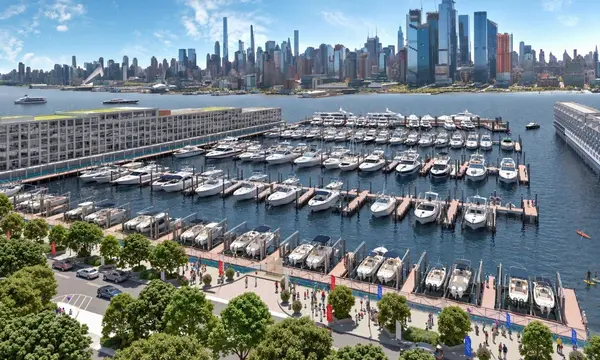
Suntex announces the redevelopment of Lincoln Harbor Marina in Weehawken, with plans for 248 wet slips serving vessels between 36 and 110 feet in …

Bahrain Marina Development Company introduces its revived Marina Club brand, with 167 planned berths for vessels up to 50 metres and a phased opening …
Superyacht Guide
Continue into the wider Superyacht Guide.
Business opportunities · Superyacht Guide
Companies serving the superyacht market can discuss clearly identified advertising, sponsorship and business-profile opportunities. Commercial activity remains separate from independent editorial coverage.