AnchorGuardian Examines Captain–Owner Choices at Anchor
AnchorGuardian's latest guidance explores anchor-dragging concerns, company-reported survey results and why masters retain responsibility for safe yacht anchoring.
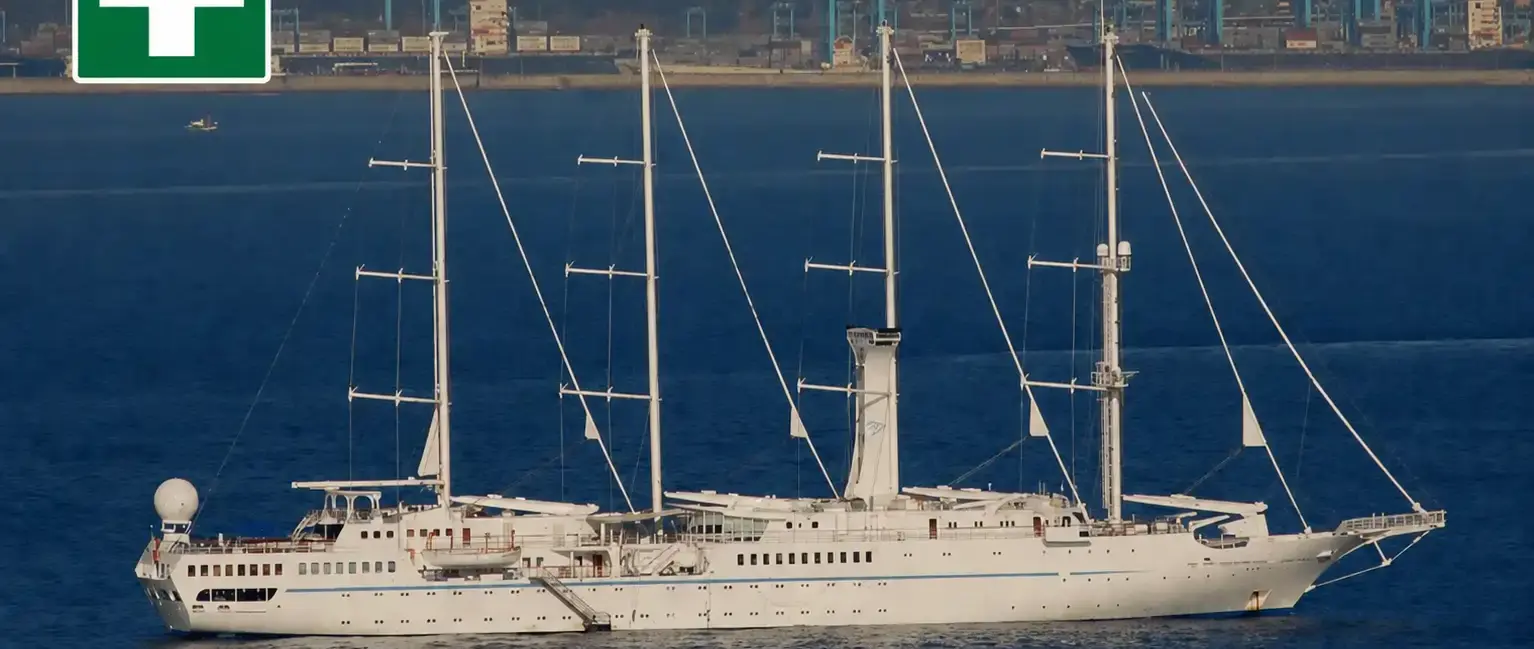
A serious illness or injury offshore can turn a luxury yacht into an isolated medical environment within minutes. Captains must ensure trained people, appropriate equipment, reliable medical advice and a workable route to definitive care are already in place before an emergency begins.
A medical emergency aboard a superyacht can begin in completely ordinary circumstances. A guest collapses over breakfast, a crew member is badly injured during deck operations, somebody suffers severe chest pain during a passage, or a seemingly manageable illness deteriorates while the yacht is several hours from suitable shore-side care. The surroundings may be luxurious, the communications sophisticated and the vessel capable of crossing oceans, but none of those things eliminate the fundamental problem: at sea, the patient may be a long way from a hospital and the yacht has to bridge that gap.
For the captain, medical readiness therefore belongs in the same category as fire, flooding, grounding and man-overboard planning. International maritime standards recognise that reality. The Maritime Labour Convention requires ships within its scope to provide access to medicines, medical equipment, medical information and expertise, and requires ships to carry a medicine chest, medical equipment and a medical guide according to national requirements. It also distinguishes between vessels that can reach professional care relatively quickly and those that may have to sustain a casualty for much longer.
One of the easiest mistakes is to treat medical preparedness as an inventory exercise. The yacht has a medical locker, first-aid kits, perhaps an AED and a collection of prescription medicines, so the box is considered ticked. In reality, the useful question is not simply what equipment is aboard but whether the crew can find it, understand it, maintain it and use it effectively under pressure while communicating with a medical professional ashore.
Flag-state requirements provide the regulatory floor. For UK vessels, for example, the Maritime and Coastguard Agency's medical-stores requirements deal not only with medicines but also emergency-response equipment, medical documents, telemedical advisory services and controlled-drug records. The precise requirements vary with vessel category, flag, commercial status, persons aboard and operating area, so a captain should be working from the yacht's actual regulatory regime rather than copying the inventory of another vessel.
The operational plan needs to go further. Equipment should have a named person responsible for expiry dates, consumables, batteries, seals, controlled items and replenishment. Emergency bags need to be genuinely portable, and essential equipment should not be buried behind stores or accessible only to one person who may themselves be the casualty. A yacht cruising between established Mediterranean ports presents a very different medical-access problem from the same yacht operating in the South Pacific, Greenland or an isolated anchorage hundreds of miles from advanced care, and that difference should influence preparation.
On most yachts there is no doctor waiting in a dedicated medical centre. The initial response will usually come from trained crew, which makes competency and role allocation more important than job title. The STCW framework includes separate competencies for Medical First Aid under A-VI/4-1 and Medical Care under A-VI/4-2, while flag-state certification regimes may require the higher level of medical training for particular command qualifications and operating profiles.
The Maritime Labour Convention's guidance makes a useful operational distinction. Ships ordinarily capable of reaching qualified medical care within eight hours should have at least one designated seafarer with approved medical first-aid training, while ships operating farther from professional care should have a designated person trained in medical care at a higher level. That principle matters enormously to yachts because cruising programmes can change faster than the crew structure. A vessel operating between established yachting centres may suddenly undertake an ocean passage or remote expedition without anybody asking whether the medical plan has changed with the geography.
Certificates alone are not enough. A captain should know who takes responsibility for the initial casualty response, who contacts shore-side medical support, who records information, who prepares communications, who navigates or diverts the vessel and who manages the remaining guests and crew. In a real emergency those functions occur simultaneously. If everybody gravitates towards the casualty and nobody remains clearly responsible for the yacht, an already serious incident can create a second operational problem.
Modern connectivity has transformed the ability of yachts to reach doctors, but telemedicine should be treated as an emergency system rather than another internet service. The IMO's Global SAR arrangements incorporate telemedical advice alongside national authorities and Rescue Coordination Centres, while the UK's Maritime and Coastguard Agency directs masters requiring telemedical assistance through the appropriate coastguard and designated medical services.
That communication route should already be known before the emergency occurs. A laminated telephone number near the bridge console is useful, but it is not a complete system. The bridge team should know which service applies in the cruising area, what communications systems remain available if the yacht's primary internet connection fails and who will transmit patient information while the captain continues to command the vessel. Satellite voice systems and mobile telephones can assist, but emergency medical communications should not depend entirely on one connection.
Good information also matters because a shore-side doctor is trying to assess somebody they cannot physically examine. The yacht needs a disciplined way of communicating what happened, the patient's condition, relevant history, medication and the observations being made aboard. The Maritime Labour Convention provides for standard medical-report information and requires medical information to remain confidential and be used to facilitate treatment. In practical terms, the captain should ensure the medical team and bridge can exchange accurate information without turning the emergency into an uncontrolled flow of messages among crew, management, family members and the owner.
Automated External Defibrillators are increasingly common aboard yachts, and current Maritime and Coastguard Agency guidance recommends that operators conduct an appropriate risk assessment when deciding whether an AED should be carried. Factors include the number and age profile of people aboard and other relevant risk factors, while equipment testing, crew familiarisation and refresher training remain essential where an AED is provided.
The important point for a captain is that an AED does not make the yacht a hospital. Even where circulation is restored following defibrillation, the patient may remain critically ill and require urgent transfer to professional medical care. The same thinking should apply to the entire medical inventory. Equipment has value only when it sits inside a chain extending from recognition of the emergency through initial care, medical consultation, monitoring, navigation and ultimately transfer to definitive treatment. Buying increasingly sophisticated equipment without training, maintenance or a realistic evacuation strategy can create reassurance without creating capability.
“Call a helicopter” is not a medical evacuation plan. Helicopter availability depends on position, range, weather, daylight, aviation capability, local rescue arrangements and the patient's circumstances. A yacht with a certified landing area may have options unavailable to another vessel, but even a helideck does not guarantee that an aircraft can reach the yacht when required. International search-and-rescue arrangements therefore centre on contact with the responsible Rescue Coordination Centre and appropriate regional services rather than assuming one particular means of evacuation.
Captains should think through the physical movement of a patient as well. A casualty may need to travel from a guest cabin, beach club, engine room or tender platform through stairways and watertight doors before reaching the place from which they can be transferred. A stretcher route that works when discussed around a table may prove very different when crew attempt it with a realistic load, the yacht moving in a seaway and doors or furniture restricting access. This is where medical planning becomes ordinary seamanship: access, manpower, communications, weather, stability and navigation all interact.
The destination requires the same thought. The nearest port is not automatically the right medical destination, and the nearest hospital may not have the facilities required for a particular emergency. Depending on advice from medical and rescue authorities, the captain may need to alter course, increase or reduce speed, make for a rendezvous point, arrange an ambulance at a berth or prepare for an offshore transfer. The plan should therefore identify credible escalation routes throughout the cruising area rather than simply storing the address of one favoured clinic.
Professional crew generally undergo statutory medical examinations, while owners and guests may arrive with very different ages, medical histories and levels of physical resilience. Flag-state guidance identifies factors such as the number and age profile of people aboard as relevant considerations in assessing medical and cardiac-emergency preparedness, which means the risk picture for a yacht carrying family groups or older guests may differ materially from one suggested by crew numbers alone.
Captains do not need to turn the guest-arrival process into a medical interrogation, but there should be an appropriate and confidential mechanism through which medically relevant information can be made available when guests choose or need to disclose it. Serious allergies, prescribed medicines or other information that could materially affect emergency care are far more useful when known before a crisis than discovered while the yacht is already speaking to a doctor ashore. Health information exists to support care and should be protected accordingly.
The cruising programme should also influence the conversation. Diving, remote shore excursions, high-speed tenders, personal watercraft, climbing, skiing or extended expedition operations can place people farther from the yacht and farther from immediate assistance. The captain's medical plan should therefore extend beyond the main vessel to the activities being conducted from it, including how a casualty is communicated with, recovered and brought back into the yacht's emergency-response system.
Most crews understand the value of fire and abandon-ship drills because the consequences of failure are obvious. Medical drills deserve the same seriousness. A useful exercise is not simply somebody lying on the deck while another crew member retrieves the first-aid kit. It should test notification, role allocation, communications, equipment retrieval, patient access, record keeping, bridge command and the decision-making process for obtaining outside medical help.
The drill can expose simple weaknesses that formal compliance does not reveal. Perhaps the medical bag cannot pass easily through a service hatch, the satellite handset does not work in the intended treatment area, the stretcher cannot negotiate a stairwell, nobody knows where a guest's information should be recorded, or the officer expected to coordinate telemedical advice is simultaneously required somewhere else by the vessel's emergency organisation. Finding those problems during a drill costs almost nothing; discovering them with a seriously ill person aboard is a very different matter.
A captain should also plan for the emergency occurring at the worst possible moment: overnight, offshore, in poor weather, with the yacht already managing another operational problem. Medical readiness is strongest when it does not depend on one particular crew member, one communications link or one route to shore.
A medical emergency exposes one of the fundamental limitations of even the most capable superyacht. The vessel can carry exceptional technology, crew and resources, but it cannot reproduce the full capability of a hospital. The captain's objective is therefore to create as much useful time and as many options as possible between the moment somebody becomes ill or injured and the moment professional shore-side care takes over.
That means carrying the right equipment for the yacht's flag and operating profile, maintaining it properly, ensuring the right people are trained, establishing telemedical communications, protecting medical confidentiality, understanding evacuation options and drilling the complete response rather than isolated parts of it. International standards and flag-state regulations provide the framework, but real preparedness comes from turning those requirements into something the crew can actually execute.
The medical locker matters. So does the AED, the certificate on the crew member's training record and the emergency number beside the bridge telephone. But the strongest medical capability aboard a yacht is the system connecting all of them. When somebody's health deteriorates hundreds of miles from shore, the captain cannot choose when the emergency begins; they can decide how prepared the yacht will be when it does.
Continue reading
AnchorGuardian's latest guidance explores anchor-dragging concerns, company-reported survey results and why masters retain responsibility for safe yacht anchoring.

The 2026 ACREW Crew Awards are scheduled in Fort Lauderdale on 25 October, recognising superyacht captains and crew across 14 professional categories.

Fraser's 2026 Monaco captains' awards recognised crews aboard VIRTUOSITY, NAFISA, HAZE 2, O'PTASIA and K2 for environmental, safety and charter achievements.

CrewRenew starts a South Florida-focused web service connecting verified yacht crew with local experiences and discounts for days away from the vessel.
Superyacht Guide
Continue into the wider Superyacht Guide.
Business opportunities · Superyacht Guide
Companies serving the superyacht market can discuss clearly identified advertising, sponsorship and business-profile opportunities. Commercial activity remains separate from independent editorial coverage.