Denison Confirms Sale of 28m Pershing 9X MAGIC OF AYR
Denison Yachting confirms the sale of 2021 Pershing 9X MAGIC OF AYR, a 28.04m motor yacht with four guest cabins and a stated 42-knot …
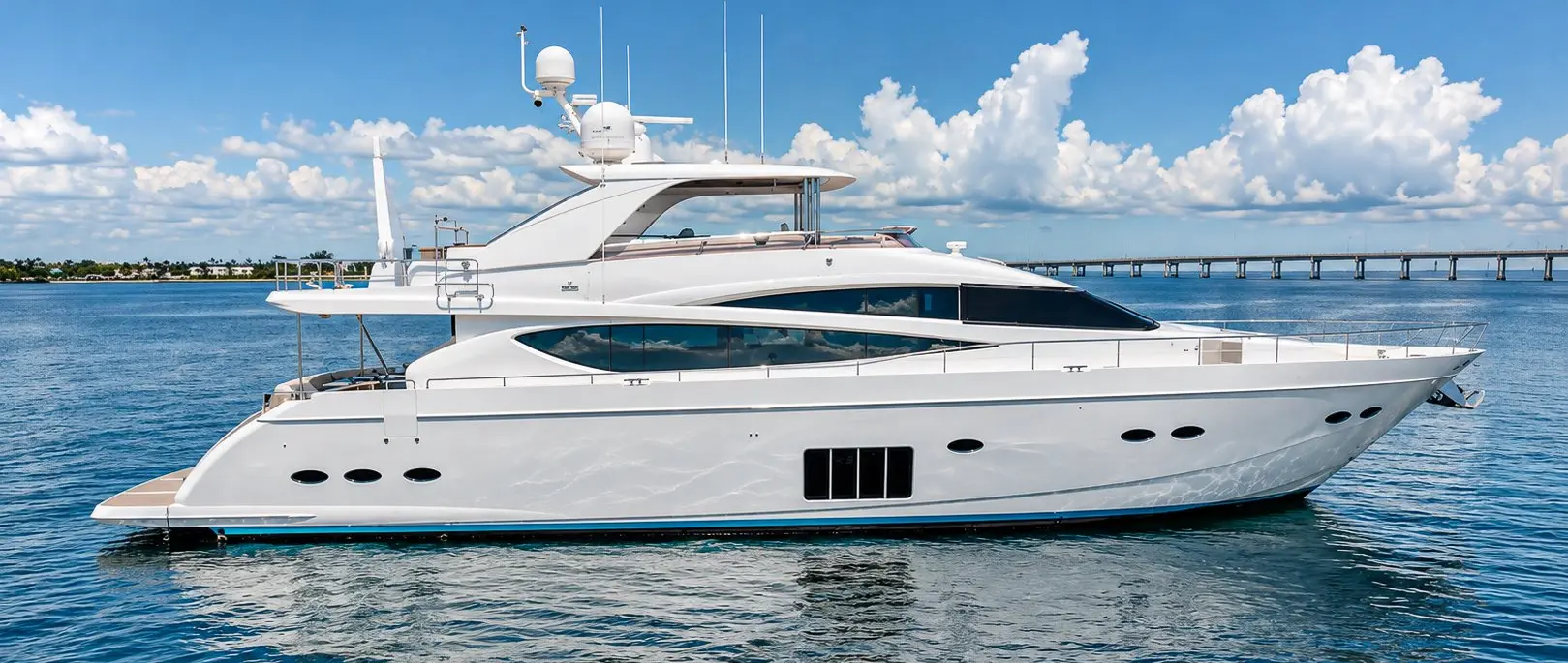
Northrop & Johnson official brokerage photograph of Princess motor yacht VIXEN.
Northrop & Johnson confirms that the 2011 Princess 85 VIXEN, measuring 25.93m and last asking €1.65 million, has sold with broker Deniz Kaymaz representing the seller.
Northrop & Johnson has confirmed the sale of the 25.93-metre Princess motor yacht VIXEN in an official announcement dated 27 November 2026. Yacht broker Deniz Kaymaz represented the seller in the transaction. The company reports that the yacht was last offered at €1,650,000, although it has not published the price achieved. This is a completed brokerage transaction for a yacht above the 24-metre superyacht threshold, not a new listing or a prediction of future interest.
The difference between a last advertised asking price and the consideration paid is especially important in market reporting. A sale announcement can establish that a vessel has changed hands without disclosing the details of its final contract. Neither a discount nor a premium can be calculated here, and there is no published basis for naming the purchaser. The definitive information is the yacht, the selling broker and the company's date of confirmation.
VIXEN was built in 2011 by the British manufacturer Princess Yachts as part of its Princess 85 series. The broker describes her as a well-maintained example of the model, with a design balancing family accommodation, open-air living and the speed expected of a planing motor yacht. That statement is a commercial assessment from the company managing the sale rather than an independent survey of every onboard system.
For readers comparing yachts of this size, an established production model can offer a clearer baseline than a one-off custom project. Layout, machinery access and construction details may be known to specialist yards and service providers. Yet individual yachts can vary considerably after 15 years of ownership and maintenance. Their condition is determined by actual use, professional inspections and the quality of refurbishment, not the reputation of the model alone.
Northrop & Johnson says VIXEN has had only two owners since new. A relatively short ownership chain may help a buyer trace maintenance and operating records, but it does not prove that those documents are complete. A purchaser would still want to verify service intervals, major repairs, equipment replacements and any historical incidents through the available documentation and independent inspections.
The announcement refers to a consistent maintenance programme and recent improvements. It does not identify the new owner or explain future plans for the yacht. A change in ownership may lead to a period of cruising or further upgrades, but reporting such possibilities as confirmed intentions would exceed the available evidence. VIXEN's actual history remains more valuable than conjecture about what may happen after her sale.
The company's report lists new teak decking, hydraulic-system refurbishment, renewed carpets and replacement ceiling panels in the main salon among the improvements carried out. These are tangible details because they relate to systems and finishes that can affect both appearance and upkeep. The word refurbishment should nevertheless not be expanded into an unsupported claim that the yacht underwent a complete technical rebuild.
Teak, hydraulics and interior finishes each create different inspection priorities. New decking should be assessed for installation quality and drainage; hydraulic work requires records of the components and testing completed; interior replacement can improve the guest experience without altering a vessel's engineering status. The reported improvements provide useful questions for a buyer, while the underlying invoices and survey evidence remain necessary to establish their technical scope.
VIXEN's main salon is described as having substantial glazing, freestanding furniture and a formal dining area for eight. Those arrangements can make a motor yacht of roughly 26 metres work well for an owner who entertains on board while retaining defined places for meals and relaxation. The broker's photographs and description provide a view of the advertised layout, but do not independently verify the condition of every surface or appliance.
A separate galley forward incorporates marble worktops, Miele equipment and its own seating area, according to the company. That layout matters for crew workflow and the separation of food preparation from formal guest spaces. It is possible for a relatively compact superyacht to feel generous when circulation has been considered carefully, although the exact quality of daily use is something an owner should assess in person.
The accommodation is arranged for eight guests in four staterooms. The full-beam owner's suite lies amidships, with a queen-size bed, walk-in wardrobe, private seating and en-suite facilities incorporating twin basins. Two further double cabins and a bunk cabin make up the remainder of the guest arrangement. This configuration may be especially suitable for family cruising where guests of different ages travel together.
Owners considering a yacht of this size should pay attention to how cabins serve their actual party rather than counting berths alone. The bunk cabin offers a different use case from a double stateroom, and access for crew service can influence daily comfort. Cabin layouts are a core part of the yacht's value proposition, but the brokerage description does not establish a prospective buyer's particular preferences.
Northrop & Johnson lists accommodation for four crew members, separate from the guest spaces. That capacity can support the professional operation of a yacht used for regular private cruising, although the precise manning level will depend on the flag, insurance requirements, itinerary and owner's expectations. The figure is a capacity detail, not a statement about the number of people employed aboard at the moment of sale.
An owner should also assess whether the crew areas offer adequate access, storage and working arrangements for the intended programme. On vessels in this size bracket, the relationship between service corridors, galley access and guest privacy can have a major impact on the onboard experience. A vessel may be designed for a specified guest and crew count without every possible staffing pattern being appropriate for each voyage.
The broker singles out VIXEN's flybridge, with outdoor dining for eight, a bar, grill and sunbathing areas. It also says the yacht is among the less common Princess 85 examples equipped with a hardtop incorporating an opening sunroof. That combination lets guests use the space in more than one weather condition, though it does not eliminate exposure to wind or rain.
For owners who spend much of their time at anchor, the flybridge can be a central social area. Its practicality depends on shade, service from the galley, movement between decks and the maintenance of any powered roof mechanisms. A technical survey should look at the operation and sealing of moving components just as carefully as the furniture and visual presentation of the outdoor spaces.
Further seating and dining are offered on the main deck aft and forward deck. The release identifies a hydraulic swimming platform and an Opacmare crane rated at 600 kilograms, intended to support tender and watersports handling. These facilities extend the owner's use of the water while introducing technical equipment that requires routine inspection and careful loading discipline.
A crane's headline lifting rating should not be confused with unrestricted permission to lift any load in every condition. Rigging arrangements, reach, sea state and manufacturer instructions affect safe operation. Likewise, a hydraulic platform needs suitable maintenance and guest-safety procedures. The presence of these systems is an advantage for certain cruising programmes, provided they are operated within the documented limits.
VIXEN's published figures are a cruising speed of 24 knots and maximum speed of 27 knots. Those are the broker's stated model or vessel specifications rather than measurements reproduced by this newsroom in an independent sea trial. They identify the yacht as a relatively fast cruising platform with a different operating profile from a long-range displacement superyacht.
Speed alone does not determine the best cruising experience. Owners should consider fuel use, range, weather tolerance and the level of machinery maintenance involved in their preferred itinerary. A fast yacht can offer useful flexibility between destinations, but a captain's passage plan will reflect the actual condition of the sea, onboard load and prudent fuel reserves rather than treating a brochure figure as a guarantee.
The company says VIXEN benefits from hydraulic zero-speed stabilisers and upgraded hydraulic bow thrusters. Equipment of this type can influence comfort at anchor and low-speed control around marinas, but its actual effectiveness depends on installation, condition and operating circumstances. The release does not publish comparative measured reductions in roll or a new commissioning report for the thrusters.
The systems are worth examining because owners of yachts near 26 metres may use them frequently when entering busy ports or staying at anchor overnight. A technician should assess hydraulic integrity, controls and service records, while the captain remains responsible for weather and berth decisions. Modern assistance can support experienced handling, but cannot replace it.
A confirmed sale of a 2011-built Princess provides a specific data point in the market for established motor yachts. It does not on its own demonstrate stronger demand, a change in achieved prices or a shortening of average marketing times. Those conclusions would require several comparable transactions and an understanding of condition, specification and the final consideration paid.
The disclosed last asking price of €1.65 million gives interested readers a point of reference, but the actual transaction amount is not public. The yacht's owner history, accommodation and documented upgrades help explain the offering without supporting an invented closing figure. Reporting the transaction accurately is more valuable than presenting it as proof of a wider industry trend that has not been measured.
The primary source is Northrop & Johnson's 27 November 2026 announcement of the sale of VIXEN. Specifications, broker identity, last asking price and reported upgrades are attributed to the selling agency. This report does not name an undisclosed owner or claim to know the achieved price.
The hero image is the official photograph of VIXEN carried with the broker's own release and is credited to Northrop & Johnson. It illustrates the actual Princess involved in the transaction rather than a generic yacht or a different vessel. No AI-generated image or competing editorial photograph has been used; no unrestricted image licence or uncredited photographer identity is invented.
Northrop & Johnson official brokerage photograph of Princess motor yacht VIXEN.
Continue reading
Denison Yachting confirms the sale of 2021 Pershing 9X MAGIC OF AYR, a 28.04m motor yacht with four guest cabins and a stated 42-knot …
The 58.5-metre Lürssen RONIN has been sold with Large Yacht Co representing the buyer and Y.CO representing the seller. The buyer's brokerage also confirms …
Kitson Yachts confirms the sale of a Benetti B.Now 52M new-build yacht scheduled for 2028 delivery. Benetti details its RWD exterior design, Valentina Zannier …
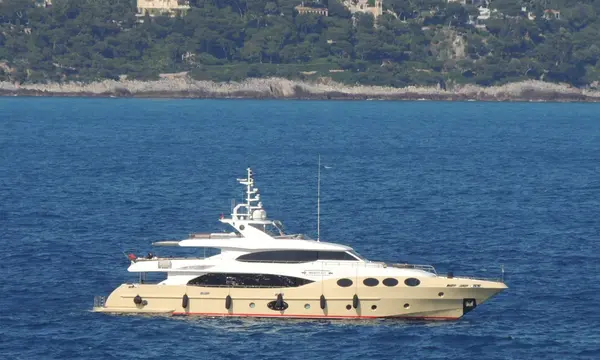
Fraser revises the asking price of 38m Gulf Craft GRAND CRU to €5.5m, citing 295GT, recent upgrades, fresh hull paint and Bureau Veritas class …
Superyacht Guide
Continue into the wider Superyacht Guide.
Business opportunities · Superyacht Guide
Companies serving the superyacht market can discuss clearly identified advertising, sponsorship and business-profile opportunities. Commercial activity remains separate from independent editorial coverage.